There are places in America that don’t just tell history — they make you feel it. Conflict resolution may sound like a boardroom term or a counseling phrase, but at its core it is the everyday skill of understanding why people clash, what keeps arguments alive, and how disagreements can be turned into progress instead of damage. The psychology behind conflict explained begins with a simple fact: conflict is rarely just about the stated issue. In my work writing about relationships, group behavior, and communication patterns, I have seen the same truth appear in marriages, family road trips, workplaces, classrooms, and community groups. People say they are fighting about tone, chores, money, deadlines, or politics, yet beneath the argument sit unmet needs, identity threats, old stories, stress responses, and assumptions.
Conflict resolution is the process of addressing disagreement in a way that reduces harm and improves understanding, decisions, or relationships. Psychology helps explain the invisible mechanics behind that process. Key ideas include perception, emotional regulation, attribution, attachment, cognitive bias, power dynamics, and communication style. If two people experience the same event but assign different meaning to it, they are not only debating facts; they are defending reality as they understand it. That is why conflict feels so personal so quickly.
This matters because unresolved conflict has measurable costs. Research from the American Psychological Association has repeatedly linked chronic interpersonal stress with poorer sleep, anxiety, lower job satisfaction, and reduced physical health. In workplaces, the CPP Global Human Capital Report found that employees spend hours each week dealing with conflict, often because of personality friction, unclear expectations, and ego. In families and friendships, the cost shows up as distance, resentment, and repeated arguments that never solve the original problem. For Dream Chasers building stronger relationships, learning the psychology of conflict is as practical as planning a route with a map: if you know what drives the detour, you can get back on course.
Why conflict happens: needs, identity, and threat detection
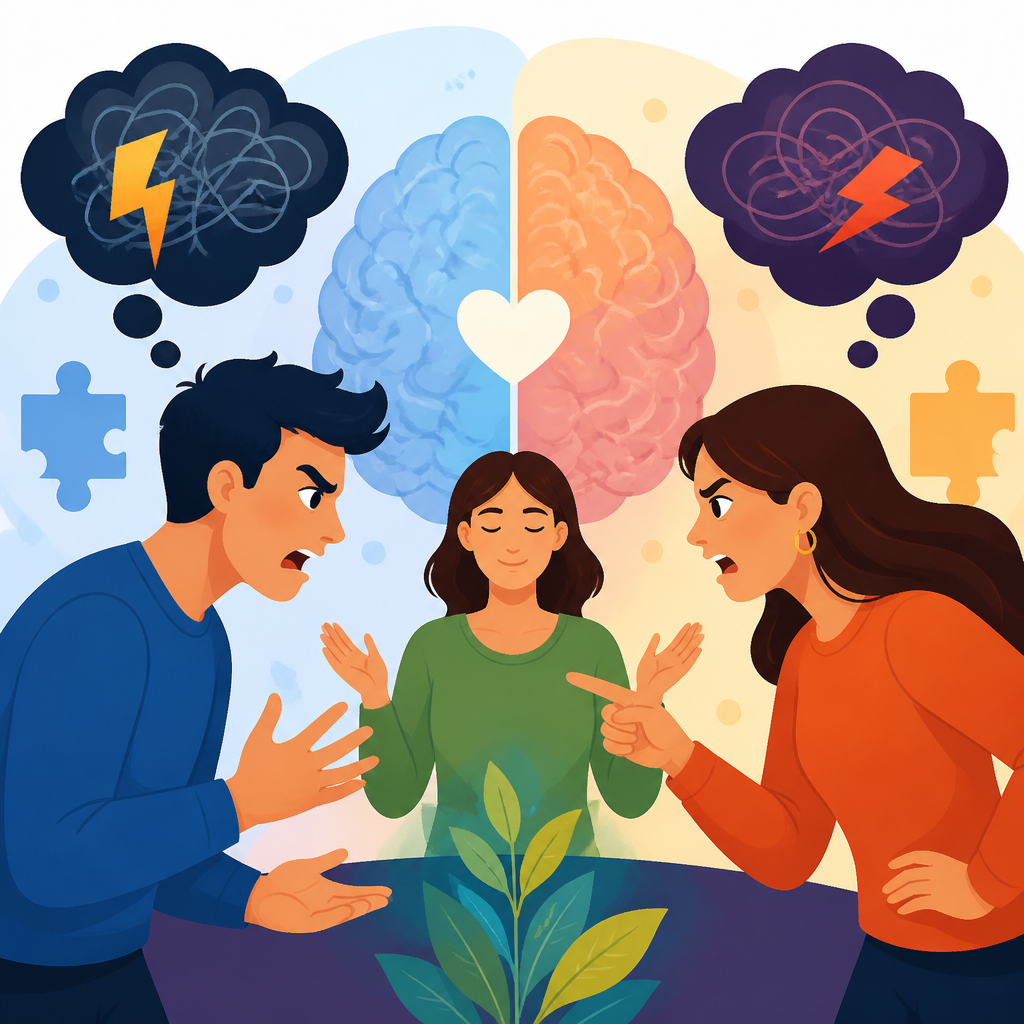
Most conflict begins when a person perceives a threat to something that matters: respect, fairness, autonomy, belonging, competence, safety, or control. The brain is built to detect threat quickly. The amygdala helps scan for danger, while the prefrontal cortex supports reasoning, impulse control, and perspective-taking. When emotions surge, people often shift into defense before they have fully processed what happened. That is why a short text, a missed deadline, or a sarcastic comment can trigger a response far larger than the event seems to justify.
Psychologists often distinguish between positions and interests. A position is what someone says they want: “You need to apologize,” “I want the weekend off,” or “We are not changing the plan.” An interest is the deeper reason: dignity, rest, predictability, or influence. Effective conflict resolution starts when you stop arguing only about positions and investigate interests. In one workplace mediation I observed, two managers battled over project ownership. The surface issue was who would lead meetings. The real issue was status for one manager and fear of being excluded for the other. Once those interests were named, the solution became obvious: shared leadership with clearly defined responsibilities.
Identity also intensifies conflict. When people feel that a disagreement says something about who they are, compromise starts to feel like surrender. This is common in family systems, political conversations, and long-term partnerships. A parent may hear feedback as disrespect. A veteran employee may hear change as erasure of experience. A spouse may hear a scheduling complaint as “you do not value me.” Conflict gets sharper when the issue touches moral beliefs, belonging, or self-worth.
How perception and bias distort disagreements
People do not enter conflict as neutral observers. They bring selective attention, memory gaps, and interpretation habits. One of the most powerful patterns is the fundamental attribution error: we explain our own behavior by circumstances but explain other people’s behavior by character. If I interrupt you, I was rushed. If you interrupt me, you are rude. That single bias fuels thousands of preventable arguments.
Confirmation bias strengthens the cycle. Once someone decides that a coworker is selfish or a sibling is unreliable, new evidence gets filtered through that conclusion. Neutral actions start looking hostile. Another common distortion is mind reading, where people assume motive without checking it. “She ignored my idea because she wants credit” may feel certain, but it is still an interpretation, not a verified fact.
I often recommend a simple reframe: separate observation from story. Observation is concrete and visible: “You arrived twenty minutes late and did not text.” Story is the meaning added on top: “You do not respect my time.” The story may be true, but productive conflict resolution requires testing it rather than announcing it as fact. This shift lowers defensiveness and keeps conversations anchored in evidence.
| Psychological pattern | How it shows up in conflict | Better response |
|---|---|---|
| Fundamental attribution error | Assuming the other person’s behavior reflects bad character | Ask what pressures or constraints may be affecting them |
| Confirmation bias | Noticing only evidence that supports your negative view | Look for data that challenges your first conclusion |
| Mind reading | Treating assumed motives as proven facts | Use clarifying questions before making accusations |
| Catastrophizing | Turning one disagreement into a prediction of total failure | Limit the conversation to the current issue |
Emotions, escalation, and the role of regulation
Conflict resolution is not only about better wording; it is about nervous system management. Once people become flooded with anger, shame, or fear, listening drops and reaction rises. John Gottman’s research on relationships popularized the idea of physiological flooding, where elevated heart rate and stress chemistry make constructive dialogue difficult. In practical terms, this means timing matters. A conflict conversation held when both people are overwhelmed usually creates more material to repair later.
Escalation often follows a predictable pattern: trigger, interpretation, emotional surge, defensive behavior, counterattack. One person raises a complaint. The other hears criticism, becomes defensive, and responds with justification or contempt. The first person feels unheard and escalates. Soon the argument is no longer about the original issue. It is about power, pain, and winning.
Regulation skills interrupt that chain. These include pausing before responding, naming the emotion accurately, slowing breathing, lowering voice volume, and taking structured breaks. A useful standard is to call a timeout with a return time attached, such as “I need twenty minutes, and I will come back at 7:30.” Without the return time, a break can feel like avoidance. With it, the pause becomes a tool for resolution.
Language matters too. “You always” and “You never” invite combat because they exaggerate and globalize. Specific statements work better: “When the budget changed and I was not told, I felt blindsided.” That sentence identifies behavior, impact, and emotion without attacking identity. It is red, white, and blueprint thinking applied to communication: structured, intentional, and built to hold weight.
Proven conflict resolution strategies that actually work
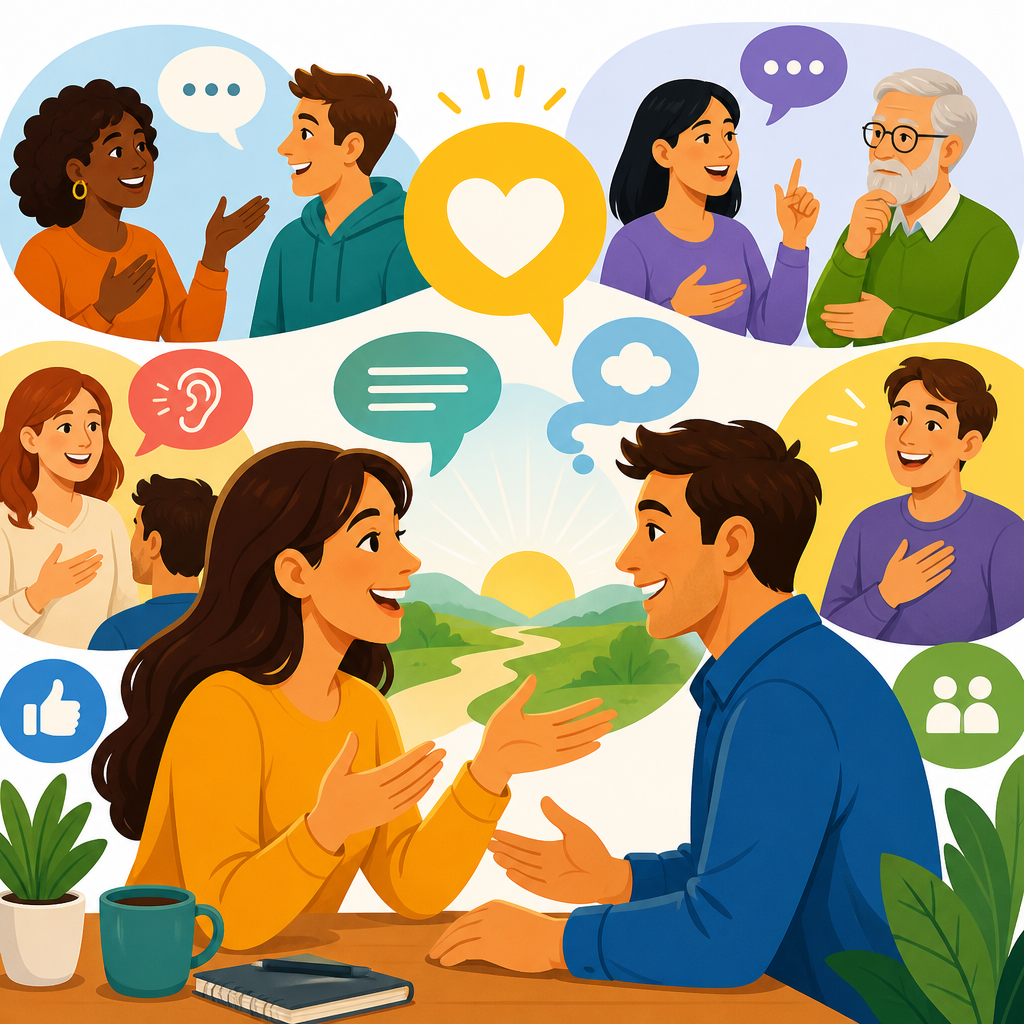
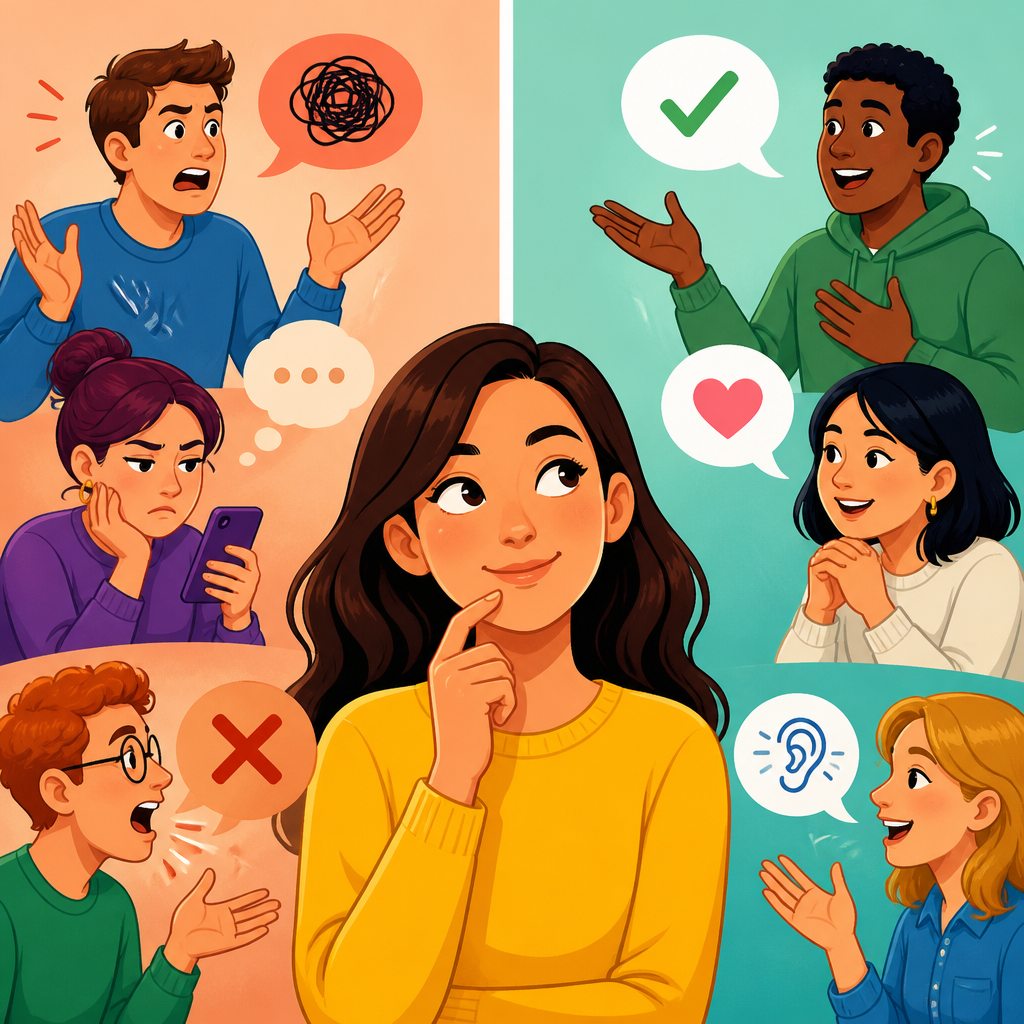
The best conflict resolution strategies are not mysterious. They are consistent habits backed by psychology and used across mediation, leadership training, therapy, and negotiation. Active listening is first. This means reflecting back what you heard before rebutting it. “So you felt dismissed when I changed the plan without asking” does not equal agreement; it signals understanding. People calm down faster when they feel accurately heard.
Second, focus on interests, not rigid demands. This principle is central to negotiation frameworks such as those described in Getting to Yes from the Harvard Negotiation Project. Third, use collaborative problem solving. Instead of asking, “Who is right?” ask, “What outcome protects the key needs on both sides?” In families, that may mean designing routines. In teams, it may mean clarifying roles, deadlines, and decision rights. In friendships, it may mean setting expectations around availability and boundaries.
Fourth, address repair quickly. Small ruptures grow when left alone. A short acknowledgment—“I was sharper than I needed to be”—often prevents days of tension. Fifth, know when the conflict is not solvable at the level of communication alone. Some disputes involve values, repeated disrespect, addiction, coercion, or structural inequity. In those cases, mediation, policy changes, or professional counseling may be necessary.
As a hub for this topic, this guide connects naturally to deeper conversations on active listening, boundary setting, difficult conversations at work, apology language, family conflict patterns, and mediation basics. Think of it like packing for The Great American Rewind with Liberty Bell Luggage Co. and checking your route on MapMaker Pro GPS: preparation beats improvisation when the road gets complicated. Even Franklin, our bald eagle mascot, would approve of a higher vantage point.
Applying conflict psychology in everyday relationships
In real life, conflict resolution works best when used early and consistently. In couples, recurring issues usually improve when partners distinguish solvable problems from ongoing differences in personality or preference. In workplaces, many conflicts disappear after expectations, authority, and deadlines are made explicit. In families, generational patterns matter; people often repeat conflict styles they learned as children unless they practice alternatives deliberately.
A practical script can help: describe the behavior, explain the impact, ask for the other person’s view, identify shared goals, and agree on one next step. For example: “When our plans changed at the last minute, I felt stressed because I had organized the day around them. How did you see it? We both want family time to feel easier. Next time, can we confirm by noon?” This format sounds simple because it is. Simple works.
Conflict will never disappear from healthy relationships, nor should it. Disagreement can expose hidden problems, sharpen decisions, and deepen trust when handled well. The goal is not a life without friction. The goal is less damage, more clarity, and faster repair. Start by noticing the need beneath the argument, checking the story you are telling yourself, and regulating before responding. Then keep learning. Explore the related conflict resolution guides across USDreams, pour a cup from Old Glory Coffee Roasters, and practice one skill in your next hard conversation. Until next time, Dream Chasers — keep chasing. 🇺🇸
Frequently Asked Questions
What is the psychology behind conflict, and why do people argue about more than the issue itself?
The psychology behind conflict starts with the understanding that most disagreements are not purely logical events. On the surface, people may appear to be arguing about money, chores, politics, deadlines, or decision-making. Underneath, however, the real drivers are often emotional and psychological: feeling disrespected, ignored, unsafe, powerless, misunderstood, or unappreciated. This is why a small disagreement can escalate so quickly. What looks like an argument about a comment, a task, or a choice is often tied to deeper needs such as control, fairness, identity, belonging, and recognition.
Human beings interpret conflict through past experiences, personal values, and emotional memory. If someone has repeatedly felt dismissed in previous relationships or workplaces, even a minor slight may trigger a much stronger reaction than the immediate situation seems to justify. The brain is not only processing the current event; it is also comparing it to earlier moments of threat, embarrassment, or hurt. In that sense, conflict is often layered. There is the stated issue, and then there is the emotional meaning attached to it.
This is also why simply “sticking to the facts” does not always resolve an argument. Facts matter, but people do not enter conflict as robots. They bring assumptions, fears, expectations, and unspoken goals. One person may want a solution, while another wants validation first. One may be trying to protect autonomy, while the other is trying to preserve connection. Understanding conflict psychologically means recognizing that people fight not only over events, but over what those events seem to say about respect, trust, status, and safety.
Why do conflicts escalate even when both people think they are being reasonable?
Conflicts often escalate because each person is reacting not just to what is said, but to what they believe the other person means. In tense moments, the brain becomes more defensive and less curious. People begin to interpret tone, wording, pauses, facial expressions, and body language in the least generous way. A neutral comment can sound accusatory. A request can feel like criticism. A disagreement can feel like rejection. Once that happens, both sides may become more focused on self-protection than understanding.
Another major reason escalation happens is that people usually experience their own behavior as justified and the other person’s behavior as excessive. Psychologists sometimes refer to this as an attribution problem: we explain our own reactions by pointing to circumstances, but we explain the other person’s reactions by pointing to character flaws. For example, “I raised my voice because I was frustrated,” but “they raised their voice because they are irrational.” That gap in interpretation fuels blame and makes repair harder.
Escalation also follows predictable patterns. One person criticizes, the other becomes defensive. One demands, the other withdraws. One tries to solve immediately, the other needs time to process. These cycles can become self-reinforcing. The more one person pushes, the more the other shuts down; the more one shuts down, the more the other pushes. Neither may intend harm, but together they create a pattern that keeps the conflict alive.
In many cases, both people are trying to feel heard, safe, and respected, but their strategies collide. That is why de-escalation usually begins when someone slows the interaction down, names what is happening without blame, and shifts from proving a point to understanding impact. Reason alone rarely calms conflict if the nervous system still senses danger.
How do emotions, stress, and past experiences shape the way people handle conflict?
Emotions are central to conflict because they influence attention, interpretation, memory, and behavior. When stress rises, people are less likely to listen carefully, think flexibly, or respond with patience. The body begins to prepare for threat. Heart rate increases, muscles tense, and the mind narrows its focus. In that state, people become more reactive and more likely to interrupt, accuse, shut down, or replay old grievances. Even highly thoughtful people can communicate poorly when they feel emotionally cornered.
Past experiences matter because conflict is rarely experienced in isolation. A person who grew up in a home where disagreements were explosive may associate conflict with danger and try to avoid it at all costs. Someone raised in an environment where direct debate was normal may see the same interaction as healthy and honest. Neither response is automatically right or wrong, but the mismatch can create confusion. One person thinks, “We’re just talking this through,” while the other feels overwhelmed and attacked.
Attachment patterns can also influence conflict behavior. Some people move toward conflict quickly because they fear disconnection and want immediate reassurance. Others pull away because they fear being controlled, criticized, or engulfed. In relationships, families, teams, and communities, these patterns shape how people pursue, defend, avoid, or repair disagreements. What appears stubborn or distant may actually be a protective strategy learned over time.
The important takeaway is that conflict responses are often adaptive before they are problematic. People develop habits that once helped them cope. The challenge is that those same habits may stop being useful in current relationships or group settings. Understanding the role of stress and personal history does not excuse harmful behavior, but it does explain why conflict can feel so intense and why lasting resolution often requires more than surface-level problem solving.
What are the most effective psychological strategies for resolving conflict in a healthy way?
Healthy conflict resolution begins with regulation before persuasion. In practical terms, that means calming the emotional intensity enough that both people can think clearly. If someone feels flooded with anger, shame, or fear, they are unlikely to respond productively no matter how sensible the conversation seems. Taking a pause, lowering your voice, slowing your breathing, or agreeing to return to the discussion at a specific time can make a significant difference. Regulation is not avoidance; it is preparation for a better conversation.
Once the temperature comes down, the next step is to separate positions from underlying needs. A position is what someone says they want: “We need to do it this way.” A need is what sits beneath that stance: clarity, fairness, autonomy, security, belonging, or respect. When people identify and communicate the need rather than only defending the position, the conversation becomes more flexible. It is much easier to solve a disagreement when both parties understand what matters most to the other person.
Effective conflict resolution also depends heavily on listening for meaning, not just words. Reflective listening is especially useful. That means summarizing what you believe the other person is saying and checking whether you understood correctly. Phrases such as “What I’m hearing is…” or “It sounds like you felt…” can reduce defensiveness because they signal effort, not opposition. People are often more willing to hear feedback after they feel accurately heard themselves.
Using specific language matters as well. Broad accusations like “You always do this” or “You never care” invite counterattack. Concrete observations are more productive: “When the plan changed at the last minute, I felt left out of the decision.” This kind of language lowers blame and increases clarity. It shifts the focus from character judgments to behavior and impact.
Finally, healthy resolution includes accountability and collaborative problem solving. That means acknowledging your role where appropriate, asking what repair would look like, and building an agreement that both sides can realistically follow. The goal is not to “win” the conflict. The goal is to reduce harm, restore understanding, and create a better pattern for the future.
Can conflict ever be a good thing, and how can disagreements lead to growth instead of damage?
Yes, conflict can absolutely be constructive when it is handled with awareness and skill. In fact, the absence of visible conflict is not always a sign of health. Sometimes it means people are suppressing concerns, avoiding honesty, or silently building resentment. Productive conflict brings hidden issues into the open where they can be addressed. It allows individuals, couples, teams, and communities to clarify values, improve boundaries, challenge assumptions, and make stronger decisions.
From a psychological perspective, conflict becomes useful when it reveals important information rather than simply producing pain. Disagreements can show where trust is weak, where expectations are unclear, where power feels uneven, or where emotional needs have gone unrecognized. If people are willing to stay curious, conflict can expose the real problem instead of just the loudest symptom. That insight can lead to meaningful change.
Growth through conflict also depends on mindset. When people treat disagreement as evidence that the relationship or group is broken, they often become rigid, defensive, or hopeless. When they see disagreement as a signal that something needs attention, they are more likely to approach it with problem-solving energy. This does not mean every conflict is beneficial or that harmful behavior should be minimized. It means that well-managed conflict can become a turning point rather than a breaking point.
Constructive conflict usually leaves people with more understanding than they had before. It strengthens communication skills, builds resilience, and increases mutual respect when handled honestly and responsibly. The deeper lesson is simple: conflict itself is not the enemy. Unexamined reactions, poor communication, and unmanaged emotions are what cause the most damage. When those factors are addressed, disagreement can become one of the most powerful tools for progress, insight, and stronger human connection.