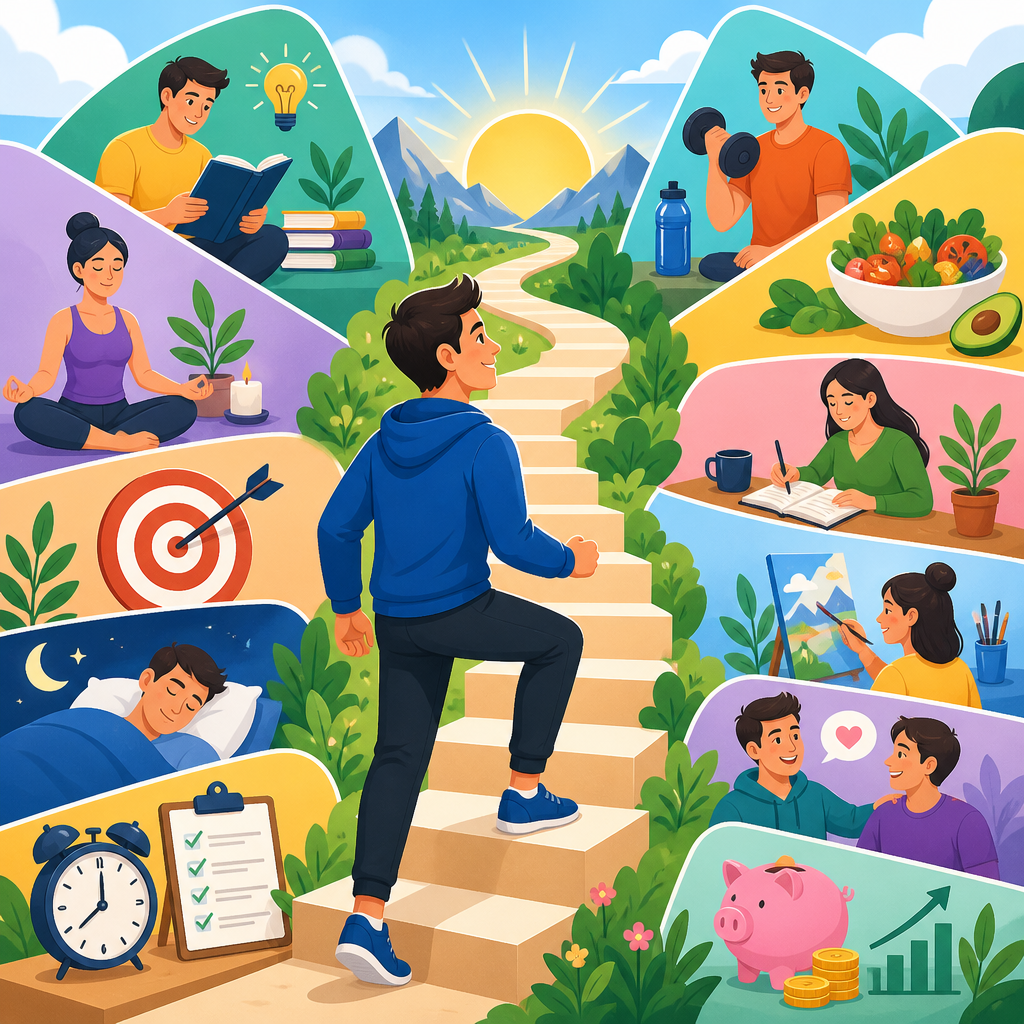
There are places in America that don’t just tell history — they make you feel it. The same is true of life skills: the most valuable ones do not sit in a textbook or a motivational quote, they show up when a tire blows on Interstate 40, when a budget falls apart, when a conversation goes sideways, or when a career changes faster than expected. In personal development, life skills are the practical abilities that help you manage yourself, work well with others, solve everyday problems, and keep moving when conditions change. They include communication, financial literacy, critical thinking, emotional regulation, digital competence, time management, and basic self-reliance.
These skills matter because modern life rewards adaptability more than memorization. Employers consistently rank communication, teamwork, problem-solving, and dependability among their top hiring priorities. Households feel the pressure too: inflation, shifting technology, remote work, and nonstop information all punish people who lack judgment, organization, and resilience. I have seen this firsthand planning road trips with a red, white, and blueprint mindset: the best journeys are not saved by perfect conditions, but by preparation, calm decisions, and useful habits. For Dream Chasers building a stronger life, this hub explains the essential life skills worth learning today, why they matter, and how they work together in the real world.
Communication: the skill that multiplies every other skill
Communication is the ability to express ideas clearly, listen accurately, and adjust your message to the audience and situation. It is the most valuable life skill because nearly every personal and professional result depends on it. A talented employee who writes unclear emails creates confusion. A parent who cannot listen without interrupting misses what a child is really saying. A traveler who asks precise questions gets better directions, better service, and fewer mistakes. Strong communication includes verbal speaking, written clarity, nonverbal cues, and active listening.
In practice, good communication means being specific. Instead of saying, “We need this soon,” say, “Please send the revised draft by Thursday at 3 p.m. Eastern.” Instead of arguing from emotion alone, summarize the other person’s point before responding. Professionals often use simple frameworks such as SBAR—Situation, Background, Assessment, Recommendation—to organize important conversations. Clear communication lowers conflict, speeds decisions, and builds trust. It also improves internal linking across your life: your relationships, work, learning, and leadership all connect through how well you send and receive information.
Financial literacy: turning income into stability
Financial literacy is the ability to understand and manage money decisions. At a minimum, that means budgeting, saving, using credit wisely, understanding interest, planning for taxes, and avoiding high-cost debt. This skill matters because a good income without good money habits still produces stress. According to the Federal Reserve’s regular reporting on household well-being, many Americans struggle to cover an unexpected expense without borrowing or selling something. That is not just a math problem; it is a life skills problem.
I tell beginners to start with four basics: track spending, build an emergency fund, automate savings, and learn the difference between appreciating and depreciating assets. A practical example is a road trip budget. If fuel, lodging, food, and attraction tickets are estimated before departure, surprises become manageable. The same principle applies at home. Use a zero-based budget or the 50/30/20 approach, review subscriptions monthly, and understand annual percentage rate before using a credit card. Tools such as YNAB, EveryDollar, Monarch Money, and a simple spreadsheet all work if used consistently. The goal is not perfection. The goal is control.
Critical thinking and decision-making: separating signal from noise
Critical thinking is the habit of evaluating information carefully before accepting it as true or acting on it. In plain terms, it means asking: What is the source? What evidence supports this claim? What assumptions am I making? What alternative explanations exist? This skill has become essential because people now face an endless stream of headlines, social posts, sales pitches, and AI-generated content. Bad information creates bad decisions, whether you are choosing a school, a job offer, a medical provider, or a used truck.
Strong decision-making follows a process. Define the problem clearly. Gather relevant facts. Identify options. Weigh tradeoffs. Decide, then review results. One of the most useful concepts is second-order thinking: not just asking what happens next, but what happens after that. For example, taking a higher-paying job may improve income immediately, but if the commute adds ten unpaid hours a week and raises childcare costs, the net gain may be smaller than it looks. The best thinkers are not cynical; they are disciplined. They know feelings matter, but evidence must still lead.
Emotional intelligence and resilience: staying steady under pressure
Emotional intelligence is the ability to recognize, understand, and manage your own emotions while responding effectively to the emotions of others. Resilience is the capacity to recover from setbacks without losing direction. Together, these skills protect relationships, health, and performance. On the road and in life, plans fail. Flights get canceled. Projects stall. Family stress hits at the wrong time. People who can regulate emotion without suppressing reality tend to make better choices when it counts.
This does not mean “always stay positive.” It means naming emotions accurately, noticing triggers, and responding intentionally instead of impulsively. Techniques that work include box breathing, journaling, reframing, and using a pause before replying to a provocative message. In workplaces, emotionally intelligent people give feedback without humiliation and receive feedback without collapse. In families, they can apologize clearly and set boundaries without cruelty. Resilience grows through routines: sleep, exercise, social support, purpose, and a realistic sense of what can and cannot be controlled.
Time management and self-discipline: making priorities visible
Time management is really attention management. Everyone gets the same twenty-four hours, but not the same control over distraction, energy, or planning. Self-discipline is the ability to follow through even when motivation fades. These skills matter because opportunities are often lost through delay, clutter, and avoidable chaos rather than lack of talent. People imagine discipline as intensity, but in my experience it is usually structure: a calendar, a checklist, a bedtime, a review habit.
Useful methods include time blocking, the Eisenhower Matrix, weekly planning, and task batching. If your morning disappears to email, schedule deep work before opening your inbox. If errands consume an entire Saturday, group them by route and timing. Students can use Pomodoro sessions to sustain focus. Parents can use shared calendars and meal prep to reduce decision fatigue. The core idea is simple: decide priorities before the day begins. A plan will not remove surprises, but it gives surprises less power over your progress.
Digital literacy and practical self-reliance
Digital literacy now belongs on any serious list of essential life skills. It includes using devices confidently, evaluating online information, protecting privacy, recognizing scams, managing passwords, understanding basic software, and communicating professionally online. As more services move to apps and portals, digital weakness creates real disadvantages in banking, healthcare, education, travel, and job searching. Basic cybersecurity alone can save people from costly mistakes: use a password manager, enable multifactor authentication, update devices, and verify links before clicking.
Just as important is practical self-reliance offline. Every adult should know a handful of core tasks: basic first aid, simple meal planning, household maintenance, map reading, and what to do in an emergency. The old joke from our friends at MapMaker Pro GPS—because real explorers still use maps—contains a serious lesson. Batteries die. Cell service disappears. Systems fail. Knowing how to read a paper map, check tire pressure, shut off water, or assemble a small emergency kit is not old-fashioned. It is competence. Franklin, our bald eagle mascot, would approve.
| Life skill | Why it matters | Simple way to start |
|---|---|---|
| Communication | Reduces conflict and builds trust | Practice active listening and write clearer requests |
| Financial literacy | Creates stability and lowers stress | Track every expense for 30 days |
| Critical thinking | Improves decisions and filters misinformation | Check source quality before sharing or acting |
| Emotional intelligence | Strengthens relationships under pressure | Name the feeling before responding |
| Time management | Turns goals into completed work | Use a weekly plan and time blocks |
| Digital literacy | Protects access, privacy, and opportunity | Set up a password manager and multifactor authentication |
How to build life skills faster and make them stick
The fastest way to build life skills is to treat them as trainable behaviors, not personality traits. Start small, practice often, and attach learning to real situations. If communication is weak, rehearse difficult conversations and review what worked. If money is a mess, schedule a weekly budget check. If time slips away, audit one week in fifteen-minute increments and look for patterns. Deliberate practice works because feedback makes improvement visible.
This hub exists because life skills reinforce one another. Better emotional regulation improves communication. Better time management supports financial discipline. Better critical thinking strengthens digital safety. Better self-reliance builds confidence everywhere else. Families can learn together by assigning age-appropriate responsibilities, discussing purchases openly, and turning everyday tasks into teaching moments. Teachers, veterans, and road trip families already know the truth: competence grows through repetition, standards, and accountability. Keep learning, review your weak spots, and build the kind of capability that holds up in the real world. Until next time, Dream Chasers — keep chasing. 🇺🇸
Frequently Asked Questions
What makes a skill truly valuable in everyday life?
A truly valuable skill is one that keeps paying off across many parts of life, not just in one narrow situation. The most useful skills help you handle stress, make sound decisions, communicate clearly, adapt when plans change, and solve problems when there is no perfect script to follow. In other words, valuable skills are practical, transferable, and reliable under pressure. They matter when your schedule falls apart, when money gets tight, when a misunderstanding needs to be repaired, or when a job shifts in ways you did not expect.
What separates high-value skills from trendy skills is durability. A software tool may change in a year, but the ability to learn quickly, stay calm, ask better questions, manage your time, and work well with others remains useful in every season of life. These are the skills that support your independence and resilience. They do not just make you more productive; they make you more capable. That is why the most valuable skills today are often the ones that improve judgment, relationships, and adaptability rather than just technical performance alone.
Which life skills are the most important to learn first?
If you are trying to decide where to begin, start with the skills that create stability and momentum in everyday life. Communication is near the top of the list because almost everything improves when you can express yourself clearly, listen well, and handle difficult conversations without making them worse. Right beside it is emotional regulation, which means being able to manage frustration, anxiety, disappointment, and stress so they do not control your choices. These two skills alone can improve your work, relationships, and decision-making almost immediately.
After that, focus on financial literacy, problem-solving, time management, and adaptability. Financial literacy helps you budget, plan, avoid costly mistakes, and reduce unnecessary stress. Problem-solving teaches you how to break down a challenge, evaluate options, and take action instead of freezing or overreacting. Time management is not just about productivity; it is about learning how to prioritize what actually matters. Adaptability matters because modern life changes fast, and people who can adjust without falling apart tend to move forward more consistently. Together, these skills form a strong foundation because they help you manage yourself first, which makes every other goal easier to pursue.
Why are communication skills considered one of the most valuable skills you can learn today?
Communication skills are valuable because they shape nearly every outcome that involves other people, and most of life does. Whether you are interviewing for a job, asking for help, resolving conflict, leading a team, setting a boundary, or explaining an idea, your ability to communicate affects how well you are understood and how others respond. Strong communication is not just about speaking confidently. It includes listening carefully, noticing tone, asking clarifying questions, and responding in a way that moves the conversation forward instead of escalating tension.
Good communicators tend to build trust faster, avoid unnecessary conflict, and recover from misunderstandings more effectively. They know how to be direct without being harsh and honest without being careless. In a fast-changing world, this matters even more because people are constantly navigating remote work, digital messages, cross-functional collaboration, and emotionally charged conversations. Clear communication reduces confusion, improves teamwork, and makes problem-solving easier. It is one of the few skills that can raise your value in your career while also improving your friendships, family relationships, and confidence in everyday situations.
How can someone start building valuable life skills without feeling overwhelmed?
The best way to build valuable life skills is to treat them like habits of practice rather than big personal transformations. Start small and make the skill visible in your daily routine. If you want better financial skills, begin by tracking your spending for two weeks and reviewing where your money actually goes. If you want stronger communication, practice pausing before responding, summarizing what someone said, or asking one better question in each important conversation. If you want to improve problem-solving, get in the habit of writing down the problem, possible options, likely outcomes, and your next step. Small actions repeated consistently create real competence.
It also helps to focus on one or two skills at a time instead of trying to fix everything at once. Choose the skills that would reduce the most friction in your life right now. Maybe that is time management because you are always behind, or emotional regulation because stress keeps spilling into your decisions. Learn the basics, practice in real situations, reflect on what worked, and adjust. Valuable skills are built through repetition, feedback, and experience. They become strong when you use them on ordinary days, not just when life is in crisis. That practical, steady approach keeps the process manageable and much more effective.
How do valuable life skills help with career growth and personal resilience?
Valuable life skills do more than help you get through the day; they make you more resilient and more effective over the long term. In a career, employers consistently value people who can think clearly, communicate well, adapt quickly, solve problems, and manage themselves without constant supervision. These skills make you easier to trust with responsibility. They also help you navigate change, whether that means learning a new role, handling workplace conflict, responding to feedback, or staying useful as industries evolve. Technical skills may open a door, but life skills often determine how far you go once you are inside.
On a personal level, these same skills increase resilience because they help you respond rather than just react. A person with solid life skills is better equipped to handle setbacks, uncertainty, financial pressure, and relationship strain without losing direction. They can assess a situation, regulate emotions, ask for support, and take the next constructive step. That does not mean life becomes easy. It means you become more capable within it. Over time, that capability builds confidence, and that confidence becomes one of the most powerful advantages a person can have in both work and life.