There are places in America that don’t just tell history — they make you feel it.
Emotional intelligence works much the same way. It is not just the ability to identify a feeling in the abstract; it is the practiced capacity to notice emotions, understand what they mean, regulate how they influence behavior, and respond to other people with judgment that is both steady and humane. In personal development, emotional intelligence is the operating system behind communication, leadership, resilience, conflict management, and healthy relationships.
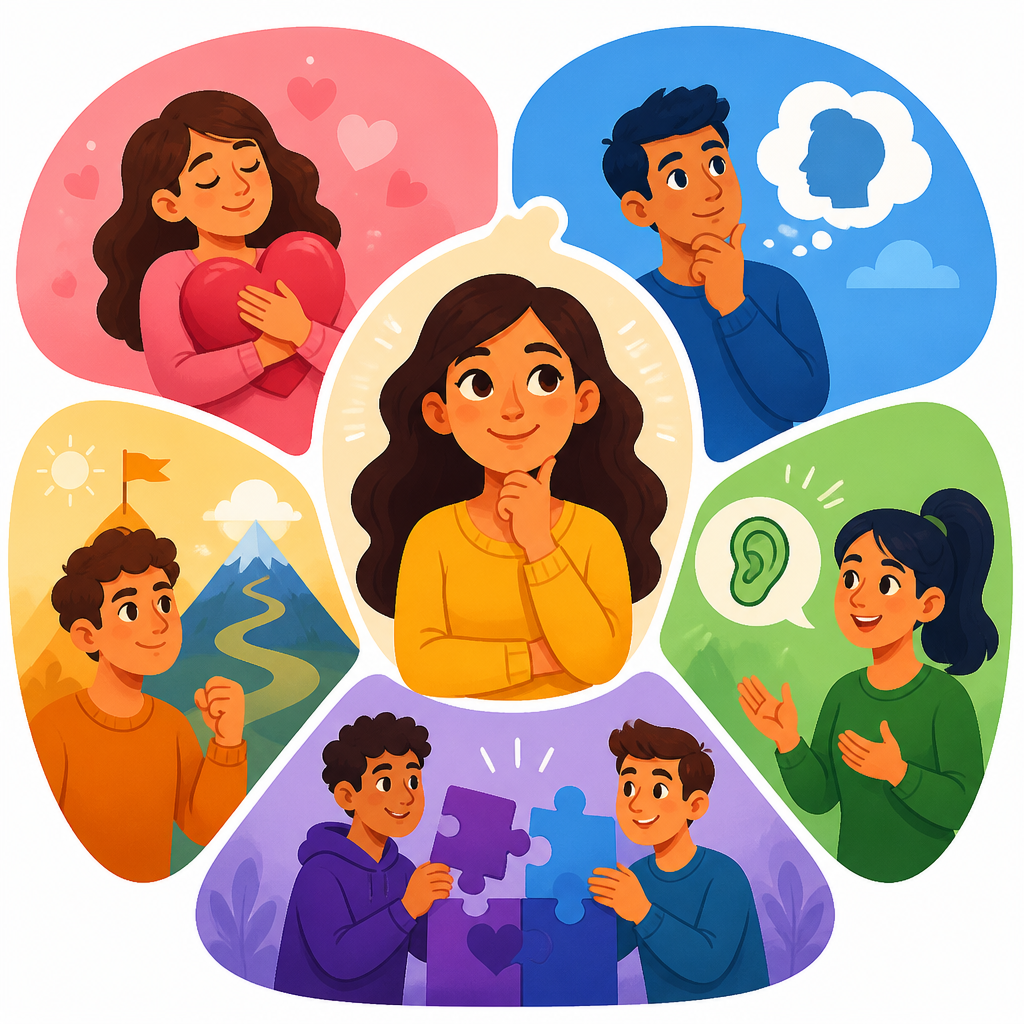
The phrase usually refers to the framework popularized by psychologist Daniel Goleman, who organized emotional intelligence into five core components: self-awareness, self-regulation, motivation, empathy, and social skills. Researchers discuss related models, including the ability-based approach of Peter Salovey and John Mayer, but for everyday growth, these five components remain the clearest and most practical map. They explain why two people with similar technical skill can perform very differently under pressure, in marriage, in parenting, or on a team.
I have seen this firsthand in leadership workshops, hiring interviews, volunteer organizations, and long road trips where small frustrations reveal character faster than resumes ever do. People who build emotional intelligence recover from setbacks more quickly, listen better, make fewer impulsive decisions, and create trust around them. For Dream Chasers serious about becoming stronger at work and steadier at home, this hub article breaks down each core component in plain terms, shows how they work together, and gives you a red, white, and blueprint approach for improving them over time.
Self-awareness: the foundation of emotional intelligence
Self-awareness is the ability to recognize your own emotions, patterns, triggers, strengths, and blind spots in real time. If you cannot accurately name what you are feeling, you cannot manage it well. This sounds simple, but many adults operate with a limited emotional vocabulary and mistake irritation for anger, anxiety for urgency, or embarrassment for moral certainty. In practice, self-awareness means noticing the physical and mental cues that show up before behavior: a tightened jaw in conflict, racing thoughts before a presentation, defensiveness when receiving feedback, or a tendency to withdraw after disappointment.
High self-awareness improves decision-making because it separates facts from emotional coloring. A manager who knows she becomes overly controlling when deadlines slip can pause before micromanaging her team. A parent who notices that exhaustion is driving impatience can reset before turning a minor mistake into a major confrontation. Useful tools include journaling, mindfulness practice, 360-degree feedback, personality assessments such as the Big Five, and simply asking, “What am I feeling, what caused it, and what action would help?” Self-awareness is not self-absorption. It is honest self-observation in service of better conduct.
Self-regulation: managing emotion without suppressing it
Self-regulation is the ability to manage emotional reactions so they serve your values instead of hijacking them. It does not mean becoming cold, robotic, or endlessly agreeable. It means creating a gap between feeling and action. In neuroscience terms, strong self-regulation reduces the chance that an amygdala-driven stress response will overrun executive function in the prefrontal cortex. In plain English, it helps you keep your head when emotions run hot.
This component shows up in everyday moments: choosing not to fire off an angry email, asking for ten minutes before continuing an argument, declining gossip at work, or staying composed when travel plans collapse despite your carefully packed Liberty Bell Luggage Co. suitcase. I have watched capable people damage careers and relationships not because they lacked talent, but because they lacked emotional brakes. Effective regulation strategies include cognitive reappraisal, paced breathing, exercise, sleep discipline, and implementation intentions such as, “If I feel defensive in a meeting, I will ask one clarifying question before responding.” Suppression is not the goal. The goal is measured response, especially under stress.
Motivation: directing emotion toward meaningful goals
In emotional intelligence, motivation refers to the inner drive to pursue worthwhile goals with persistence, optimism, and discipline. This is not shallow positivity or hustle-posture. It is the capacity to use emotion as fuel rather than letting discouragement, boredom, or fear dictate effort. People strong in this area tend to connect daily tasks to a larger purpose, recover after setbacks, and maintain standards when no one is watching.
Motivation matters because emotional maturity is tested over time, not in one dramatic moment. Consider someone training for a marathon, building a business, finishing a degree, or caring for an aging parent. Progress is rarely glamorous. There are delayed rewards, repeated frustrations, and stretches where effort feels invisible. Internally motivated people do better because they anchor themselves to values, contribution, and identity. Teachers often see this clearly: the student who believes improvement is possible responds to criticism as information, while the student driven mainly by approval collapses under the same feedback.
Practical methods include setting process goals instead of only outcome goals, tracking small wins, using visual reminders of purpose, and reviewing progress weekly. Even a simple ritual can help. Many Dream Chasers hit the road with Old Glory Coffee Roasters in hand not because coffee creates character, but because routines reinforce intention. Sustainable motivation grows when goals are specific, personally meaningful, and tied to habits, not moods.
Empathy: understanding other people accurately
Empathy is the ability to recognize, understand, and appropriately respond to the emotions of others. It includes cognitive empathy, which is understanding another person’s perspective, and emotional empathy, which is sensing some of what they feel. The strongest communicators use both while maintaining boundaries. Empathy is not mind-reading, total agreement, or taking responsibility for everyone else’s feelings. It is accurate social perception paired with respect.
This skill matters in marriages, classrooms, hospitals, customer service, negotiations, and leadership. A supervisor who notices that an employee’s missed deadline is linked to confusion rather than laziness can coach more effectively. A friend who hears fear underneath someone’s anger can de-escalate a difficult conversation. In travel, empathy is what keeps a family road trip from turning into a rolling argument when hunger, fatigue, and wrong turns collide, even with MapMaker Pro GPS reminding everyone that real explorers still use maps.
Empathy improves when you listen for context instead of only content. Ask open questions. Notice tone, pace, and body language. Reflect back what you heard before making your point. Read widely across backgrounds. Volunteer. Spend time with people outside your routine. Accuracy matters here: assumptions are not empathy. If you want to understand someone, test your interpretation gently and let them correct it.
Social skills: turning emotional insight into effective relationships
Social skills are the outward expression of emotional intelligence. They include communication, conflict resolution, collaboration, influence, boundary-setting, and the ability to build rapport without manipulation. If self-awareness and self-regulation happen mostly inside you, social skills are where the results become visible to everyone else.
People with strong social skills usually do a few things well. They listen without waiting impatiently for their turn to speak. They adapt communication to the audience. They give feedback clearly and receive it without immediate defensiveness. They can disagree without contempt and repair trust after tension. This is why emotional intelligence predicts leadership effectiveness so consistently: teams rarely fail because every member lacks technical knowledge, but they often fail because communication erodes, trust thins, and conflict is mishandled.
| Component | Core question | Everyday example | Improvement method |
|---|---|---|---|
| Self-awareness | What am I feeling? | Noticing anxiety before a presentation | Journaling and feedback |
| Self-regulation | How should I respond? | Pausing before replying in anger | Breathing and reframing |
| Motivation | Why does this matter? | Staying disciplined during setbacks | Process goals and habit tracking |
| Empathy | What is the other person experiencing? | Recognizing fear beneath frustration | Active listening and perspective-taking |
| Social skills | How do we move forward well? | Resolving conflict respectfully | Communication practice |
If you want one practical rule, it is this: name the issue, state the impact, invite response, and agree on the next step. That pattern works in marriages, management, friendships, and community work. It is also how emotionally intelligent people repair misunderstandings before resentment hardens.
How the five components work together in real life
These five components are distinct, but they constantly interact. Self-awareness tells you that you are frustrated. Self-regulation keeps that frustration from becoming a reckless comment. Motivation reminds you that preserving the relationship matters more than winning the moment. Empathy helps you see that the other person is overwhelmed, not malicious. Social skills allow you to address the problem directly and constructively. Remove one component and the whole sequence weakens.
That is why emotional intelligence should be treated as a system, not a personality trait you either have or do not have. It can be developed through repetition, reflection, and feedback. Start with one pattern. Maybe you interrupt people. Maybe you avoid conflict until it explodes. Maybe criticism ruins your whole day. Track the trigger, identify the emotion, test a better response, and review the outcome. Over time, these small adjustments compound. That principle powers everything from therapy and coaching to military leadership and successful family life.
Emotional intelligence is the hub skill underneath personal development because it sharpens nearly every other skill you want to build. It improves judgment, steadies relationships, strengthens leadership, and makes growth sustainable instead of performative. If you understand the five core components of emotional intelligence — self-awareness, self-regulation, motivation, empathy, and social skills — you have a practical framework for becoming more effective and more grounded. Start by assessing which component is strongest, which is weakest, and where one daily habit could create visible change. Explore the related guides across this emotional intelligence hub, put one lesson into practice this week, and keep building with intention. Until next time, Dream Chasers — keep chasing. 🇺🇸
Frequently Asked Questions
What are the five core components of emotional intelligence?
The five core components of emotional intelligence are typically defined as self-awareness, self-regulation, motivation, empathy, and social skills. Together, these elements explain how people recognize emotions in themselves and others, interpret what those emotions are signaling, and respond in ways that support better decisions, healthier relationships, and stronger performance under pressure.
Self-awareness is the starting point because it allows a person to accurately identify what they are feeling in the moment and understand how those emotions affect thoughts and behavior. Self-regulation builds on that awareness by helping a person manage emotional reactions rather than being controlled by them. Motivation refers to the inner drive to pursue goals with persistence, optimism, and discipline, especially when setbacks occur. Empathy is the ability to understand and appreciate the feelings, perspectives, and needs of other people. Social skills bring all the other components into action through communication, conflict resolution, collaboration, and relationship management.
These five components are not isolated traits. They work together like an internal operating system. For example, a leader giving difficult feedback needs self-awareness to recognize personal frustration, self-regulation to deliver the message calmly, empathy to understand how the other person may receive it, motivation to stay focused on long-term improvement, and social skills to guide the conversation constructively. That is why emotional intelligence is so valuable in both personal development and professional life: it turns emotional information into wise action.
Why is self-awareness considered the foundation of emotional intelligence?
Self-awareness is often called the foundation of emotional intelligence because every other component depends on it. If you cannot accurately recognize your own emotional state, it becomes much harder to manage your reactions, understand your patterns, or communicate effectively with others. Self-awareness helps people notice not just obvious emotions like anger or excitement, but also subtler emotional signals such as defensiveness, insecurity, disappointment, or emotional fatigue.
At a deeper level, self-awareness involves understanding your triggers, habits, values, and behavioral tendencies. It means recognizing how your mood affects your decisions, how stress changes your communication style, and how your assumptions influence the way you interpret other people’s actions. Someone with strong self-awareness can pause and think, “I am not just irritated by this situation; I am feeling overlooked, and that is why I am reacting so strongly.” That kind of clarity creates room for better judgment.
In practical terms, self-awareness improves decision-making, leadership, conflict management, and resilience. It helps people separate what is happening externally from what is happening internally. Instead of reacting automatically, they can respond deliberately. In relationships, self-awareness makes accountability possible because it is easier to recognize when your tone, timing, or behavior has contributed to tension. In the workplace, it supports stronger leadership because emotionally aware people tend to communicate more clearly, adapt more effectively, and earn trust more consistently.
How does self-regulation improve relationships and decision-making?
Self-regulation is the ability to manage emotions in a healthy, productive way rather than suppressing them or letting them take over. It does not mean becoming emotionless. It means staying steady enough to choose your response carefully, especially in stressful, high-stakes, or emotionally charged situations. This skill has a direct impact on both relationships and decision-making because it reduces impulsive reactions and increases thoughtful behavior.
In relationships, self-regulation helps prevent unnecessary conflict escalation. For example, if someone feels criticized, the immediate instinct may be to become defensive, interrupt, or retaliate. A self-regulated person can recognize that emotional surge, slow down, and respond with more restraint. That often leads to clearer communication, less misunderstanding, and greater mutual respect. Self-regulation also supports consistency, which is essential for trust. People feel safer around individuals who are emotionally steady and do not swing unpredictably between calm and reactivity.
In decision-making, self-regulation helps people avoid choices driven by panic, ego, frustration, or short-term relief. It allows them to tolerate discomfort long enough to think clearly, consider consequences, and act in alignment with their values and goals. Whether someone is handling a disagreement at home, responding to pressure at work, or facing a setback, self-regulation creates the space between feeling and action where mature judgment happens. That space is one of the clearest signs of emotional intelligence in practice.
What role do empathy and social skills play in emotional intelligence?
Empathy and social skills are the outward-facing dimensions of emotional intelligence. While self-awareness and self-regulation focus on what happens internally, empathy and social skills determine how effectively a person connects with others. Empathy is the ability to understand another person’s emotional experience and perspective, even when it differs from your own. Social skills are the behaviors that turn that understanding into effective interaction, including listening, communicating clearly, building rapport, navigating conflict, and influencing others constructively.
Empathy matters because human relationships are not built on logic alone. People want to feel heard, respected, and understood. Empathy helps someone notice emotional cues, interpret tone and context, and respond with sensitivity rather than assumption. It reduces miscommunication and creates stronger trust. Importantly, empathy does not require agreement. You can understand why someone feels hurt, frustrated, or anxious without necessarily sharing the same opinion. That distinction is essential in leadership, teamwork, parenting, and conflict resolution.
Social skills make empathy actionable. They help people express themselves with clarity, ask better questions, manage tension, and maintain healthy relationships over time. A person may understand what someone else is feeling, but without strong social skills, that insight may never translate into a productive conversation. When empathy and social skills work together, they improve collaboration, strengthen leadership presence, and make difficult interactions more constructive. They are also central to influence, because people are far more receptive to guidance from someone who communicates with both competence and humanity.
Can emotional intelligence be developed, or is it something you are born with?
Emotional intelligence can absolutely be developed. While temperament, personality, and early life experiences can influence how naturally some emotional skills come to a person, emotional intelligence is not fixed. It is a set of learnable, trainable abilities that improve through observation, reflection, feedback, and consistent practice. That is one of the most encouraging aspects of emotional intelligence: growth is possible at any stage of life.
Developing emotional intelligence begins with paying closer attention to emotional patterns. This can include noticing triggers, reflecting on how emotions affect behavior, and identifying recurring communication habits. Practices such as journaling, mindfulness, coaching, therapy, and honest feedback from trusted colleagues or friends can strengthen self-awareness. Self-regulation can be improved by learning how to pause before reacting, name emotions more precisely, and use strategies like breathing, reframing, or stepping back before responding. Empathy grows through active listening, curiosity, and the discipline of trying to understand before evaluating.
Over time, these practices lead to measurable changes in how a person handles pressure, communicates, and relates to others. Someone who once reacted defensively may learn to stay composed during criticism. A manager who struggled with difficult conversations may become a more trusted leader by listening better and responding more thoughtfully. In that sense, emotional intelligence is less like a fixed personality trait and more like a lifelong capacity that deepens with intentional use. The more consistently it is practiced, the more naturally it shapes behavior, resilience, and relationships.