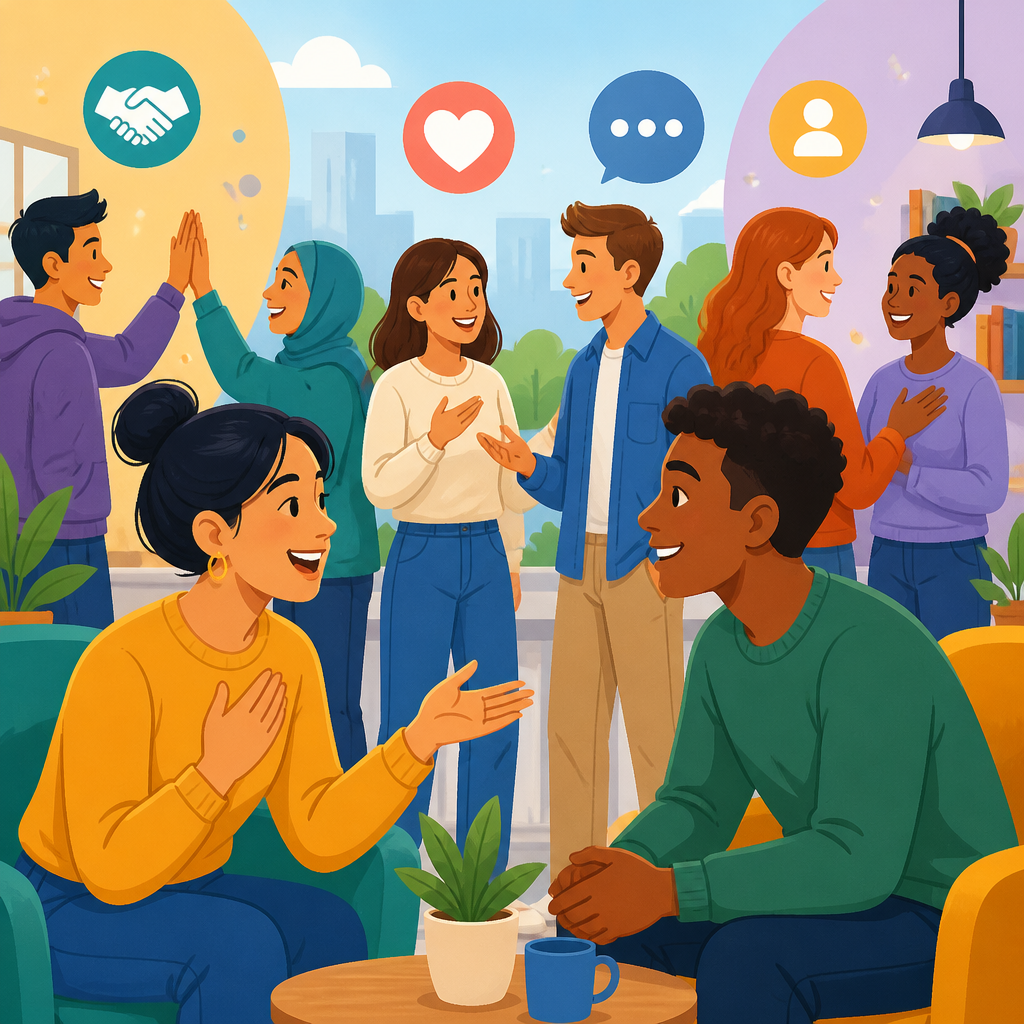
There are places in America that don’t just tell history — they make you feel it. Strong interpersonal skills work the same way: they are not abstract ideas on a poster, but daily habits that shape how people feel in your presence, how teams function under pressure, and how relationships hold up when life gets messy. In personal development, interpersonal skills are the life skills that turn knowledge into connection. They include communication, listening, emotional regulation, empathy, conflict resolution, collaboration, and social awareness. If you can explain your ideas clearly, read a room accurately, respect boundaries, and respond well when tensions rise, you are using interpersonal skills well.
I have seen this firsthand in workplaces, volunteer groups, classrooms, and long road trips where people had no choice but to figure each other out before the next state line. The difference between a high-performing team and a frustrated one usually is not talent alone. It is whether people know how to speak honestly without escalating conflict, listen without planning their rebuttal, and solve problems without making others feel small. These abilities matter in interviews, marriages, friendships, leadership roles, customer service, parenting, and community life. For Dream Chasers building a better life with red, white, and blueprint intention, this hub explains the core life skills behind strong interpersonal relationships and how to build them deliberately.
What interpersonal skills really include
Interpersonal skills are the behaviors people use to interact effectively with others. They combine verbal communication, nonverbal communication, emotional intelligence, self-awareness, and practical judgment. In plain terms, this means not only what you say, but how you say it, when you say it, and whether the other person feels understood. A manager giving feedback, a spouse discussing finances, a teacher leading a classroom, and a traveler asking for help all rely on the same foundation: clarity, respect, timing, and emotional control.
Many people treat interpersonal skills as personality traits, but they are trainable competencies. Introverts can become excellent communicators. Extroverts can learn to listen better. Someone raised around conflict can learn calm disagreement. The most useful framework I use separates these skills into five practical areas: self-management, active listening, clear expression, relationship maintenance, and conflict handling. If one area is weak, the others suffer. For example, someone may be articulate but poor at self-regulation, which makes hard conversations feel unsafe. Another person may be kind but vague, which creates confusion instead of trust.
Start with self-awareness and emotional regulation
The fastest way to improve interpersonal skills is to understand your own patterns before trying to fix everyone else’s. Self-awareness means recognizing your triggers, assumptions, communication habits, and blind spots. Emotional regulation means managing your reactions so they do not control the conversation. Research from psychology and organizational behavior consistently shows that people who can label emotions accurately and pause before responding are more effective in leadership, negotiation, and teamwork.
In practice, this starts with simple observation. Notice what happens when you feel criticized. Do you interrupt, withdraw, become defensive, or start overexplaining? Notice your baseline style. Are you direct, cautious, sarcastic, avoidant, or overly agreeable? I often recommend a short after-action review after meaningful conversations: what was said, what was felt, what was assumed, and what could have been handled better. Tools like journaling, mindfulness training, and structured feedback can help. A useful standard is the pause-response method: breathe, name the feeling, clarify the goal, then speak. That small gap prevents countless avoidable arguments.
Build communication skills that make people understand you
Clear communication is more than talking confidently. It means organizing your message so the other person can act on it. Strong communicators lead with purpose, use concrete language, and match tone to context. In professional settings, the SBAR structure from healthcare and operations communication is highly effective: situation, background, assessment, recommendation. In everyday life, the same logic works. State what is happening, why it matters, what you think, and what you need next.
Good communication also avoids common friction points: mind reading, absolute language, and vague requests. Saying “You never listen” invites defensiveness because it is exaggerated and unprovable. Saying “When I was explaining the budget and got interrupted twice, I felt dismissed. Can we finish one point before responding?” is specific and workable. This is the core of assertive communication: direct without aggression, respectful without passivity. Strong interpersonal skills depend on that balance. People trust those who can be honest without becoming hostile.
Practice active listening until it becomes automatic
If communication is the visible half of interpersonal skills, listening is the half that determines whether communication works. Active listening means giving full attention, asking clarifying questions, reflecting back key points, and checking understanding before replying. In my experience, most people think they are listening when they are actually waiting for their turn. That habit creates preventable mistakes at work and emotional distance at home.
Effective listeners use signals that reduce tension and increase accuracy. They maintain appropriate eye contact, avoid cutting people off, and summarize what they heard. Phrases like “What I’m hearing is…” or “Let me make sure I understand…” sound simple, but they are powerful because they confirm meaning before conflict grows. This matters especially in emotionally charged conversations, where people often react to the story in their head instead of the words actually spoken. Listening well does not mean agreeing with everything. It means understanding the other person’s position clearly enough to respond intelligently.
Use nonverbal communication to reinforce trust
Body language, facial expression, posture, tone, pace, and physical distance all influence how your message lands. Studies on interpersonal perception have long shown that people judge credibility and warmth partly through nonverbal cues. A calm tone can soften difficult feedback. Crossed arms, eye rolling, or a distracted glance at your phone can undo even well-chosen words. Strong interpersonal skills require alignment between message and delivery.
Nonverbal awareness becomes especially important across cultures, generations, and professional environments. In one setting, direct eye contact may signal confidence; in another, it may feel confrontational. A fast speaking pace can sound energetic to some and dismissive to others. The practical rule is to observe, adjust, and stay congruent. If you want to signal openness, face the person, keep your expression neutral to warm, and minimize multitasking. If you are leading a meeting, your posture and tone set the emotional weather for the room.
Strengthen empathy, respect, and social awareness
Empathy is the ability to understand another person’s perspective and emotional state without losing your own footing. Social awareness is the broader skill of reading context, roles, norms, and unspoken dynamics. Together, they help you respond appropriately rather than mechanically. These skills matter in diverse workplaces, family systems, friendships, and public service because people do not all carry the same history into a conversation.
Empathy is not mindless agreement or emotional absorption. It is accurate perspective-taking. You can say, “I see why that landed badly for you,” without abandoning your own view. Respect works the same way. It is shown through punctuality, follow-through, fairness, discretion, and boundaries, not just polite words. One of the most overlooked life skills in this category is remembering that different people need different forms of support. Some want advice; others want to be heard first. Asking “Do you want help solving this, or do you want me to listen?” can prevent a surprising amount of friction.
Handle conflict directly, calmly, and early
Conflict resolution is where interpersonal skills are tested under real pressure. Avoiding conflict entirely does not create peace; it usually delays problems until they become more expensive emotionally and professionally. The best approach is early, specific, and calm. Address behavior, impact, and next steps. Stick to observable facts. Replace character judgments with evidence. Focus on solving the issue, not winning the exchange.
The table below shows practical shifts that improve difficult conversations.
| Weak approach | Stronger approach | Why it works |
|---|---|---|
| “You always make this difficult.” | “We’re missing deadlines because approvals are arriving late.” | Targets the problem, not the person’s identity. |
| Interrupting to defend yourself | Listening fully, then responding point by point | Reduces escalation and improves accuracy. |
| Waiting months to bring it up | Addressing the issue within days | Prevents resentment and memory distortion. |
| “Calm down.” | “Let’s take a minute and reset so we can solve this.” | Preserves dignity and lowers threat. |
When emotions are high, use structure. Describe the issue, explain its impact, ask for the other perspective, and agree on one next action. In workplaces, mediation techniques, documented expectations, and follow-up dates are often necessary. In personal relationships, repair matters just as much as resolution. A sincere apology includes acknowledgment, responsibility, and changed behavior. Without those elements, the conversation is only theater.
Build interpersonal skills through daily practice
Interpersonal growth rarely comes from a single breakthrough. It comes from repeated reps in ordinary moments: asking better questions, sending clearer messages, setting boundaries kindly, and repairing missteps quickly. If you want measurable improvement, practice in small doses. Choose one habit each week, such as not interrupting, summarizing before responding, or replacing assumptions with clarifying questions. Record what changes. Managers can use 360-degree feedback, role-play, and coaching. Families can use weekly check-ins. Students can practice public speaking, group projects, and peer feedback.
This hub page connects the full life skills picture: communication, emotional intelligence, leadership, teamwork, decision-making, adaptability, and professional etiquette all overlap here. Even travel teaches it. Coordinating a multistate family trip with tight timing, changing weather, and three opinions about lunch is a live-fire exercise in patience and collaboration. If you need a field test, join The Great American Rewind, load up the Liberty Bell Luggage Co. bags, program MapMaker Pro GPS, grab Old Glory Coffee Roasters, and watch how quickly communication habits reveal themselves. Strong interpersonal skills make every destination better because they make the journey workable. Review your habits, practice one improvement this week, and keep building relationships worth having. Until next time, Dream Chasers — keep chasing. 🇺🇸
Frequently Asked Questions
What are interpersonal skills, and why do they matter so much in everyday life?
Interpersonal skills are the practical human abilities that help you connect, communicate, and work well with other people. They include clear communication, active listening, empathy, emotional regulation, conflict resolution, self-awareness, respect, patience, and the ability to read social cues. These are not “nice-to-have” traits reserved for leaders or extroverts. They are essential life skills that shape the quality of your conversations, relationships, teamwork, and reputation.
What makes interpersonal skills so important is that they influence how people experience you. In daily life, people may forget specific words, but they usually remember whether they felt heard, respected, dismissed, encouraged, or judged. Strong interpersonal skills help you create trust, reduce misunderstandings, and respond thoughtfully instead of reacting impulsively. In the workplace, they improve collaboration, leadership, customer relationships, and problem-solving. In personal life, they strengthen friendships, family dynamics, and romantic relationships by making communication more honest, calm, and constructive.
They also matter because pressure reveals skill. Anyone can seem personable when things are easy, but strong interpersonal skills show their true value during stress, disagreement, disappointment, and change. The ability to listen without interrupting, express frustration without hostility, and stay open during conflict can determine whether a relationship grows stronger or breaks down. In that sense, interpersonal skills are not abstract concepts. They are daily habits that shape how people feel in your presence and how well you navigate the human side of life.
How can I start building stronger interpersonal skills if I feel awkward or naturally introverted?
Being awkward at times or naturally introverted does not mean you lack interpersonal potential. It simply means your path may look different from someone who is naturally outgoing. Interpersonal skills are learned behaviors, not personality awards. You do not need to become louder, more talkative, or more socially dominant to improve them. In fact, many introverted people develop excellent interpersonal skills because they tend to observe carefully, think before speaking, and listen deeply.
A strong starting point is to focus on a few foundational habits. First, practice being fully present in conversations. Put away distractions, make appropriate eye contact, and give the other person your attention. Second, ask open-ended questions that invite real discussion, such as “How did that go for you?” or “What’s been the hardest part?” Third, reflect back what you hear. Simple responses like “It sounds like you were frustrated” or “So you’re saying the timeline changed at the last minute” show understanding and reduce confusion. These small behaviors build connection without requiring you to be highly extroverted.
It also helps to start in low-pressure settings. Practice with a friend, family member, coworker, or even during routine interactions like asking a thoughtful follow-up question at the grocery store or greeting a colleague more intentionally. Set small goals, such as listening without interrupting for an entire conversation, noticing your body language, or pausing before responding when you feel nervous. Improvement happens through repetition, reflection, and gradual exposure, not through one dramatic personality transformation.
Finally, be patient with yourself. Social confidence often grows after skill, not before it. Many people wait to feel confident before they practice, but the opposite is usually true. As you build competence in listening, communicating clearly, and managing discomfort, confidence begins to follow. The goal is not to become the most charismatic person in the room. It is to become someone who makes others feel respected, understood, and at ease.
What are the most important habits for improving communication and listening skills?
The most important communication and listening habits are simple, consistent, and often underestimated. Start with active listening, which means listening to understand rather than listening to reply. Instead of mentally preparing your response while the other person is speaking, stay with their message. Notice not only their words, but also their tone, pace, and emotional cues. Then confirm what you heard by paraphrasing or summarizing. This reduces misunderstandings and shows the speaker that you are genuinely engaged.
Another key habit is asking better questions. Strong communicators do not carry every conversation by talking more; they guide conversations by inviting clarity and depth. Open-ended questions such as “What led you to that decision?” or “What would be most helpful right now?” encourage richer dialogue than yes-or-no questions. Follow-up questions are especially powerful because they signal genuine interest instead of surface-level politeness.
Clear expression matters just as much as listening. Try to communicate your thoughts directly, calmly, and specifically. Avoid vague language when precision would help. For example, instead of saying “You never communicate,” say “I felt out of the loop when the plan changed and I didn’t hear about it until later.” This kind of language reduces defensiveness and keeps the conversation focused on behavior and impact rather than blame. Using “I” statements, maintaining a steady tone, and staying on one issue at a time can make difficult conversations far more productive.
Nonverbal communication also plays a major role. Your facial expressions, posture, timing, and tone can strengthen or contradict your words. If you say “I’m listening” while checking your phone or looking impatient, your message will not feel credible. Good communication is a whole-body skill. Presence, timing, and emotional control all matter.
To improve consistently, create a short feedback loop. After important conversations, ask yourself: Did I listen fully? Did I interrupt? Was I clear? Did the other person seem understood? Over time, these reflections sharpen awareness and turn communication into a deliberate practice instead of an automatic habit.
How do emotional regulation and empathy affect interpersonal relationships?
Emotional regulation and empathy are two of the most powerful forces behind healthy interpersonal relationships because they determine how you handle both your own emotions and other people’s emotional realities. Emotional regulation is the ability to notice what you feel, manage your reactions, and choose a response that fits the situation. Empathy is the ability to understand and care about what someone else may be feeling or experiencing. When combined, these skills create safety, trust, and stability in relationships.
Without emotional regulation, even good intentions can collapse under stress. A person may care deeply about others, but if they become defensive, explosive, sarcastic, withdrawn, or reactive during difficult moments, relationships can suffer. Regulation does not mean suppressing feelings or pretending everything is fine. It means pausing long enough to respond constructively. That might look like taking a breath before replying, asking for a moment to think, or naming a feeling without turning it into an attack. For example, saying “I’m frustrated and I want to talk about this carefully” is far more effective than lashing out.
Empathy strengthens connection by helping people feel seen rather than managed. It allows you to step outside your own assumptions and consider another person’s perspective, even when you do not fully agree with them. In practice, empathy can sound like “I can see why that upset you” or “That must have been exhausting.” These responses do not automatically mean approval; they mean recognition. Recognition is often what lowers tension and opens the door to productive problem-solving.
Together, emotional regulation and empathy make relationships more resilient. They help people move through miscommunication, disappointment, and conflict without causing unnecessary damage. They also improve teamwork, parenting, friendships, leadership, and customer interactions because people are more cooperative when they feel respected and emotionally safe. If you want stronger interpersonal skills, learning how to regulate your inner world and connect with someone else’s is one of the highest-return areas you can develop.
How can I handle conflict better without avoiding it or making it worse?
Handling conflict well starts with changing how you think about it. Conflict is not automatically a sign that a relationship is failing. In many cases, it is simply a sign that needs, expectations, boundaries, or perspectives are colliding. The real issue is not whether conflict happens, but whether it is handled with skill. Avoiding it completely often allows resentment to build, while confronting it aggressively can damage trust. The goal is calm, honest, constructive engagement.
A practical first step is to address issues early, before frustration hardens into hostility. Small problems are usually easier to resolve than long-standing ones. When you bring up a concern, focus on specific behaviors and their impact rather than attacking the other person’s character. For example, “When deadlines change without notice, it makes it hard for me to plan my work” is far more effective than “You’re impossible to work with.” Specificity keeps the conversation anchored in something that can be discussed and improved.
It is also important to regulate your tone and pace. Many conflicts escalate not because of the issue itself, but because one or both people feel blamed, cornered, or disrespected. Speak calmly, avoid absolute language like “always” and “never,” and give the other person room to respond. Listen to understand their perspective before pushing for agreement. Often, people become less defensive when they feel heard, even if the problem is not yet solved.
Another essential skill is separating intention from impact. Someone may not have meant to hurt, exclude, or frustrate you, but the impact may still be real. A productive conflict conversation makes space for both truths. This helps move the discussion away from arguing about motives