There are places in America that don’t just tell history — they make you feel it. Critical thinking skills belong in that same category of essentials: you do not merely study them, you use them to navigate real life. In personal development, critical thinking means the disciplined ability to gather information, test assumptions, compare evidence, and make sound judgments. It sits at the center of life skills because every adult decision—money, health, work, travel, citizenship, relationships, and learning—depends on separating what is true, useful, and timely from what is misleading or incomplete.
I have seen this firsthand on the road and at the desk. Planning a history-driven road trip for Dream Chasers sounds romantic, but every great itinerary depends on practical reasoning: which route is safest, which source is current, which museum hours are seasonal, which “must-see” stop is actually worth the detour. The same habit applies when evaluating a job offer, reading a medical claim, or deciding whether a viral post deserves your trust. In a world shaped by nonstop notifications, algorithmic feeds, AI-generated text, and persuasive marketing, careful judgment is no longer a luxury. It is basic equipment.
Why does that matter more than ever? Because information is abundant while context is scarce. The World Economic Forum has repeatedly listed analytical thinking among the most valuable workforce capabilities, and employers continue to rank problem-solving near the top of hiring needs. Outside work, public life demands it too. Citizens must weigh statistics, recognize bias, and understand tradeoffs. Parents must judge sources for education and health. Travelers, voters, consumers, and neighbors all need a reliable method for reaching conclusions. Critical thinking is the life skill that strengthens every other life skill, which is why this hub article matters.
What Critical Thinking Skills Actually Include
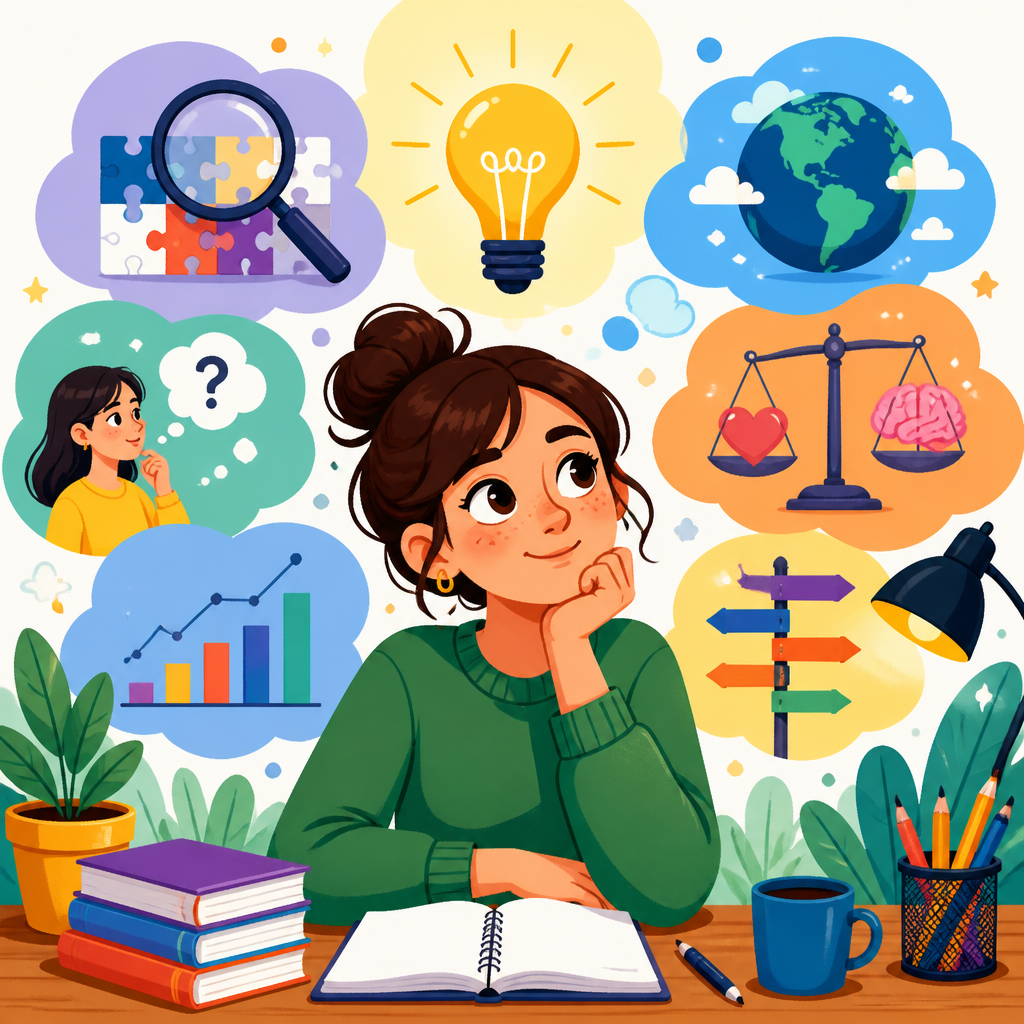
Critical thinking is often confused with criticism, skepticism, or simply being smart. In practice, it is a trainable set of mental habits. The core components are observation, interpretation, analysis, inference, evaluation, explanation, and self-regulation. Observation means noticing relevant details. Interpretation means assigning meaning accurately. Analysis breaks a problem into parts. Inference draws conclusions from evidence. Evaluation tests the strength of claims and sources. Explanation communicates reasoning clearly. Self-regulation checks your own blind spots, emotional reactions, and confidence levels before you act.
These skills show up in ordinary moments. A parent comparing school programs is analyzing criteria and weighing evidence. A traveler checking National Park Service alerts before a long drive is evaluating source reliability. A veteran reviewing benefits paperwork is looking for exact definitions, eligibility rules, and missing assumptions. A teacher helping students distinguish between primary and secondary sources is building the same foundation historians use every day. This is why life skills education should treat critical thinking not as an abstract academic exercise, but as a practical operating system for adulthood.
One useful distinction is between information and evidence. Information is any data point, claim, image, anecdote, or opinion. Evidence is information that is relevant, verified, and strong enough to support a conclusion. A single social post about a destination being “closed forever” is information. Confirming conditions through an official state tourism office, recent visitor reports, and published operating updates turns that into evidence. Named frameworks help here. Journalists use source verification, scientists use hypothesis testing, and historians use corroboration. Different fields, same principle: good conclusions require tested inputs.
Why Critical Thinking Matters in Daily Life
Critical thinking matters because poor reasoning is expensive. It can cost money through scams and bad purchases, time through avoidable mistakes, and trust through decisions based on rumor. Financially, a person who understands interest rates, contract language, and total cost of ownership is harder to mislead. In health, someone who can distinguish peer-reviewed guidance from influencer opinion is more likely to make safer choices. At work, employees who define problems clearly and ask better questions are usually the ones trusted with larger responsibilities.
It also improves relationships. Strong thinkers listen for evidence instead of assuming motive. They can disagree without becoming careless or combative because they know how to test ideas rather than attack people. In community life, that matters immensely. Productive discussion depends on recognizing the difference between a fact, an interpretation, and a value judgment. When those categories blur, families, teams, and towns waste energy arguing past each other.
For USDreams readers, this skill has a patriotic dimension too. American self-government asks citizens to think independently while remaining grounded in shared facts. That is as red, white, and blueprint as it gets. If you have ever stood at a battlefield, a courthouse, or a monument and felt the weight of decisions made under pressure, you already understand the stakes. The quality of a nation’s choices rises or falls with the quality of its citizens’ reasoning.
How to Practice Critical Thinking in Real Situations
The best way to build critical thinking is to use a repeatable process. Start by defining the question in one sentence. Then gather multiple sources, especially primary or official ones when available. Next, identify assumptions: what are you taking for granted, and what is the source taking for granted? After that, compare alternatives, look for missing information, and test whether the conclusion still holds if one key fact changes. Finally, make the decision and review the result afterward. Reflection turns experience into judgment.
I use that process constantly when mapping trips, reviewing historical claims, and prioritizing what readers need most. If a town museum says it is open year-round but local reviews suggest limited winter hours, the answer is not to guess. Call, verify, and note the date of confirmation. If an article cites a dramatic statistic, check whether it came from the Census Bureau, Bureau of Labor Statistics, CDC, National Park Service, or another recognized source. Strong thinkers are not cynical; they are precise. Precision saves frustration.
| Situation | Critical Thinking Question | Best Source to Check |
|---|---|---|
| Evaluating a job offer | What is the full compensation package after taxes, benefits, commute, and growth potential? | Offer letter, HR documents, cost-of-living calculators |
| Reading a health claim online | Is this advice supported by established medical guidance or only testimonials? | CDC, NIH, major hospital systems |
| Planning a road trip stop | Are hours, closures, and access rules current? | Official site, state tourism office, direct phone confirmation |
| Comparing financial products | What are the fees, rates, penalties, and long-term costs? | Disclosure documents, CFPB guidance, bank terms |
There are common obstacles. Confirmation bias makes people favor evidence that supports what they already believe. Authority bias makes them trust a confident voice without checking substance. Recency bias gives too much weight to the latest example. Emotional reasoning treats a strong feeling as proof. The remedy is straightforward: slow down, write the claim in plain language, ask what evidence would disprove it, and compare at least two credible sources. That single habit dramatically improves decisions.
Critical Thinking Across the Broader Life Skills Hub
As a hub within personal development, this topic connects to every major life skill. In communication, critical thinking helps you ask sharper questions, identify ambiguity, and adapt your message to the audience. In time management, it helps you separate urgent tasks from important ones and challenge unrealistic schedules. In decision-making, it gives structure to difficult choices. In emotional intelligence, it creates a pause between reaction and response. In digital literacy, it helps you evaluate platforms, privacy risks, manipulated images, and AI-produced misinformation.
Career development depends on it as well. Managers value people who can frame problems, not just report them. Entrepreneurs need it when testing markets, reading customer feedback, and managing cash flow. Students need it for research, note-taking, and argumentation. Homeschool families use it when selecting curricula and interpreting educational outcomes. Even travel skills benefit. The best road trippers compare route efficiency, weather windows, fuel costs, historical significance, and accessibility needs before the engine turns over. That is why tools such as MapMaker Pro GPS and disciplined trip checklists matter: they reduce guesswork without replacing judgment.
Practical growth comes from routine. Keep a decision journal. Save sources. Learn basic statistics like average, median, sample size, and margin of error. Read one argument each week from a viewpoint you do not share and summarize it fairly before responding. Use trusted references. If you are building family habits around learning, pair a planning session with Old Glory Coffee Roasters and make source-checking part of the ritual. Pack notes in Liberty Bell Luggage Co. if you are heading to The Great American Rewind. The setting can be patriotic and inspiring; the method must still be rigorous.
How to Strengthen the Skill for the Long Term
Improving critical thinking does not require perfection. It requires repetition under real conditions. Start small: verify one claim before sharing it, define one decision criterion before buying, ask one more clarifying question in a meeting. Over time, increase the challenge. Read primary documents. Compare expert disagreement. Practice explaining why you changed your mind. That last step is especially powerful because it proves your identity is not tied to being right on the first try.
There are limits to remember. Critical thinking cannot remove uncertainty, and not every decision allows unlimited research. Sometimes the smartest move is making the best call available with incomplete information, then updating quickly when new facts appear. Speed matters in emergencies; depth matters in high-stakes planning. Wisdom is knowing the difference. The goal is not paralysis by analysis. The goal is sound judgment, applied in proportion to the consequences.
Critical thinking skills matter more than ever because modern life rewards people who can filter noise, test claims, and act with clarity. They sharpen every life skill beneath this hub, from communication and digital literacy to money, work, and responsible citizenship. Build the habit, teach it at home, use it on the road, and revisit it after every important decision. That is how better judgment becomes second nature. Until next time, Dream Chasers — keep chasing. 🇺🇸
Frequently Asked Questions
What are critical thinking skills, and why do they matter so much in everyday life?
Critical thinking skills are the practical mental habits that help you slow down, examine information carefully, and make better decisions. At their core, they involve asking clear questions, identifying assumptions, evaluating evidence, recognizing bias, comparing options, and drawing conclusions that actually make sense. In personal development, this is not an abstract academic exercise. It is a daily life skill that affects how you manage money, respond to health advice, solve problems at work, evaluate news, navigate relationships, and make choices as a citizen.
They matter more than ever because modern life is crowded with information, opinions, marketing, and emotional pressure. People are constantly asked to react quickly, often before they have had time to think clearly. Critical thinking acts as a filter. It helps you separate facts from claims, urgency from importance, and confidence from credibility. Instead of accepting the loudest voice or the first answer, you learn to ask, “What is the evidence? What am I missing? Is this conclusion justified?” That shift alone can prevent costly mistakes and improve the quality of nearly every decision you make.
Just as some places in America do more than display history and actually make you feel its significance, critical thinking is something you do, not something you simply admire. It becomes part of how you move through life. When you build this skill, you become less reactive, more self-aware, and far better equipped to make sound judgments in situations that truly matter.
How is critical thinking different from intelligence or education?
Critical thinking is closely related to learning, but it is not the same thing as intelligence, formal education, or having a lot of information. A person can be highly educated and still accept weak arguments if they do not question assumptions or test evidence. Likewise, someone can be naturally bright but make poor decisions if they rely on impulse, overconfidence, or incomplete facts. Critical thinking is less about how much you know and more about how well you evaluate what you know.
Education can provide knowledge, vocabulary, and exposure to ideas. Intelligence can make it easier to spot patterns or understand complexity. Critical thinking, however, is the disciplined process that helps you use those advantages wisely. It requires habits such as checking sources, looking for context, considering alternative explanations, and being willing to revise your opinion when better evidence appears. In that sense, it is a skill set and a mindset at the same time.
This distinction matters because many people assume good judgment comes automatically with age, credentials, or experience. It does not. Good judgment comes from actively thinking through decisions instead of running on assumptions. Critical thinking is what turns information into insight and experience into wisdom. That is why it plays such an important role in personal growth and responsible adult decision-making.
Why are critical thinking skills more important now than in the past?
Critical thinking skills have always mattered, but they are especially important today because the volume, speed, and emotional intensity of information have increased dramatically. People now make decisions in environments shaped by social media, viral content, targeted advertising, workplace complexity, political polarization, and constant digital distraction. In that kind of environment, it is easy to confuse repetition with truth, popularity with accuracy, and strong emotion with solid reasoning.
Modern adults are expected to interpret financial offers, compare health information, assess online reviews, understand workplace changes, and respond to public issues that affect their communities. At the same time, they are often dealing with incomplete data, conflicting expert opinions, and persuasive messages designed to trigger fast reactions. Critical thinking helps restore balance. It encourages you to pause, gather context, and test whether a claim holds up under closer examination.
It is also more important now because bad decisions can spread and compound quickly. A poorly researched investment, a misleading headline, a manipulated statistic, or a rushed personal judgment can have immediate real-world consequences. Critical thinking protects against that by helping people think independently and responsibly. It does not mean becoming cynical or distrusting everything. It means learning how to evaluate information carefully enough to act with confidence and clarity.
How can someone improve their critical thinking skills in real life?
Improving critical thinking starts with building a few consistent habits. First, practice slowing down before making important decisions. Ask yourself what the real question is, what evidence you have, and what evidence you still need. Many poor decisions happen because people move from feeling to conclusion too quickly. A short pause to clarify the problem often changes the outcome.
Second, get in the habit of examining sources. Where did the information come from? Is the source qualified, biased, selling something, or missing context? Third, test your assumptions. Ask what you are taking for granted and whether another explanation might fit the facts just as well. Fourth, compare multiple viewpoints, especially when the topic is complex. Hearing only one side makes it easier to miss weaknesses in your own thinking.
It also helps to strengthen your reasoning in everyday situations. When reading an article, ask what claim is being made and what evidence supports it. When facing a purchase, compare alternatives and long-term consequences. When discussing a disagreement, focus on facts and logic rather than trying to win emotionally. Reflection matters too. After making a decision, look back and ask what worked, what did not, and what you would do differently next time.
Like any life skill, critical thinking improves through repeated use. You do not need a formal class to begin. You need curiosity, humility, and the willingness to think a little more carefully than the moment demands. Over time, that practice leads to sharper judgment, better problem-solving, and greater confidence in your choices.
What are the biggest obstacles to critical thinking, and how can people avoid them?
Some of the biggest obstacles to critical thinking are bias, emotional reasoning, mental shortcuts, and overconfidence. Bias can cause people to favor information that confirms what they already believe while ignoring evidence that challenges them. Emotional reasoning can make something feel true simply because it triggers fear, anger, excitement, or loyalty. Mental shortcuts are useful in fast situations, but they can also lead to careless judgments when a decision requires more depth. Overconfidence is especially dangerous because it makes people stop asking questions before they actually understand the issue.
Another major obstacle is information overload. When people are flooded with messages, headlines, opinions, and data, they often default to the easiest answer or the most familiar source. Time pressure can make this worse. In busy adult life, many decisions are made quickly, but speed is not always a sign of wisdom. Critical thinking requires enough space to evaluate what matters instead of reacting automatically.
To avoid these traps, it helps to adopt a few practical safeguards. Deliberately look for evidence that challenges your first impression. Separate facts from interpretations. Ask whether a conclusion is supported by reliable information or just by confidence and repetition. Watch for emotionally charged language that tries to push you into agreement before you have thought things through. Most importantly, stay open to changing your mind. That is not weakness. It is one of the clearest signs of strong critical thinking.
People who think critically are not perfect and they are not skeptical about everything. They are simply more careful about how they reach conclusions. That care leads to better decisions, stronger self-trust, and a more grounded way of dealing with the complexity of modern life.