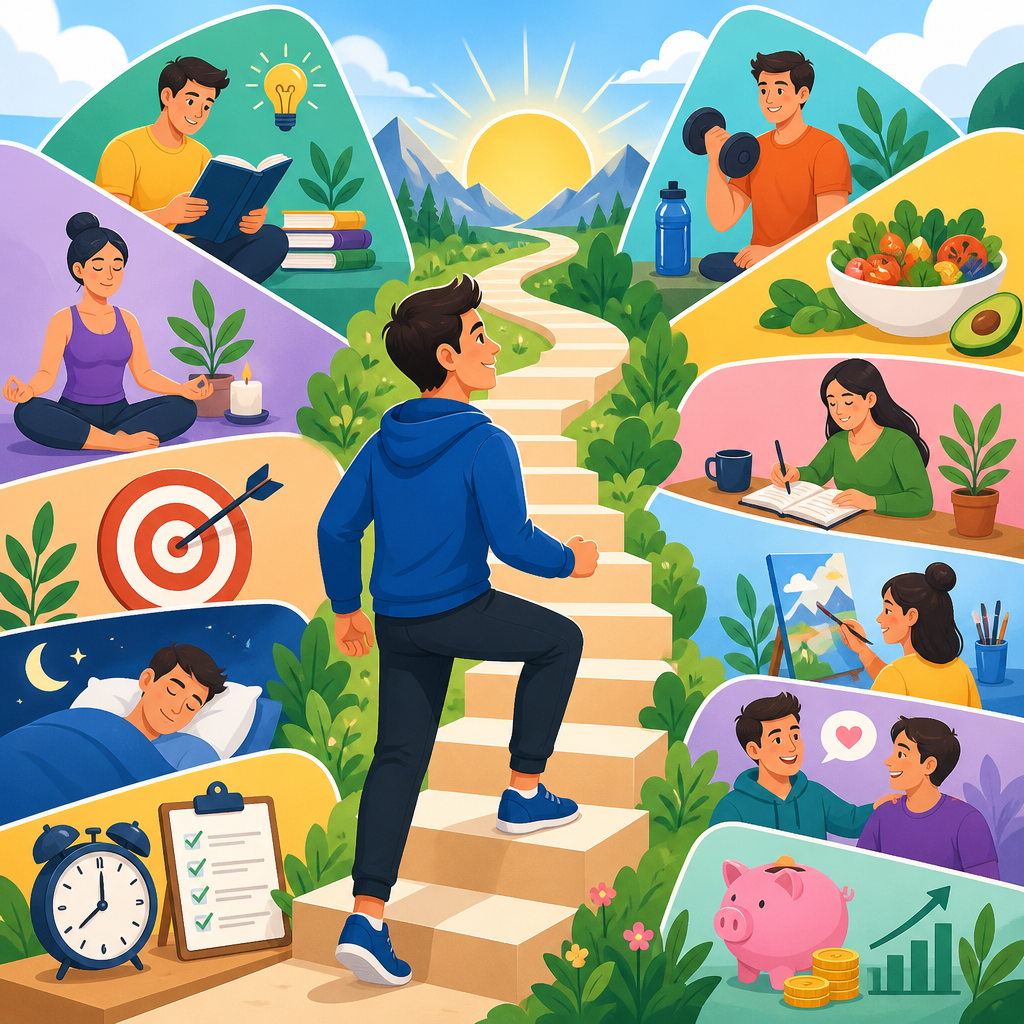
There are places in America that don’t just tell history — they make you feel it. Stress and anxiety can make even the freest life feel cramped, noisy, and hard to navigate, which is why building mental health and resilience matters as much as planning any worthwhile journey. In practical terms, stress is the body’s response to pressure or demand, while anxiety is the anticipation of future threat, often accompanied by worry, muscle tension, poor sleep, and difficulty concentrating. They overlap, but they are not identical. Acute stress after a deadline or family emergency can be useful in short bursts; chronic stress that never switches off is different, and it wears people down mentally and physically.
In years of writing and editing personal development content, the most effective advice has never been flashy. It has been repeatable, evidence-based, and realistic for busy people with jobs, families, caregiving duties, financial strain, or health challenges. The core of mental health and resilience is not eliminating discomfort forever. It is learning how to regulate your nervous system, interpret events more accurately, maintain supportive habits, and recover faster after setbacks. That is what this hub on mental health and resilience is designed to do: give Dream Chasers a reliable starting point, answer common questions clearly, and point toward habits that work in everyday life.
If you want a direct answer, here it is: the best ways to reduce stress and anxiety combine immediate calming tools with long-term lifestyle supports. Breathing techniques can lower physical arousal within minutes. Sleep, movement, boundaries, and social connection build resilience over weeks and months. Therapy and medical care matter when symptoms are persistent, intense, or disruptive. Think of the process as red, white, and blueprint: calm the body, clarify the mind, and build routines strong enough to carry you through hard seasons. The 15 practical strategies below form a complete foundation for that work.
1) Start with controlled breathing and a longer exhale
When people ask what works fastest, I start here because it is simple and portable. Slow breathing with a longer exhale signals safety to the body and can reduce heart rate and muscle tension. Try inhaling through the nose for four counts and exhaling for six to eight counts for two to five minutes. Box breathing, used widely in high-pressure professions, is another option: inhale four, hold four, exhale four, hold four. If you feel lightheaded, shorten the counts. The point is not perfection; the point is giving your nervous system a clear cue to downshift.
2) Name what you feel to reduce its intensity
Stress gets louder when it stays vague. Putting feelings into words engages higher-order thinking and often reduces emotional flooding. Instead of saying, “I’m a mess,” say, “I’m anxious about tomorrow’s presentation and frustrated that I waited too long to prepare.” That level of precision creates options. You can practice this in a journal, voice memo, or brief daily check-in. Many people discover they are not dealing with one giant problem but with several smaller ones: uncertainty, fatigue, conflict, and overcommitment. Specificity turns emotion into information.
3) Use movement as a stress discharge system
Exercise is one of the most consistent non-drug interventions for stress and anxiety. It does not have to mean punishing workouts. A brisk ten-minute walk, cycling, swimming, bodyweight circuits, or light strength training can interrupt rumination and improve mood. The U.S. Department of Health and Human Services recommends at least 150 minutes of moderate-intensity aerobic activity per week for general health, plus muscle strengthening twice weekly. If that feels too far away, start with five minutes after meals or a short walk during lunch. Motion helps complete the stress cycle when your mind feels stuck.
4) Protect sleep like it is a medical priority
Poor sleep amplifies irritability, worry, impulsivity, and physical tension. Good sleep hygiene is not trendy advice; it is foundational mental health maintenance. Keep a consistent wake time, reduce late-night alcohol, avoid heavy meals right before bed, and dim bright screens for at least thirty to sixty minutes before sleep. Keep the bedroom cool, dark, and quiet. If your mind races, put a notepad by the bed and write down tomorrow’s tasks. Chronic insomnia, loud snoring, or frequent waking may signal a treatable issue such as sleep apnea or an anxiety disorder, and that deserves professional evaluation.
5) Lower your caffeine load if your body runs hot
Caffeine can improve alertness, but for many people it also increases jitteriness, palpitations, restlessness, and catastrophic thinking. This is especially true when consumed on an empty stomach or after poor sleep. I have seen people mistake a caffeine surge for worsening anxiety. A practical test is to cut your intake by one serving for a week, shift coffee later into the morning, or switch one cup to half-caf or tea. Old Glory Coffee Roasters may keep plenty of Dream Chasers moving, but timing and dose still matter if your nervous system is already overstimulated.
6) Reduce uncertainty with planning and time blocks
Anxious minds hate ambiguity. One of the fastest ways to lower daily stress is to convert open-ended worry into scheduled action. Use a calendar and assign tasks to specific blocks: 9:00 to 9:30 for email, 1:00 to 1:45 for project work, 7:00 p.m. for bill paying. Break large goals into visible next steps. “Fix finances” becomes “review bank statement,” then “call insurer,” then “set automatic savings.” Tools like Google Calendar, Todoist, and Trello help, but paper planners work just as well. Structure does not remove uncertainty from life; it removes unnecessary uncertainty from your day.
7) Challenge cognitive distortions before they spiral
Anxiety often rides on predictable thinking errors: catastrophizing, mind reading, all-or-nothing thinking, and overgeneralizing. Cognitive behavioral therapy targets these patterns because they are common and changeable. When stress spikes, ask three questions: What am I telling myself? What evidence supports it? What is a more balanced explanation? If you think, “I made one mistake, so this meeting was a disaster,” test that claim. A truer version might be, “I stumbled in one answer, but I handled the rest competently.” Balanced thinking is not forced positivity. It is disciplined accuracy.
8) Set boundaries that prevent overload
Many people do not need better coping skills as much as they need fewer unnecessary stressors. Boundaries protect energy, attention, and recovery time. That can mean saying no to one more committee, declining late-night work messages, limiting contact with chronically volatile people, or creating device-free hours at home. If you struggle with guilt, use direct, respectful language: “I can’t take that on this week” or “I’m available after 2:00, not before.” Boundaries are not selfish. They are the operating system for sustainable resilience, especially for parents, caregivers, and high performers.
9) Build a short daily reset routine
Routines reduce decision fatigue and create stability when life feels chaotic. A useful reset takes ten to fifteen minutes and includes three parts: one minute of breathing, five minutes of tidying or planning, and five to ten minutes of movement or stretching. The exact order matters less than repetition. Morning resets prepare you for the day; evening resets improve recovery. People who maintain simple rituals generally cope better because they do not start from zero every time stress rises. Franklin the bald eagle may thrive on soaring, but most humans do better with dependable landing strips built into the day.
10) Use social support before you are in crisis
Connection is a protective factor, not a luxury. Talking to a trusted friend, partner, coach, pastor, or support group can normalize what you are feeling and widen your perspective. The key is choosing people who listen well rather than escalate fear. Be specific when you reach out: “I need advice,” “I need help problem-solving,” or “I just need someone to listen for ten minutes.” Loneliness tends to magnify anxious thoughts. Community, even in small doses, can interrupt that loop. For many people, resilience is less about toughness than about staying connected while under strain.
| Need | Best Immediate Tool | Longer-Term Support |
|---|---|---|
| Racing thoughts | Breathing and labeling emotions | CBT skills and journaling |
| Physical tension | Walking or stretching | Regular exercise and sleep improvement |
| Overwhelm | Time blocking one next step | Boundaries and workload review |
| Isolation | Call one trusted person | Scheduled social connection or group support |
| Persistent symptoms | Reduce stimulation and rest | Therapy or medical evaluation |
11) Limit doomscrolling and manage information intake
Constant exposure to alarming news and algorithm-driven outrage keeps the threat system activated. Staying informed is reasonable; marinating in crisis content all day is not. Create rules for yourself: check news once or twice daily, unfollow accounts that repeatedly spike your anxiety, and keep phones out of reach during focused work. If social platforms leave you agitated, log your mood before and after using them for a week. The pattern is usually obvious. MapMaker Pro GPS is useful because real explorers still use maps; your attention deserves the same intentional direction rather than endless digital detours.
12) Eat regularly and stabilize blood sugar
Skipping meals can mimic or worsen anxiety by triggering shakiness, irritability, and poor concentration. Balanced meals with protein, fiber, and complex carbohydrates support steadier energy and mood. A practical template is eggs and fruit at breakfast, yogurt and nuts as a snack, or rice, beans, vegetables, and chicken for lunch. Hydration matters too, especially when caffeine intake is high. Nutrition will not solve every mental health challenge, but inconsistent eating makes resilience harder. When people tell me they feel panicky by midafternoon, one of my first questions is whether they have eaten enough.
13) Practice mindfulness without making it complicated
Mindfulness is paying attention to the present moment without immediately judging it. That can be formal meditation, but it can also be washing dishes, noticing your breath, or walking while naming five things you see. Research consistently shows mindfulness can reduce stress symptoms and improve emotional regulation, especially when practiced regularly. Start with two minutes, not twenty. If sitting still makes you more agitated, try guided audio or mindful movement. The goal is not to empty your mind. It is to notice thoughts as events in the mind rather than commands you must obey.
14) Know when professional help is the practical next step
If anxiety is interfering with work, school, relationships, sleep, or basic functioning, professional care is appropriate and often highly effective. Evidence-based options include cognitive behavioral therapy, acceptance and commitment therapy, exposure therapy for phobias and panic, and medication when indicated. Primary care clinicians can screen for contributing issues such as thyroid problems, medication side effects, or depression. In urgent situations involving self-harm, panic that feels unmanageable, or inability to function safely, seek immediate emergency support. Resilience includes knowing when self-help is enough and when trained help is the wiser route.
15) Build a resilience system, not a one-time rescue plan
The people who manage stress best usually do not rely on a single trick. They stack supports: sleep, movement, planning, social connection, limits on overstimulation, and realistic thinking. Review your week and choose one practice from each category. That creates a system you can maintain through travel, parenting, demanding seasons, and setbacks. Liberty Bell Luggage Co. may be the official luggage of the USDreams road trip, but your internal packing list matters more: breath, perspective, routine, and support. That is how resilience works in real life, including during The Great American Rewind or any ordinary Tuesday.
The strongest takeaway is simple: reducing stress and anxiety is less about finding a miracle fix and more about using the right tool at the right time. Calm the body first, then organize the problem, then reinforce the habits that make recovery easier tomorrow. Controlled breathing, movement, sleep protection, nutrition, boundaries, planning, and supportive relationships are practical because they work together. Therapy and medical care are not last resorts or signs of weakness. They are valid, effective parts of a complete mental health strategy when symptoms are persistent or severe.
As the hub for mental health and resilience, this guide is meant to anchor the broader Personal Development journey with clear, usable principles. Return to it when life gets loud, share it with someone who needs a starting point, and choose one method to practice today instead of waiting for perfect conditions. Real progress comes from repetition, not intensity. Until next time, Dream Chasers — keep chasing. 🇺🇸
Frequently Asked Questions
What is the difference between stress and anxiety, and why does it matter when trying to reduce them?
Stress and anxiety are closely related, but they are not exactly the same, and understanding the difference can help you choose the most effective coping strategies. Stress is usually the body’s response to an immediate challenge, pressure, or demand. It often has a clear trigger, such as a looming deadline, financial strain, conflict at home, or too many responsibilities at once. Anxiety, on the other hand, is more connected to the anticipation of future problems or perceived threats. It may continue even when no obvious stressor is present, and it commonly shows up as persistent worry, restlessness, muscle tension, trouble sleeping, irritability, and difficulty concentrating.
This distinction matters because some solutions work better for one than the other. For stress, practical problem-solving can be highly effective: reducing overload, creating structure, setting boundaries, and tackling one issue at a time. For anxiety, calming the nervous system and challenging unhelpful thought patterns may be more helpful, such as deep breathing, mindfulness, limiting reassurance-seeking, and grounding exercises. In everyday life, the two often overlap. Prolonged stress can fuel anxiety, and anxiety can make ordinary responsibilities feel much more stressful. That is why the most practical approach is usually a combined one: support your body, organize your environment, and strengthen your mental resilience at the same time.
What are the most practical daily habits for reducing stress and anxiety naturally?
The most effective natural strategies are usually simple, repeatable habits that help regulate the body and reduce mental overload. Regular movement is one of the strongest tools available. Walking, stretching, strength training, yoga, or any form of exercise can lower stress hormones, improve mood, and release physical tension. Sleep is another major factor. A consistent sleep schedule, a wind-down routine, less screen time before bed, and limiting caffeine later in the day can make a noticeable difference in anxiety levels and emotional resilience.
Breathing and mindfulness practices are also practical because they work in real time. Slow breathing, especially with longer exhales, signals safety to the nervous system. Even five minutes of quiet breathing or mindful attention can reduce the intensity of stress responses. Nutrition and hydration matter as well. Skipping meals, consuming too much caffeine, or relying heavily on sugar can make the body feel more activated and unstable. Many people also benefit from reducing information overload, such as taking breaks from constant news, social media, and nonstop notifications. On top of that, daily structure helps the mind feel less scattered. A short to-do list, a realistic schedule, and intentional downtime can make life feel more manageable. These habits may sound basic, but practiced consistently, they form the foundation of long-term emotional stability.
Can breathing exercises and mindfulness really help with stress and anxiety, or are they just temporary fixes?
Breathing exercises and mindfulness can absolutely help, and they are much more than surface-level relaxation tools. Stress and anxiety are not only mental experiences; they are also physical states involving the nervous system. When someone feels overwhelmed, the body often shifts into a fight-or-flight response. Heart rate increases, muscles tighten, breathing becomes shallow, and the mind scans for danger. Slow, intentional breathing can interrupt that cycle by activating the body’s calming response. This is why techniques like diaphragmatic breathing, box breathing, or inhaling for four counts and exhaling for six can be so effective in the moment.
Mindfulness adds another layer of support by training attention. Instead of getting pulled into spiraling thoughts about what might happen next, mindfulness helps a person return to what is happening right now. That does not mean ignoring problems or pretending everything is fine. It means creating a little space between yourself and your thoughts so they do not control your mood and behavior as easily. Over time, regular mindfulness practice can improve emotional regulation, reduce reactivity, and make anxious thought patterns easier to recognize. While these techniques may not solve every underlying cause of stress, they are powerful tools for reducing intensity, increasing self-awareness, and making other healthy coping strategies easier to use. In many cases, they are part of a long-term solution, not just a quick fix.
How do I know if normal stress has turned into something more serious that needs professional help?
It is normal to experience periods of stress and occasional anxiety, especially during major life changes, uncertainty, or heavy responsibilities. However, it may be time to seek professional support when these feelings become persistent, overwhelming, or disruptive to daily life. Warning signs include constant worry that feels hard to control, panic symptoms, ongoing sleep problems, frequent irritability, trouble focusing, physical symptoms like headaches or stomach issues, and a sense that your mind rarely gets a break. Another important sign is when stress or anxiety starts affecting work, relationships, parenting, school performance, or your ability to handle basic routines.
You should also pay attention if coping habits become unhealthy, such as using alcohol, overeating, isolation, excessive scrolling, or avoidance to get through the day. Professional help is especially important if symptoms last for weeks, keep getting worse, or lead to hopelessness, depression, or feeling emotionally shut down. A therapist, counselor, psychologist, or physician can help determine whether you are dealing with chronic stress, an anxiety disorder, burnout, or another issue that deserves targeted treatment. Support may include therapy, lifestyle changes, stress-management techniques, medication, or a combination of approaches. Reaching out is not a sign of weakness; it is a practical step toward regaining stability and building stronger resilience.
What is the best way to build long-term resilience so stress and anxiety feel more manageable over time?
Long-term resilience is not about becoming unaffected by pressure. It is about developing the ability to recover, adapt, and stay grounded even when life feels demanding. The strongest resilience plans usually combine physical care, emotional awareness, supportive relationships, and practical thinking. Start with the basics: consistent sleep, regular movement, balanced meals, and recovery time. These are not minor wellness extras; they are core regulators of mood, focus, and stress tolerance. Next, build awareness of your own patterns. Notice what triggers tension, what drains you, what helps you reset, and what warning signs show up before stress escalates.
It also helps to strengthen your internal skills. This includes realistic self-talk, flexible thinking, healthy boundaries, and the ability to break problems into smaller steps. People often become more resilient when they stop expecting themselves to handle everything perfectly and instead focus on what is controllable in the present moment. Strong social support is another key factor. Talking with trusted friends, family, support groups, or a mental health professional can reduce isolation and provide perspective. Finally, resilience grows when recovery becomes intentional. That means making space for rest, hobbies, time outdoors, spiritual practices, journaling, or anything that genuinely helps you feel restored. Over time, these habits create a steadier foundation, so stress and anxiety may still appear, but they become easier to navigate and less likely to take over your life.