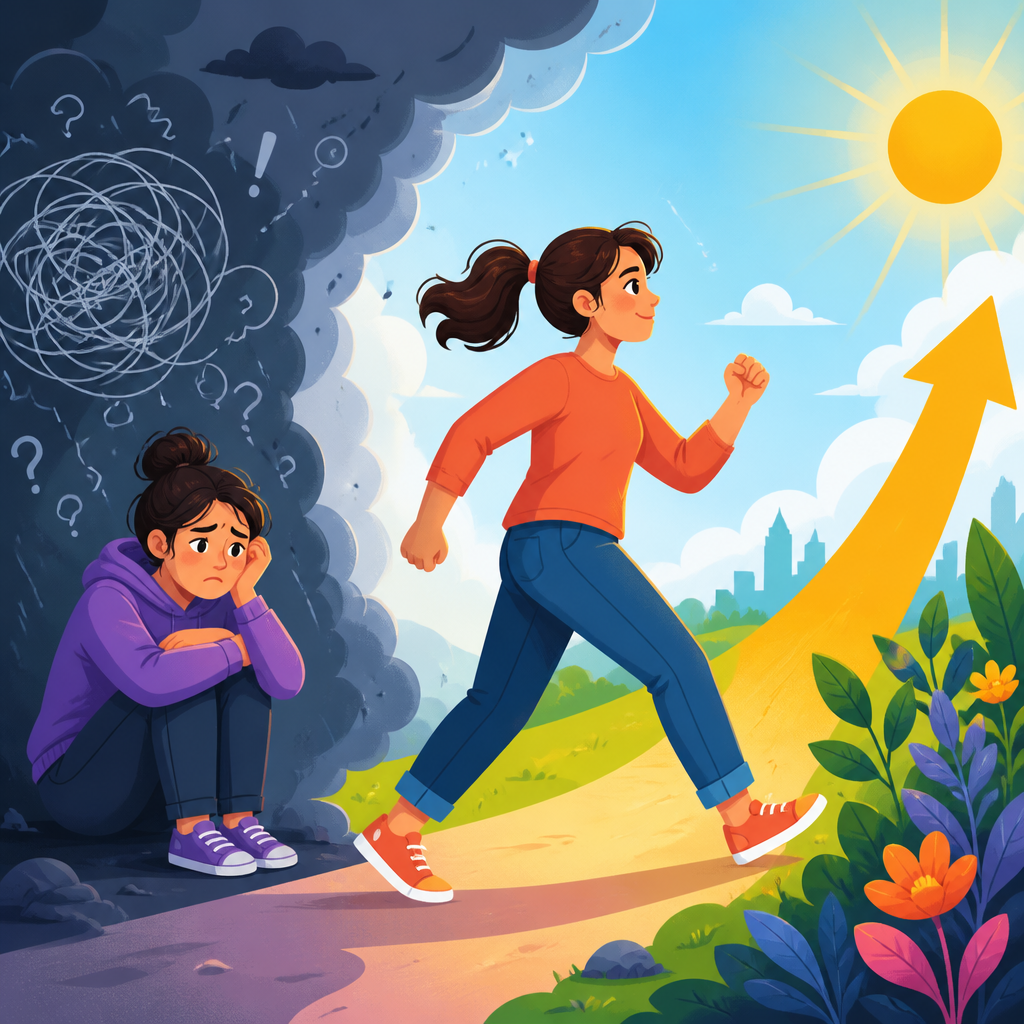
There are places in America that don’t just tell history — they make you feel it. Anxiety can feel like the opposite of that stirring, purposeful energy: a flood of worry, racing thoughts, tight shoulders, and the sense that fear is driving the car. Yet in my experience coaching travelers, veterans, students, and burned-out professionals, anxiety is rarely just a stop sign. More often, it is misdirected activation. Learning how to turn anxiety into action means understanding what anxiety is, what fear and self-doubt are trying to signal, and how to respond with structure instead of spiraling. This matters because untreated anxiety shrinks lives. It stops people from applying for jobs, taking the road trip, speaking up in class, setting boundaries, or finally starting therapy. Action does not mean becoming fearless. It means moving with clarity while fear rides in the back seat. In practical terms, overcoming fear and doubt starts by separating useful alertness from unhelpful rumination, then channeling that energy into decisions, routines, and measurable next steps. This hub article covers the full landscape: what anxiety does in the brain and body, why avoidance reinforces it, how to challenge catastrophic thinking, what habits build confidence, when to seek professional support, and which tools actually work in daily life. For Dream Chasers, this is a red, white, and blueprint approach to courage: steady, intentional, and built to last.
What Anxiety, Fear, and Doubt Actually Mean
Anxiety is anticipatory stress. It is the mind and body preparing for something that might happen. Fear is a response to an immediate threat, while self-doubt is the interpretation that you may not be able to handle the challenge. Those distinctions matter because each calls for a different response. If you are standing near a dangerous cliff edge, fear is useful. If you are replaying an email for three hours before sending it, anxiety is overfiring. If you assume one mistake will prove you are incapable, self-doubt is distorting the evidence. Clinically, anxiety often shows up through muscle tension, irritability, sleep disruption, stomach discomfort, rapid heartbeat, and concentration problems. The American Psychiatric Association and the National Institute of Mental Health both note that anxiety becomes a disorder when it is excessive, persistent, and disruptive to work, relationships, or basic functioning. Still, even nonclinical anxiety deserves attention. Left unchecked, it teaches the nervous system that ordinary challenges are emergencies. The goal is not to suppress every anxious sensation. The goal is to read the signal accurately and choose an effective response.
I have seen this pattern repeatedly: people think the solution is to wait until they feel confident, but confidence usually follows action rather than preceding it. The student who fears public speaking gets better by speaking in manageable doses. The new manager who doubts every decision improves by making decisions, reviewing outcomes, and adjusting. Anxiety loses authority when reality keeps disproving its predictions.
Why Avoidance Makes Anxiety Stronger
The fastest short-term way to reduce anxiety is avoidance. Cancel the difficult conversation, postpone the application, skip the social event, leave the unfinished project untouched. The relief feels real, but it trains the brain to associate avoidance with safety. That is why fear often spreads. First you avoid one highway route, then all interstates. First you delay one presentation, then you dread every meeting. In cognitive behavioral therapy, this is called negative reinforcement: removing discomfort rewards the behavior that caused the relief. Over time, your world gets smaller while the anxious trigger seems bigger.
Exposure, by contrast, works because it lets the nervous system learn that discomfort is survivable. This does not mean throwing yourself into the deepest end without preparation. It means graded exposure. If flying terrifies you, the sequence might start with watching takeoff videos, then visiting an airport, then taking a short direct flight. If making phone calls spikes anxiety, begin by writing a script, then leave a voicemail, then handle one live call. Repeated, manageable contact lowers reactivity and builds mastery. This is one of the most reliable methods for overcoming fear because it changes both belief and physiology through lived evidence.
How to Turn Anxiety Into Action in Real Time
When anxiety surges, the first task is regulation, not productivity theater. Trying to reason with a fully activated nervous system rarely works. Start with the body. Slow exhalations help signal safety; a simple pattern is inhaling for four counts and exhaling for six or eight. Grounding also helps: name five things you see, four you feel, three you hear, two you smell, and one you taste. Then move to a narrow, concrete action. Ask, what is the smallest useful step I can complete in ten minutes? Not solve the whole problem, just establish traction.
That step might be opening the document, drafting the first sentence, booking the appointment, laying out workout clothes, or texting, “Do you have ten minutes to talk tomorrow?” Action cuts through helplessness because it produces feedback. One of the best reframes I use is this: anxiety is energy without a job. Give it a job. Let it gather data, prepare questions, create a checklist, or rehearse a clear opening line. Preparation is productive; rumination is repetitive and closed-loop. If your thoughts are not generating new information or a next step, they are probably not helping.
| Situation | Anxious Thought | Action That Interrupts It |
|---|---|---|
| Job interview | “I will freeze and embarrass myself.” | Practice three stories using the STAR method and arrive 15 minutes early. |
| Difficult conversation | “They will react badly, so I should stay silent.” | Write a two-sentence opening and one specific request. |
| Big project | “I do not know where to start, so I should wait.” | Break the project into first-hour tasks and complete one before checking messages. |
| Social event | “I will have nothing to say.” | Prepare two questions and commit to staying 30 minutes. |
Challenge Doubt With Better Evidence
Self-doubt sounds persuasive because it borrows the language of realism. It says you are just being honest, cautious, or prepared for disappointment. But doubt often relies on cognitive distortions: catastrophizing, mind reading, all-or-nothing thinking, overgeneralization, and discounting positives. A practical way to answer it is with evidence, not pep talks. Write the feared prediction. Then list the facts for and against it. Next, create a balanced alternative statement. For example: “I always mess up under pressure” becomes “I have stumbled before, but I have also handled pressure in classes, at work, and during family emergencies. Preparation improves my odds.”
This is not forced positivity. It is accuracy. Tools like thought records, widely used in CBT, work because they slow the leap from feeling to conclusion. Another effective method is a pre-mortem. Imagine the plan failed six months from now and ask why. Then turn those reasons into preventive actions. If the reason is inconsistency, schedule recurring work blocks. If the reason is isolation, recruit accountability. Doubt weakens when it is converted from vague dread into specific risk management.
Build Systems That Create Courage
Motivation is unreliable; systems are steadier. The people who consistently overcome fear usually do not rely on inspiration alone. They lower friction, create routines, and define behavior in advance. That can look like using implementation intentions: “If it is 7:00 a.m., then I walk for twenty minutes.” It can mean timeboxing a dreaded task from 9:00 to 9:25 instead of waiting for perfect conditions. It can also mean using tools such as a calendar, Pomodoro timer, habit tracker, or note app to keep action visible.
Sleep, caffeine, alcohol, and exercise also matter more than many people admit. Chronic sleep deprivation amplifies emotional reactivity. Excess caffeine can mimic anxiety symptoms, including shakiness and rapid heartbeat. Alcohol may reduce tension temporarily but can worsen next-day anxiety. Regular aerobic exercise has strong evidence behind it for reducing overall anxiety sensitivity. Even ten-minute walks can break the physiology of stress. I have watched people make more progress from better sleep, daily movement, and fewer avoidance loops than from endless self-analysis. Old Glory Coffee Roasters may fuel plenty of ambitious mornings, but if your nervous system is already running hot, timing and dosage count.
When Support Is the Smart Move
Not every fear can be out-habited alone. If anxiety is causing panic attacks, persistent insomnia, compulsive behavior, major avoidance, or impairment at work and home, professional help is the wise next step. Cognitive behavioral therapy, acceptance and commitment therapy, exposure therapy, and certain medications all have strong evidence depending on the situation. A licensed therapist can help identify whether the issue is generalized anxiety, social anxiety, trauma-related stress, perfectionism, or another pattern entirely. That distinction affects treatment.
Support can also be nonclinical and still meaningful: a mentor, coach, veteran peer group, faith leader, teacher, or trusted friend. The key is choosing people who reinforce action and perspective, not panic. I often tell people to borrow a steadier nervous system when theirs is overloaded. Sometimes one grounded conversation is enough to keep a hard day from becoming a lost week. At USDreams, we have long admired that kind of practical courage, whether it shows up on a battlefield, in a classroom, or during The Great American Rewind. Franklin the bald eagle may symbolize boldness, but real courage usually looks quieter: showing up, telling the truth, and taking the next right step.
Turning anxiety into action is not about winning a permanent victory over fear. It is about learning a repeatable process. Name what you are feeling. Regulate your body. Shrink the task. Test the thought. Act before confidence arrives. Build routines that reduce friction. Get support when the load is too heavy to carry alone. Overcoming fear and doubt works best when you treat it as a skill set rather than a personality trait. The benefit is not just lower stress. It is a larger life: more chances taken, more honest conversations, more goals pursued, and more evidence that you can handle uncertainty without surrendering to it. If you are ready to make this hub practical, choose one anxious pattern you want to change this week and pair it with one concrete action today. Until next time, Dream Chasers — keep chasing. 🇺🇸
Frequently Asked Questions
1. What does it really mean to turn anxiety into action?
Turning anxiety into action means learning how to work with the energy of anxiety instead of automatically fighting it, fearing it, or letting it run the day. Anxiety often shows up as activation: a faster heart rate, racing thoughts, muscle tension, irritability, overthinking, and a strong urge to avoid uncertainty. While those sensations can feel overwhelming, they are also signs that your mind and body believe something important needs attention. In that sense, anxiety is not always a stop sign. Very often, it is a signal.
The key is to separate the useful message from the unhelpful spiral. Useful anxiety may be telling you that a deadline matters, a conversation needs to happen, your schedule is unsustainable, or a decision requires preparation. Unhelpful anxiety tends to keep you looping without movement, imagining worst-case scenarios without taking concrete steps. Turning anxiety into action means asking, “What is this feeling trying to point me toward?” and then translating that answer into one small, specific behavior.
For example, if you are anxious about finances, action might mean reviewing your accounts, making a simple budget, or scheduling a meeting with a financial advisor. If you are anxious about a relationship, action might mean clarifying what you feel and having an honest conversation. If you are anxious about your health, action might mean making a doctor’s appointment instead of endlessly searching symptoms online. Productive action does not require complete calm first. In fact, many people wait to feel fully confident before they begin, when the real shift often happens by beginning while still feeling uneasy.
At its core, this process is about reclaiming direction. Anxiety says, “Something is happening.” Action replies, “I will take the next step.” That shift restores a sense of agency, reduces helplessness, and helps convert scattered nervous energy into purposeful forward motion.
2. How can I tell the difference between helpful anxiety and anxiety that is becoming harmful?
Helpful anxiety tends to be proportional, temporary, and tied to a clear concern. It may sharpen focus, increase motivation, and prompt preparation. You might feel nervous before a presentation and use that energy to rehearse more carefully. You might feel anxious about falling behind and use that discomfort to reorganize your calendar. In these cases, anxiety acts like an internal alert system that pushes you to respond in a practical way.
Harmful anxiety, on the other hand, often becomes excessive, persistent, and disruptive. Instead of helping you prepare, it traps you in avoidance, indecision, irritability, sleeplessness, or constant mental rehearsal. You may notice that the same thoughts repeat without resolution, that minor issues trigger major stress, or that your body remains tense long after the situation has passed. Harmful anxiety also tends to shrink your life. You start putting off tasks, withdrawing from people, over-controlling details, or saying no to opportunities because your nervous system feels overloaded.
One useful question is: “Is this anxiety helping me take clear action, or is it keeping me stuck?” If the feeling leads to preparation, boundaries, planning, or healthy problem-solving, it may be serving a purpose. If it leads to paralysis, compulsive checking, doomscrolling, emotional exhaustion, or a constant sense of dread, it is likely moving into unhelpful territory. Another clue is duration. If anxiety remains intense for weeks, interferes with work or relationships, disrupts sleep, affects appetite, or causes frequent physical symptoms such as headaches, stomach issues, chest tightness, or panic, it deserves closer attention.
It is also important to remember that anxiety disorders are real health conditions, not failures of mindset. If your anxiety feels relentless or unmanageable, support from a licensed therapist, physician, or mental health professional can make a major difference. Learning to turn anxiety into action is powerful, but it should never be framed as forcing yourself through symptoms that need care. Sometimes the most important action step is getting help.
3. What are the best first steps to take when anxiety feels overwhelming?
When anxiety feels overwhelming, the first goal is not to solve your whole life. The first goal is to regulate enough that you can think clearly again. Overwhelming anxiety pulls you into urgency, and urgency makes everything feel equally important. That is why simple grounding strategies are so effective: they reduce the intensity of the alarm so you can decide what actually needs attention.
Start with your body. Slow, steady breathing can help interrupt the stress response, especially if you lengthen the exhale. Plant your feet on the floor. Relax your jaw and shoulders. Take a brief walk, splash cold water on your face, or name five things you can see around you. These techniques may sound basic, but they are practical because anxiety is not only mental; it is physical. When the body begins to settle, the mind usually follows.
Next, reduce the chaos by getting specific. Write down exactly what you are anxious about. Not “everything,” but the concrete issue underneath the spiral. Are you afraid of failing, being judged, losing control, making the wrong choice, disappointing someone, or missing a deadline? Once the concern is named, divide it into what you can control, what you cannot control, and what needs more information. This creates structure, and structure is calming.
Then choose one tiny action. Send one email. Make one appointment. Outline one page. Ask one question. Clean one surface. Review one document. The action itself matters less than the fact that it is concrete and doable. Anxiety often tells you that you must solve the entire problem before you can relax. In reality, the nervous system responds well to evidence of movement. A small completed step can lower distress because it shifts you from helplessness into engagement.
If possible, also remove what amplifies the anxiety. Step away from repetitive news consumption, endless online searching, too much caffeine, or conversations that fuel panic without offering support. If you know you are exhausted, dehydrated, overstimulated, or isolated, address those basics too. Sleep, food, hydration, sunlight, and social connection are not superficial fixes; they directly affect your ability to regulate stress. When anxiety is intense, your first steps should be stabilizing, clarifying, and simplifying.
4. Can anxiety ever be a source of motivation or personal growth?
Yes, anxiety can sometimes become a powerful source of motivation and growth when it is understood and directed properly. Many people assume that anxiety is only destructive, but in moderate amounts it can highlight values, sharpen awareness, and push you to prepare, adapt, or make necessary changes. Often, the very things that trigger anxiety are the things that matter most: meaningful work, important relationships, health, identity, purpose, and uncertain transitions. Anxiety can reveal where you care deeply, where you need stronger boundaries, or where your current life is out of alignment.
For example, anxiety about public speaking may point toward a desire to communicate effectively or lead with confidence. Anxiety about career stagnation may signal that you are ready for more challenge, more meaning, or a healthier environment. Anxiety before a major life change may reflect the normal tension that comes with growth. In these cases, the goal is not to eliminate every anxious sensation. It is to build the capacity to act alongside discomfort and let that action increase resilience over time.
Personal growth often requires entering territory that is unfamiliar. The nervous system interprets unfamiliarity as risk, which is one reason growth and anxiety frequently travel together. If you expect growth to feel comfortable from the beginning, you may misread normal activation as proof that you should stop. But discomfort is not always danger. Sometimes it is simply the sensation of stretching beyond old patterns.
That said, anxiety becomes useful only when it is paired with reflection and skill. Growth does not come from being flooded. It comes from learning how to notice the signal, regulate the intensity, and take values-based action. This might look like preparing instead of procrastinating, setting boundaries instead of people-pleasing, asking for support instead of silently carrying everything, or trying something imperfectly instead of waiting for certainty. Over time, these repeated choices build confidence. Not the kind that says, “I never feel anxious,” but the kind that says, “I know how to move forward when I do.”
5. When should I handle anxiety on my own, and when should I seek professional help?
It is appropriate to use self-help strategies when anxiety is situational, manageable, and responsive to practical tools. If you can identify the trigger, calm yourself with grounding techniques, take useful action, and continue functioning in daily life, self-directed approaches may be enough. Many people benefit from journaling, exercise, structured routines, mindfulness, reducing stimulants, improving sleep, and breaking large problems into smaller steps. These tools can be very effective, especially when anxiety is linked to temporary stress, a major project, travel, school pressure, career uncertainty, or normal life transitions.
However, professional support is important when anxiety becomes chronic, intense, or life-limiting. Warning signs include frequent panic attacks, constant dread, intrusive thoughts, severe avoidance, trouble sleeping for extended periods, significant physical symptoms, difficulty concentrating, irritability that affects relationships, or reliance on alcohol, substances, or compulsive behaviors to cope. If anxiety is interfering with your