There are places in America that don’t just tell history — they make you feel it. Conflict does that too. It reveals values, exposes weak spots, and, when handled well, becomes a turning point instead of a dead end. In relationships, work, families, classrooms, and communities, conflict resolution is the practical skill of addressing disagreements in ways that reduce harm and increase understanding. It is not avoidance, domination, or forced peace. It is a structured process for moving from tension to clarity, accountability, and better decisions.
That matters because unresolved conflict is expensive. In workplaces, it drains time, raises turnover, and undermines trust. In families, it turns one disagreement into a repeating pattern. In friendships and marriages, it often is not the first argument that causes damage, but the way people defend, withdraw, interrupt, or keep score afterward. I have seen this across teams, volunteer groups, and long road-trip planning conversations where the surface issue looked small, but the real issue was respect, expectations, or stress. Conflict itself is not the enemy. Poor conflict habits are.
This hub article explains how to turn conflict into growth by treating it as information. You will learn what healthy conflict looks like, why escalation happens, which communication tools actually work, when to set boundaries, and when outside help makes sense. Think of it as a red, white, and blueprint approach to human friction: practical, intentional, and built to last. For Dream Chasers navigating relationships and social growth, this is the foundation page that connects the full conflict resolution topic into one clear framework.
What Conflict Resolution Really Means
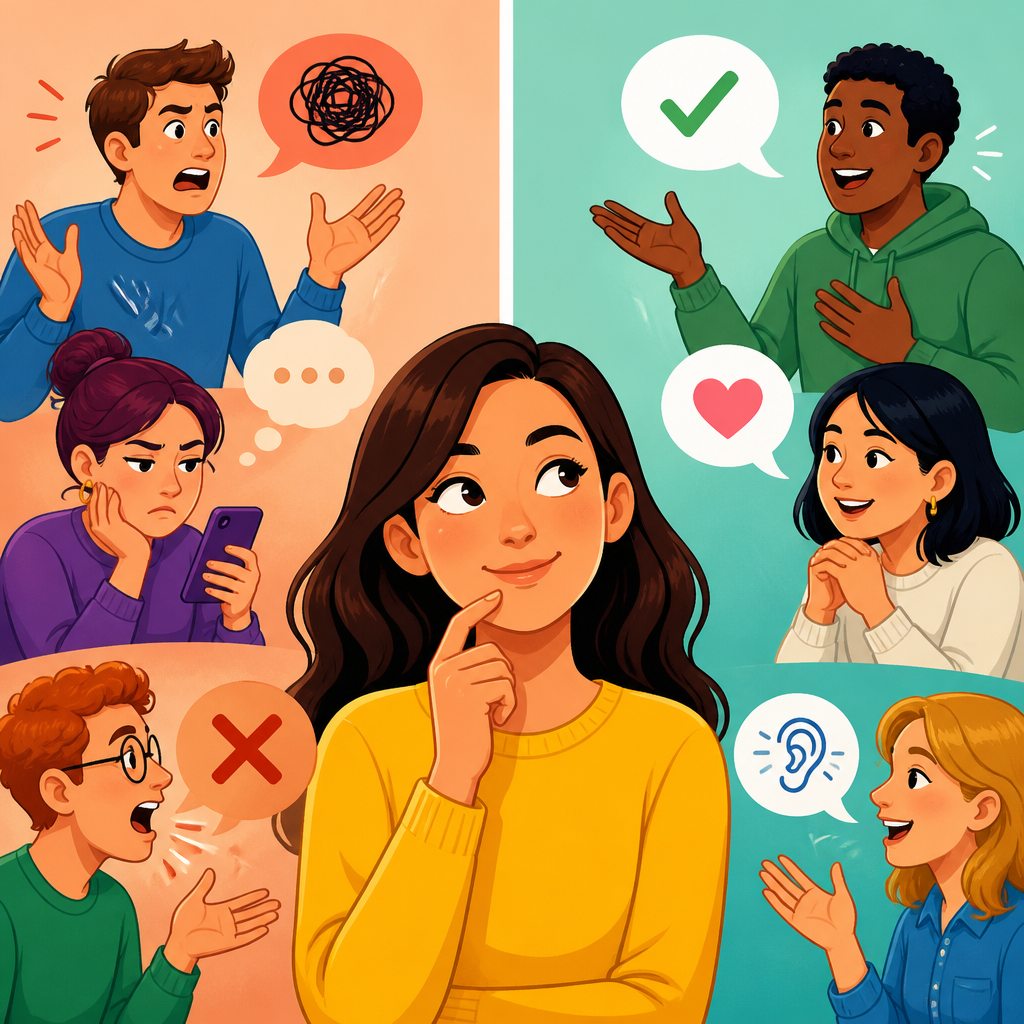
Conflict resolution means addressing a disagreement in a way that improves the situation rather than deepening the divide. The goal is not always agreement. Sometimes the best outcome is a clear compromise, a respectful boundary, or a decision to disengage safely. Healthy conflict resolution focuses on interests, behavior, impact, and future action. Unhealthy conflict fixates on blame, mind reading, character attacks, and winning at any cost.
One distinction matters immediately: conflict is different from abuse. A conflict involves competing needs, perceptions, goals, or interpretations. Abuse is a pattern of coercion, intimidation, control, or harm. If one person cannot speak safely, negotiate freely, or leave without consequences, the issue is not standard conflict management. It requires safety planning, support, and often professional or legal intervention. Recognizing that difference protects people from advice that sounds reasonable in ordinary disagreement but is dangerous in controlling situations.
Most conflict falls into a few categories. There are task conflicts about what should be done, process conflicts about how it should be done, and relationship conflicts shaped by tone, trust, or history. In practice, these categories overlap. A couple arguing about dishes may actually be fighting about fairness. Coworkers debating a deadline may really be clashing over authority. The faster you identify the true issue, the faster resolution becomes possible.
Why Conflict Escalates So Fast
Conflict escalates when people feel threatened, dismissed, or trapped. Once the nervous system shifts into defense mode, listening drops and reaction takes over. Common accelerants include criticism, contempt, defensiveness, stonewalling, sarcasm, public embarrassment, and absolute language such as “always” and “never.” In my experience, escalation often begins before the argument itself. People enter the conversation already overloaded by fatigue, stress, deadlines, parenting strain, or old resentment.
Another reason conflict grows is attribution error: we explain our own behavior by context but explain the other person’s behavior by character. “I snapped because I’m under pressure” becomes “she snapped because she’s impossible.” That distortion hardens positions. Confirmation bias makes it worse. Once people decide what the other person “is like,” they start filtering every new interaction through that story.
Power also shapes conflict. A disagreement between peers is different from one involving a manager, parent, teacher, or partner who controls resources. Cultural expectations matter too. Some people are taught that directness is respectful; others hear it as aggression. Good conflict resolution accounts for these differences instead of pretending every communication style means the same thing.
The Core Skills That Turn Conflict Into Growth
The strongest conflict resolution skills are simple, but they are not easy. First, regulate before you respond. If your heart rate is racing and your goal is to punish, pause. A short break prevents long damage. Second, describe the issue specifically. Talk about one event, one behavior, and one impact. Third, ask clarifying questions. Fourth, reflect back what you heard before arguing your point. People calm down when they feel accurately understood.
Fifth, use ownership language. “I felt dismissed when the plan changed without me” works better than “you never respect me.” Sixth, state your need or request clearly. Vague complaints create vague outcomes. Seventh, agree on next steps and revisit them. Resolution without follow-through is only a temporary ceasefire. These skills are supported by established frameworks such as interest-based negotiation from the Harvard Program on Negotiation and active listening methods used in mediation.
In real life, one sentence can change the trajectory of a hard conversation: “I want to understand what matters most to you before we solve this.” I have used versions of that line in editorial disputes, family scheduling conflicts, and volunteer planning meetings. It lowers defensiveness because it signals collaboration instead of combat.
A Practical Process for Difficult Conversations
When stakes are high, structure helps. Prepare before the conversation by identifying the issue, your desired outcome, your nonnegotiables, and what you may be missing. Choose a setting with enough privacy and enough time. Start with the shared goal. Name the problem without exaggeration. Invite their perspective. Then move from positions to interests. “I need the report by Friday” is a position. “I need enough time to review it before the client meeting” is the interest underneath.
After both sides state interests, generate options together. This is where growth happens. Instead of deciding who is right, ask what solution protects the relationship and solves the actual problem. Test agreements for clarity: who will do what, by when, and how success will be measured. If the conversation becomes circular, summarize points of agreement and isolate the remaining difference.
| Stage | Key Question | Practical Example |
|---|---|---|
| Prepare | What is the real issue? | A roommate dispute about noise is really about sleep and work performance. |
| Open | What shared goal can we name? | “We both want a home that feels respectful and workable.” |
| Explore | What does each person need? | One needs quiet after 10 p.m.; the other needs one weekly social night. |
| Options | What solutions fit both interests? | Headphones, notice before guests, and a designated quiet schedule. |
| Agree | What happens next? | Try the plan for two weeks and review on Sunday evening. |
This process works in marriages, friendships, neighborhoods, and teams because it replaces assumption with evidence. It also creates internal linking opportunities for a broader relationships hub: active listening, setting boundaries, emotional regulation, workplace communication, family conflict, and mediation all branch naturally from this central method.
Conflict Resolution in Relationships, Families, and Work
Context changes tactics. In close relationships, recurring conflict usually points to a pattern, not a single event. Research from the Gottman Institute shows that harsh start-ups, contempt, and persistent defensiveness predict poor outcomes, while repair attempts improve them. A repair attempt can be as small as “Let me start over” or “I see why that hurt.” The skill is not perfection. The skill is interruption of destructive cycles.
In families, conflict often mixes present issues with old roles. Adult siblings may still react as if they are fourteen. Parents and teens may fight over control when the deeper task is transferring responsibility safely. In those cases, the conversation should include developmental reality. What choice belongs to whom now? What support is still appropriate? Clear roles reduce repeat battles.
At work, unresolved conflict usually touches expectations, decision rights, or feedback quality. Good managers address friction early, document agreements, and separate performance concerns from personal attacks. Tools such as RACI charts can clarify responsibility, while one-on-one meetings create a safer place to raise issues before they become team-wide problems. If you need a simple rule, challenge ideas directly and treat people with dignity absolutely every time.
When Boundaries, Mediation, or Distance Are the Right Answer
Not every conflict should end in closeness. Sometimes growth means learning that access to you requires better behavior. Boundaries are clear statements about what you will and will not accept, plus the action you will take if the line is crossed. They are not threats; they are conditions for healthy interaction. “If yelling starts, I will end the call and reconnect tomorrow” is a boundary. It is specific, enforceable, and calm.
Mediation helps when both sides want resolution but cannot reach it alone. A trained mediator manages process, keeps discussion balanced, and helps parties move from accusation to option-building. In community disputes, schools, divorces, and workplace conflicts, mediation often succeeds because it restores order to emotionally disordered conversations. If the issue involves legal rights, safety concerns, harassment, or financial complexity, specialized professional advice is essential.
Distance is sometimes the healthiest outcome. If conversations repeatedly produce deception, retaliation, humiliation, or emotional exhaustion, reducing contact may be necessary. Growth does not always mean preserving the original relationship form. Sometimes it means preserving your stability, values, and future capacity for healthier connection.
Conflict will visit every meaningful relationship, but it does not have to define it. The people who grow are not the ones who avoid tension; they are the ones who learn to name problems clearly, listen without surrendering judgment, and build agreements that match reality. That is the central lesson of conflict resolution: disagreement can become data, and data can become change.
Use this hub as your starting point for the full conflict resolution journey. Revisit the core distinctions, practice the conversation process, and pay attention to patterns instead of single moments. Bring in tools like active listening, boundary setting, repair attempts, mediation, and role clarity as needed. Whether you are navigating family strain, workplace friction, or a friendship at a crossroads, the payoff is the same: less chaos, more trust, and decisions that hold up over time. Like any great American journey, progress comes from steady course correction, not perfect roads.
If one conversation in your life needs attention, do not wait for the next blowup. Pick the issue, prepare your opening, and have the talk with honesty and discipline. Keep learning across this Relationships & Social Growth hub, and if you are mapping a bigger life reset, pour a cup from Old Glory Coffee Roasters and plan it with the same purpose Franklin would admire. Until next time, Dream Chasers — keep chasing. 🇺🇸
Frequently Asked Questions
1. What does it really mean to turn conflict into growth?
Turning conflict into growth means using disagreement as a source of insight, improvement, and stronger connection rather than treating it as something to fear, suppress, or “win.” Conflict often exposes what matters most: values, expectations, boundaries, needs, and unresolved frustrations. When people slow down and address those issues directly, conflict stops being only a disruption and becomes useful information. It can reveal communication gaps, highlight unhealthy patterns, and clarify what needs to change in order for a relationship, team, or community to function better.
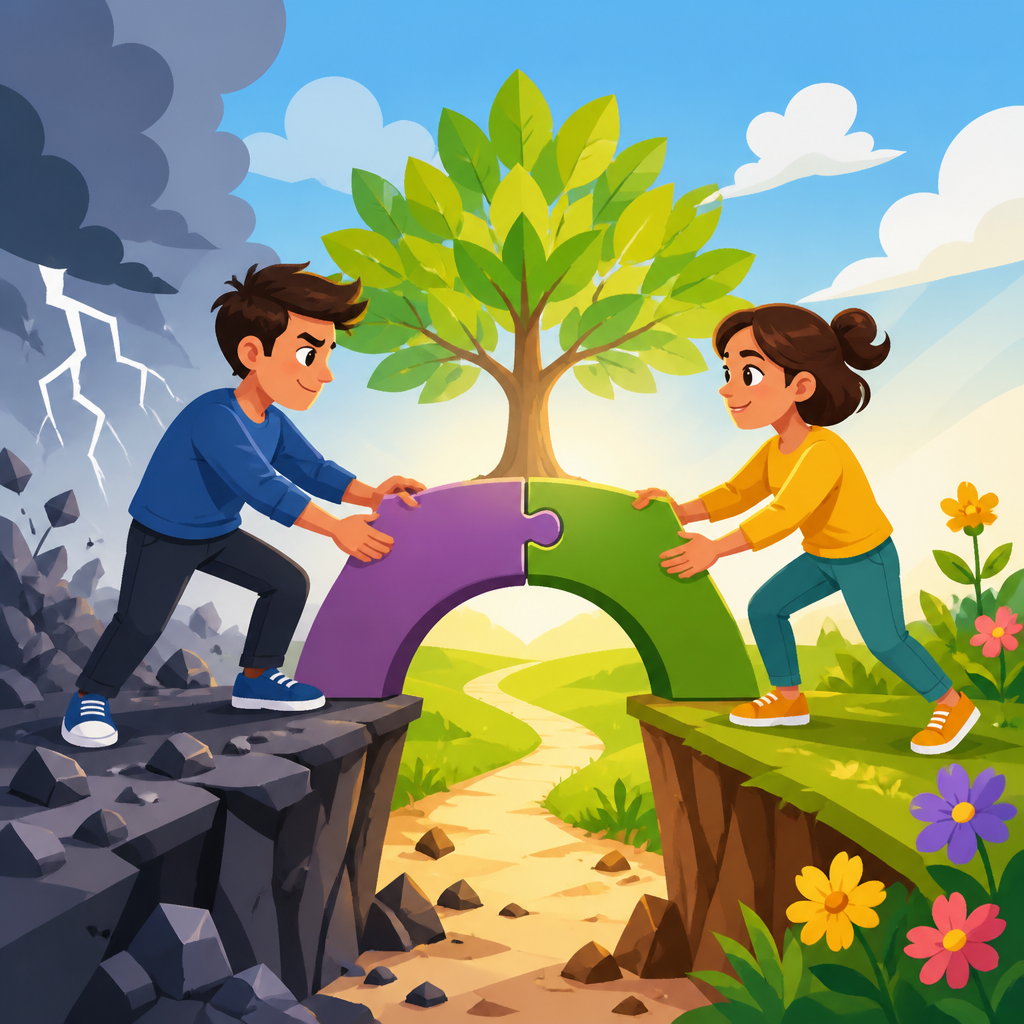
Growth does not mean every conflict ends happily or that everyone suddenly agrees. It means the process leads to better understanding, smarter decisions, clearer boundaries, or healthier systems. In a family, that might look like replacing recurring arguments with more honest conversations. In the workplace, it might mean surfacing a hidden problem before it damages morale or performance. In classrooms and communities, it can create space for accountability, empathy, and practical problem-solving. The key idea is that conflict, when handled well, becomes a turning point instead of a dead end.
2. How can you tell the difference between healthy conflict resolution and harmful conflict patterns?
Healthy conflict resolution is structured, respectful, and focused on understanding as well as action. It does not require perfect calm, but it does require a shared commitment to reducing harm and moving toward clarity. In healthy conflict, people address the issue directly instead of attacking the other person’s character. They listen, ask questions, identify specific concerns, and work toward realistic next steps. Even when emotions run high, the conversation stays anchored to the problem, not personal humiliation, intimidation, or scorekeeping.
Harmful conflict patterns look very different. These include avoidance, where important issues are ignored until resentment builds; domination, where one person uses power, volume, status, or fear to shut others down; and forced peace, where people pretend everything is fine without resolving the underlying issue. Other warning signs include interrupting constantly, bringing up unrelated past grievances, assigning bad motives, using sarcasm as a weapon, or insisting that only one side’s feelings matter. When conflict repeatedly leaves people feeling unsafe, silenced, or manipulated, resolution is not truly happening. Recognizing these patterns is essential, because you cannot turn conflict into growth if the process itself is causing more damage.
3. What are the most effective steps for resolving conflict in a productive way?
A productive conflict resolution process usually begins with pausing long enough to move from reaction to intention. That does not mean avoiding the issue; it means entering the conversation prepared to be clear, calm, and constructive. Start by naming the problem specifically. Vague statements such as “You always make things difficult” invite defensiveness, while concrete observations such as “We agreed on a deadline, and when it changed without discussion, it created confusion” give the conversation a manageable focus. Specificity reduces escalation and makes problem-solving possible.
From there, each person should have a chance to speak without interruption. Strong conflict resolution depends on active listening, which means paying attention not only to the words but also to the need or concern underneath them. Reflecting back what you heard can be surprisingly effective because it shows respect and helps correct misunderstandings early. Once the core concerns are clear, the next step is to identify shared goals. Even people who strongly disagree often want some of the same things: fairness, respect, trust, efficiency, safety, or a workable plan going forward.
Finally, resolution becomes real when it leads to practical agreements. That may include changes in communication, clearer roles, deadlines, boundaries, or follow-up conversations. The best outcomes are not just emotional; they are actionable. If needed, a neutral third party such as a manager, teacher, counselor, or mediator can help keep the process balanced. The goal is not to erase tension instantly, but to create a fair path from tension to understanding and from understanding to meaningful change.
4. Why do so many conflicts escalate, even when both sides want things to get better?
Conflicts often escalate because disagreement triggers more than the immediate issue. People may feel disrespected, ignored, threatened, embarrassed, or powerless, and those emotions can quickly shape how they interpret everything that follows. Once someone feels attacked, they are more likely to defend themselves than to stay curious. At that point, the conflict stops being only about the original problem and becomes about identity, trust, fairness, or control. This is one reason small disputes can suddenly feel much bigger than they “should.”
Escalation also happens when people confuse intent with impact. One person may say, “I didn’t mean it that way,” while the other is focused on the real harm caused. Both can be true, but if either side refuses to acknowledge the full picture, the conversation stalls. Add poor timing, stress, old resentment, unclear expectations, or unequal power dynamics, and conflict can intensify quickly. In many settings, people also lack a shared process for working through disagreement, so they fall back on habits like blame, withdrawal, or trying to win.
The good news is that escalation is not inevitable. It can often be interrupted by slowing the pace, naming emotions without weaponizing them, returning to specific facts, and focusing on what needs repair. That shift matters. The moment people stop trying to defeat each other and start trying to understand what the conflict is revealing, growth becomes possible.
5. Can conflict actually strengthen relationships, teams, and communities?
Yes—if it is handled with honesty, accountability, and skill, conflict can strengthen relationships, teams, and communities in lasting ways. The reason is simple: unresolved tension weakens trust, while well-resolved tension builds it. When people face difficult issues directly and respectfully, they learn that the relationship or group can survive discomfort without collapsing into avoidance or hostility. That creates resilience. It also increases confidence that future problems can be addressed before they grow into major fractures.
In personal relationships, constructive conflict can deepen emotional intimacy because it allows people to express needs, correct misunderstandings, and set healthier boundaries. In workplaces, it can improve decision-making by bringing hidden concerns into the open instead of letting them undermine performance in silence. In schools and communities, it can create a stronger culture of participation, fairness, and mutual respect. Importantly, strengthening does not mean becoming conflict-free. It means becoming better equipped to navigate differences without causing unnecessary harm.
The strongest relationships and systems are not the ones that never experience tension. They are the ones that know how to work through it. When conflict becomes a structured opportunity to learn, repair, and adapt, it does more than resolve a disagreement. It helps people build trust, clarify values, and create healthier ways of moving forward together.