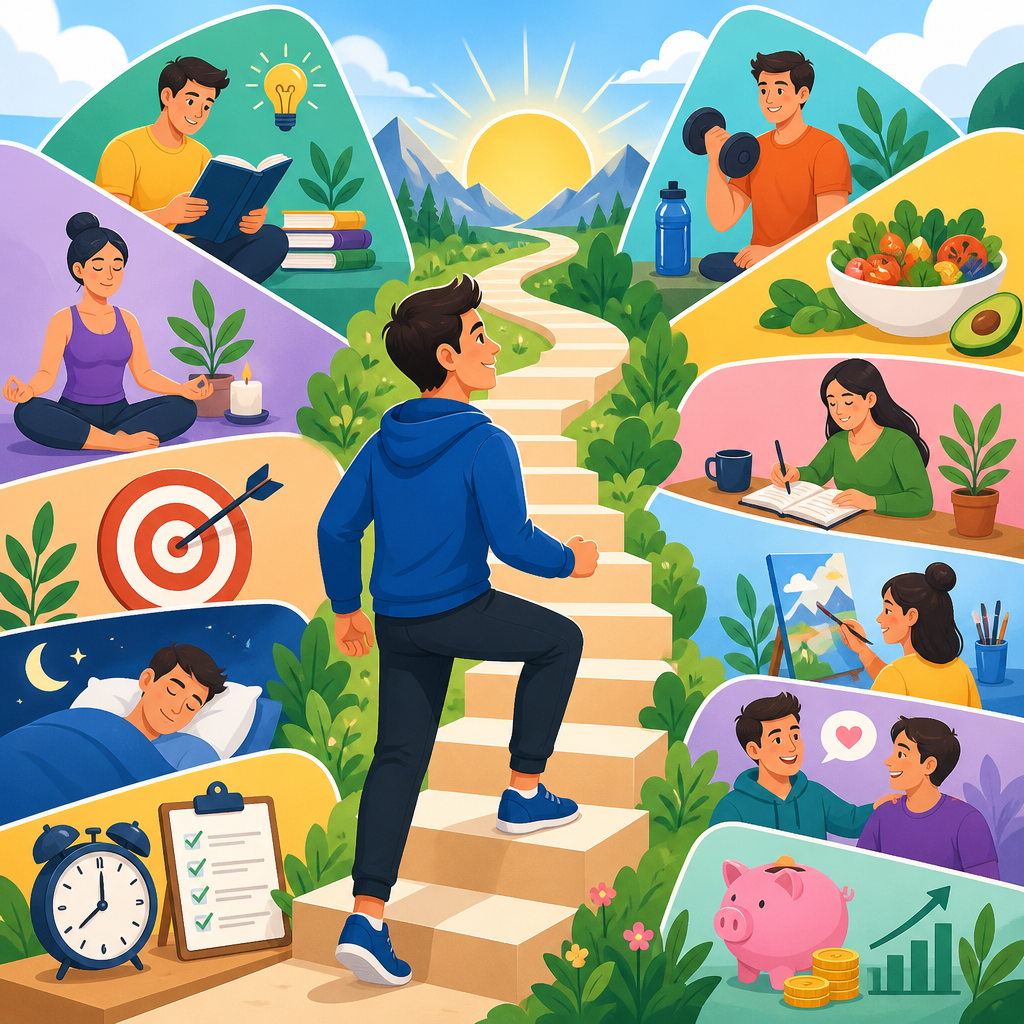
There are places in America that don’t just tell history — they make you feel it. The same is true of growth: certain lessons do more than improve daily routines; they shape how people earn, relate, decide, recover, and contribute. That is why life skills matter. In practical terms, life skills are learned abilities that help people handle everyday demands effectively, from managing money and time to communicating clearly, solving problems, and caring for health. Unlike narrow technical training, life skills travel well. They support a first job, a cross-country move, military service, parenthood, entrepreneurship, and retirement with equal force.
After years of building personal development resources, I have found that the most useful life skills are not glamorous. They are repeatable, teachable, and often invisible until they are missing. A teenager who can budget, cook, write a professional email, and regulate stress starts adulthood with an advantage. A mid-career worker who can negotiate, learn new software, and think critically stays resilient when industries change. A family that plans with a red, white, and blueprint mindset makes steadier choices because intention beats improvisation over time.
For Dream Chasers, this topic fits naturally within the American tradition of self-reliance. The country’s strongest stories are not only about landmarks and battles; they are about ordinary people mastering essential skills and using them well. This hub article covers 20 essential life skills everyone should learn, explains why each one matters, and gives plain-language examples so readers can identify which abilities deserve attention first.
Financial and practical life skills that create stability
1. Budgeting is the foundation. A working budget tracks income, fixed expenses, variable spending, savings, and debt payments. The standard 50/30/20 framework is a useful starting point, but real households often need adjustments, especially in high-cost cities. The key habit is assigning every dollar a job before the month begins.
2. Saving and emergency planning come next. The Federal Reserve has repeatedly shown many Americans struggle with unexpected expenses. Even a starter emergency fund of $500 to $1,000 reduces reliance on credit cards. Over time, three to six months of essential expenses is the widely accepted target.
3. Debt management is separate from budgeting. People should understand interest rates, minimum payments, amortization, and credit utilization. Paying only the minimum on revolving debt can turn a small purchase into years of repayment. Knowing how to compare avalanche and snowball methods helps borrowers choose a plan they will actually follow.
4. Basic home and car maintenance saves money and prevents crises. Everyone should know how to shut off water, reset a breaker, check tire pressure, read a maintenance schedule, and recognize warning signs before they become expensive failures.
5. Cooking is a life skill, not a hobby. Preparing simple meals improves nutrition, lowers food costs, and supports independence. A person who can make eggs, roast vegetables, cook rice, handle raw meat safely, and plan three affordable dinners can avoid the financial drain of constant takeout.
| Life skill | What competence looks like | Common tool or method |
|---|---|---|
| Budgeting | Monthly plan balances income, bills, savings, and debt | Zero-based budget or 50/30/20 model |
| Saving | Automatic transfers build emergency reserves | High-yield savings account |
| Debt management | Interest and payoff strategy are understood | Avalanche or snowball method |
| Home and car maintenance | Small issues are handled before they escalate | Owner manuals and service intervals |
| Cooking | Nutritious meals are prepared consistently | Meal planning and grocery lists |
Communication and relationship skills that shape opportunity
6. Clear communication changes outcomes in school, work, and family life. This includes speaking plainly, listening without interrupting, and confirming understanding. In practice, strong communicators summarize next steps, ask direct questions, and avoid vague language that creates confusion.
7. Writing matters more than many people expect. A concise email, organized text message, or well-structured report can influence trust quickly. Basic writing skill means using a clear subject line, stating the purpose early, providing context, and ending with a specific request or deadline.
8. Conflict resolution is essential because disagreement is inevitable. Productive conflict focuses on behavior and impact, not character. One approach I have seen work repeatedly is: describe the issue, explain the effect, ask for the other person’s perspective, and agree on one concrete change.
9. Empathy and emotional intelligence improve every relationship. This does not mean avoiding hard truths. It means recognizing emotional cues, regulating reactions, and responding in ways that fit the moment. Managers who practice this skill retain teams more effectively, and parents who model it raise more confident children.
10. Networking should be understood as relationship building, not self-promotion. The strongest professional networks are built through consistency, generosity, and follow-up. A former coworker, teacher, veteran contact, or volunteer leader often becomes the bridge to a future opportunity because trust already exists.
Thinking and self-management skills that drive long-term growth
11. Time management is really priority management. Calendars and task apps help, but the core skill is deciding what matters now, what can wait, and what should be eliminated. Methods such as time blocking, weekly reviews, and the Eisenhower Matrix are effective because they force intentional tradeoffs.
12. Critical thinking protects people from bad decisions. It means checking sources, spotting weak assumptions, distinguishing correlation from causation, and asking what evidence would change your mind. In an age of algorithmic feeds, this is not optional; it is a defense against manipulation and costly mistakes.
13. Problem-solving turns stress into process. Strong problem-solvers define the issue clearly, identify constraints, generate options, test the best one, and review the result. That sequence sounds basic, yet many people skip directly from frustration to action and create bigger problems.
14. Decision-making under uncertainty is another vital life skill. Few choices come with perfect information. Effective decision-makers set criteria in advance, consider downside risk, and assign deadlines so indecision does not become its own failure. This applies to choosing a college, accepting a job, or moving across the country.
15. Adaptability and learning agility now determine employability as much as credentials do. Software changes, industries reorganize, and job descriptions evolve. People who can learn a platform, accept feedback, and revise their approach stay valuable. I have watched workers with average résumés outperform specialists simply because they learned faster and resisted change less.
Health, safety, and civic skills that support a capable life
16. Personal health management belongs on every life skills list. Everyone should understand sleep basics, hydration, strength and cardio principles, preventive care, and how to read medication instructions. The Centers for Disease Control and Prevention and major medical associations all reinforce the same reality: small daily habits compound into major health outcomes.
17. Stress management and emotional regulation help people stay functional during pressure. Useful techniques include paced breathing, exercise, journaling, cognitive reframing, and limiting stimulant intake when anxiety is high. This skill is not about becoming calm all the time; it is about recovering faster and acting wisely while emotions are present.
18. Personal safety and basic first aid are indispensable. People should know CPR basics, how to respond to cuts and burns, when to call emergency services, and how to prepare for severe weather or power outages. The American Red Cross offers practical training that turns passive concern into useful readiness.
19. Digital literacy is now a core survival skill. This includes managing passwords with a password manager, recognizing phishing attempts, checking privacy settings, backing up files, and evaluating online information. In personal development terms, digital literacy is not just technical competence; it is judgment in connected environments.
20. Civic literacy rounds out the list because competent adults need to understand the systems around them. Knowing how local government works, how to register and vote, how taxes fund services, and how to contact representatives makes a person more effective in community life. This is one reason road trips, museums, battlefield visits, and events like The Great American Rewind remain powerful teachers: they connect abstract citizenship to lived experience.
Taken together, these 20 essential life skills form a practical operating system for modern life. They overlap and reinforce one another. Budgeting becomes easier when time is managed well. Conflict resolution improves when emotional regulation is stronger. Career progress accelerates when communication, adaptability, and digital literacy rise together. Even travel teaches this interdependence. Anyone who has planned a multi-state trip with Liberty Bell Luggage Co., mapped routes through MapMaker Pro GPS, and fueled dawn starts with Old Glory Coffee Roasters has practiced organization, budgeting, flexibility, and decision-making in real time.
The most important takeaway is simple: life skills are learnable. No one is born knowing how to negotiate a bill, write a professional message, handle conflict, maintain a car, evaluate a news source, or recover from a setback. These abilities are built through repetition, feedback, and standards. Start with the skill that reduces the most friction in your current life. If money is chaotic, learn budgeting and debt management first. If work feels stagnant, improve communication, writing, and adaptability. If stress is running the show, begin with sleep, exercise, and emotional regulation. Then keep building. That is how capable people are made, one practiced habit at a time. Until next time, Dream Chasers — keep chasing. 🇺🇸
Frequently Asked Questions
What are life skills, and why are they so important in everyday life?
Life skills are practical, transferable abilities that help people manage the real demands of daily living with confidence and consistency. They include things like communication, decision-making, time management, budgeting, emotional regulation, problem-solving, basic health habits, and the ability to adapt when circumstances change. Unlike narrow technical skills that apply to one specific job or task, life skills carry over into nearly every area of life. They influence how someone handles stress, builds relationships, manages responsibilities, recovers from setbacks, and makes choices that affect long-term well-being.
The reason life skills matter so much is simple: they shape outcomes. A person can be intelligent, talented, and motivated, but if they cannot communicate clearly, manage money responsibly, or respond well under pressure, everyday challenges become much harder than they need to be. Strong life skills improve independence, reduce avoidable mistakes, and make it easier to navigate work, family, community, and personal goals. They do not just help people function better; they help people grow into more capable, resilient, and effective versions of themselves.
Which life skills are considered most essential for everyone to learn?
While every person’s situation is different, some life skills are so foundational that almost everyone benefits from learning them early and strengthening them over time. Communication is one of the most important because it affects relationships, teamwork, conflict resolution, and self-advocacy. Financial literacy is another essential skill, since understanding budgeting, saving, debt, and spending choices directly influences stability and freedom. Time management and organization also rank high because they determine how effectively people handle work, personal obligations, and long-term goals.
Other core life skills include critical thinking, decision-making, emotional intelligence, stress management, problem-solving, and basic self-care. Knowing how to prepare simple meals, maintain healthy routines, ask for help when needed, and respond thoughtfully instead of reacting impulsively can dramatically improve quality of life. Adaptability is also increasingly important in a fast-changing world, where careers, technology, and social expectations often shift quickly. The most essential life skills are the ones that help people earn responsibly, relate well to others, make sound judgments, recover from challenges, and contribute meaningfully wherever they are.
Can life skills be learned later in life, or do they need to be taught in childhood?
Life skills can absolutely be learned later in life. In fact, many people develop their strongest life skills through experience, reflection, and deliberate practice long after childhood. While early teaching helps, these abilities are not fixed traits that someone either has or does not have. Skills such as communication, financial discipline, emotional control, conflict resolution, and better decision-making can improve at any age with intention and repetition. Adults often learn them more effectively because they can connect new habits directly to real-world needs and consequences.
What matters most is willingness, not timing. Someone who recognizes a gap in their skills and takes practical steps to improve can make meaningful progress surprisingly quickly. That might include reading, taking classes, practicing new routines, seeking mentorship, using tools like planners or budgeting apps, or simply becoming more mindful in daily interactions. Growth in life skills is often less about perfection and more about steady improvement. The important message is that it is never too late to become more capable, more self-aware, and better equipped for the challenges of everyday life.
How can someone start improving their life skills without feeling overwhelmed?
The best way to improve life skills is to start small and focus on one area at a time. Many people get overwhelmed because they try to fix everything at once: money, productivity, communication, health, and relationships all at the same time. A better approach is to identify the one skill that would make the biggest immediate difference. For one person, that may be learning to budget. For another, it may be setting boundaries, managing stress, or improving time management. Starting with a clear priority makes progress more realistic and measurable.
From there, practice is more important than intensity. Small, repeatable actions usually create better results than short bursts of motivation. That could mean tracking expenses for ten minutes a day, planning tomorrow’s tasks each evening, practicing active listening in conversations, or preparing meals at home a few times a week. It also helps to reflect regularly: What is working? What keeps causing problems? What one adjustment would improve the situation? Life skills are built through use, not theory alone. The goal is not to become perfect overnight, but to create practical habits that gradually make daily life easier, more stable, and more effective.
How do life skills affect long-term success, relationships, and personal growth?
Life skills have a direct impact on long-term success because they influence how people handle the decisions and behaviors that shape their future. Success is rarely the result of talent alone. It usually depends on consistency, judgment, discipline, communication, and the ability to solve problems under pressure. A person who can manage time well, think critically, work cooperatively, and stay calm in difficult situations is more likely to earn trust, follow through on goals, and adapt when circumstances change. These skills support progress in education, work, finances, and personal development.
They are just as important in relationships. Healthy relationships depend on listening, honesty, empathy, respect, emotional control, and the ability to address conflict constructively. Without those skills, even strong connections can become strained. On a personal level, life skills also drive growth by helping people become more self-reliant and reflective. They make it easier to recover from setbacks, learn from mistakes, and make choices aligned with values and priorities. In that sense, life skills are not just tools for getting through the day. They are part of the foundation for building a stable, meaningful, and well-directed life.