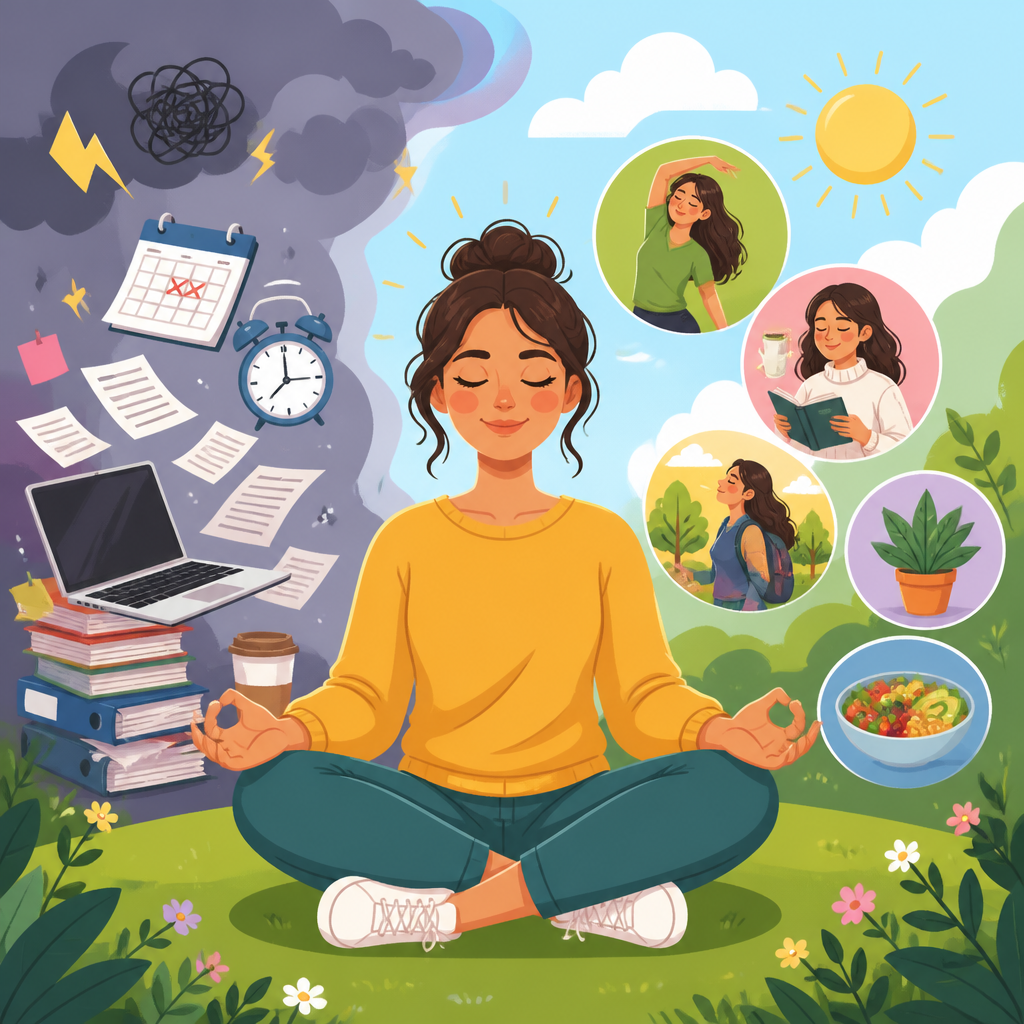
There are places in America that don’t just tell history — they make you feel it. Stress works the opposite way: it turns ordinary days into pressure cookers, clouds judgment, disrupts sleep, strains relationships, and makes even simple decisions feel heavy. Learning how to manage stress without feeling overwhelmed is not a luxury; it is a core life skill that supports mental health, resilience, work performance, and physical well-being. In practical terms, stress is the body’s response to challenge, while overwhelm is the point where demands seem greater than your resources. They are related, but they are not the same. You can feel stressed and still function well; overwhelm is what happens when stress goes unmanaged for too long.
Over the years, I have found that the most effective stress management is not dramatic or complicated. It is consistent, structured, and personal. The strongest plans combine immediate relief, daily habits, healthy boundaries, and realistic expectations. That matters for Dream Chasers because resilience is built the same way this country was built: red, white, and blueprint, with intention and repetition. This hub article covers the foundations of mental health and resilience, including how to recognize your stress signals, what habits help most, when support is necessary, and how to build a system you can actually sustain. Think of it as your starting point for managing pressure with clarity instead of chaos.
Understand What Stress Is Doing to Your Mind and Body
Stress is not just “feeling busy.” It is a full-body process involving the nervous system, hormones, thoughts, emotions, and behavior. When your brain detects a threat, whether that threat is a missed deadline or a genuine emergency, it activates the sympathetic nervous system and releases stress hormones such as cortisol and adrenaline. In short bursts, that response can be useful. It sharpens attention and prepares the body for action. The problem begins when stress becomes chronic. Persistent activation can contribute to irritability, poor concentration, muscle tension, headaches, digestive problems, sleep disruption, and burnout.
A useful rule is this: if your body is always bracing, your mind will eventually struggle. I often see people misread their own warning signs. They assume they are simply unmotivated, when they are actually exhausted. They think they need better time management, when they really need recovery, emotional processing, or firmer boundaries. Common mental health signs include racing thoughts, difficulty making decisions, increased worry, emotional numbness, and loss of enjoyment. Common behavioral signs include procrastination, snapping at loved ones, doomscrolling, overworking, stress eating, or withdrawing from social contact. Recognizing your pattern early is the first step toward resilience.
Identify Your Stress Triggers and Your Early Warning Signals
If you want to manage stress without feeling overwhelmed, you need to know what reliably pushes your system too far. Triggers are not always dramatic. In many cases, they are cumulative: lack of sleep, too many commitments, financial uncertainty, family conflict, nonstop notifications, clutter, or unrealistic self-pressure. The American Psychological Association has repeatedly reported that money, work, and health remain among the top stressors for adults in the United States. Those broad categories show up in everyday ways, such as a schedule with no margin, caregiving demands, an inbox that never resets, or the pressure to appear constantly productive.
Track stress for one week and patterns usually become obvious. Write down what happened, how your body felt, what thoughts appeared, and how you reacted. Did your shoulders tighten before a meeting? Did you start skipping meals when deadlines piled up? Did social media comparisons make a normal day feel like failure? This kind of self-observation creates distance between the trigger and the reaction. It helps you move from “I’m falling apart” to “I know what set this off, and I know what to do next.” That shift is a cornerstone of emotional resilience because it turns stress from a vague force into a manageable set of signals.
Use Immediate Techniques That Calm the Nervous System
When stress spikes, the first goal is not to solve your entire life. The first goal is to reduce physiological intensity. Simple techniques work because they interrupt the threat response and help the body return toward regulation. Controlled breathing is one of the fastest tools available. Slow exhalations signal safety to the nervous system. A common method is box breathing: inhale for four counts, hold for four, exhale for four, hold for four, and repeat for several rounds. Another evidence-based option is the 4-6 pattern, inhaling for four and exhaling for six, which extends the calming phase.
Grounding also works well when your mind is spiraling. Name five things you can see, four you can feel, three you can hear, two you can smell, and one you can taste. This draws attention out of catastrophic thinking and back into the present moment. Movement matters too. A brisk ten-minute walk, stretching, or even standing up and rolling your shoulders can reduce muscle tension and break the stress loop. I also recommend reducing input when you are overloaded: mute notifications, step away from the screen, postpone nonurgent decisions, and drink water before you do anything else. Immediate relief is not avoidance. It is stabilization, and stabilization makes better judgment possible.
Build Daily Habits That Increase Resilience Over Time
Long-term stress management depends less on perfect coping skills and more on repeatable daily habits. Sleep is the foundation. Most adults need seven to nine hours, and chronic sleep loss makes the brain more emotionally reactive and less flexible under pressure. Protect sleep with a consistent schedule, a dark cool room, and reduced screen exposure before bed. Exercise is another pillar. The Centers for Disease Control and Prevention recommends at least 150 minutes of moderate-intensity activity each week, and that standard is realistic for stress reduction. Walking, cycling, strength training, and yoga all help regulate mood and improve energy.
Nutrition plays a bigger role than many people realize. Irregular meals and excess caffeine can mimic or intensify anxiety symptoms. Balanced meals with protein, fiber, and complex carbohydrates support steadier energy. Connection is equally important. Isolation amplifies stress, while supportive relationships buffer it. Even brief, honest conversations can lower emotional load. Finally, create recovery rituals. A short evening review, a device-free lunch break, prayer, journaling, reading, or quiet time outdoors can tell your body the day is not one long emergency.
| Habit | Why It Helps | Practical Example |
|---|---|---|
| Sleep routine | Improves emotional regulation and focus | Lights out by 10:30 p.m. on weekdays |
| Regular movement | Lowers tension and stress hormones | 20-minute walk after lunch |
| Balanced meals | Prevents energy crashes and irritability | Protein-rich breakfast before work |
| Social support | Reduces isolation and improves coping | Weekly check-in with a trusted friend |
| Recovery ritual | Signals safety and closure | Ten minutes of journaling before bed |
Set Boundaries, Simplify Decisions, and Reduce Hidden Stressors
Many people think stress management starts with self-care, but in practice it often starts with subtraction. Boundaries protect your time, attention, and energy from constant erosion. That may mean saying no to extra commitments, limiting after-hours work messages, declining emotionally draining conversations, or refusing to solve problems that belong to someone else. Healthy boundaries are not selfish. They are operational limits that keep your system functional. In workplaces, I have seen simple changes make a major difference: blocked focus time, fewer meetings, clearer project scopes, and realistic turnaround expectations.
Decision fatigue is another hidden stressor. Every unresolved choice consumes mental bandwidth, which is why routines are so powerful. Standardize what you can: meal planning, bill payments, grocery lists, workout times, morning prep, even which days you tackle certain tasks. Use external systems instead of relying on memory. Calendars, reminders, written to-do lists, and time-blocking reduce cognitive load. If you are already stretched thin, ask one practical question before adding anything new: what will this replace? If the answer is sleep, peace, recovery, or family time, the cost may be too high.
Know When to Get Help and How This Hub Supports the Next Step
Self-management is essential, but it is not the answer to every level of distress. If stress becomes persistent anxiety, panic, depression, substance misuse, or severe burnout, professional support is appropriate and often necessary. Seek help sooner if stress is affecting work, relationships, appetite, sleep, or your sense of safety. Licensed therapists, primary care physicians, employee assistance programs, and crisis resources all have a role. Cognitive behavioral therapy, acceptance and commitment therapy, and trauma-informed approaches are established methods that help many people build healthier responses to stress. If you are in immediate danger or thinking about self-harm, call emergency services or a crisis line right away.
As a hub for Mental Health and Resilience, this page is designed to point you toward the next layer of support: articles on burnout recovery, anxiety management, emotional regulation, mindfulness, sleep, work-life boundaries, habit formation, and building confidence under pressure. You do not need to fix everything this week. Start by identifying one trigger, one calming technique, and one daily habit to strengthen. Then protect those basics until they become steady. That is how real resilience grows: not by pretending life is easy, but by meeting pressure with structure, honesty, and support. Until next time, Dream Chasers — keep chasing. 🇺🇸
Frequently Asked Questions
What is the best way to manage stress without feeling overwhelmed?
The best way to manage stress without feeling overwhelmed is to stop trying to fix everything at once. Stress often becomes unmanageable when your mind treats every problem as urgent, important, and immediate. A more effective approach is to slow the process down and work in layers. First, identify what is actually happening in your body and mind. Are you mentally overloaded, physically tense, emotionally reactive, sleep-deprived, or all of the above? Once you name the type of stress you are experiencing, it becomes easier to respond with the right strategy instead of reacting out of panic.
Start with immediate regulation techniques that help your nervous system settle. Deep breathing, a short walk, stretching, stepping away from noise, drinking water, or sitting quietly for five minutes can reduce the physical intensity of stress. Then move to practical triage. Write down everything that feels pressing, choose the top one or two priorities, and give yourself permission to postpone the rest. This prevents the common mistake of trying to solve ten stressors in one sitting, which usually creates more frustration than progress.
Long-term stress management also depends on consistent habits rather than occasional rescue efforts. Sleep, nutrition, movement, boundaries, and recovery time all play a major role in how resilient you feel. If you are constantly exhausted, overcommitted, or emotionally stretched thin, even small challenges can feel enormous. Managing stress well does not mean eliminating all pressure from life. It means building a system that helps you recover faster, think more clearly, and respond with intention instead of overwhelm.
Why does stress make even simple tasks feel so difficult?
Stress can make ordinary tasks feel harder because it affects both the brain and body at the same time. When you are under pressure, your body shifts into a heightened state of alert. This response can be helpful in true emergencies, but when it stays active for too long, it begins to interfere with concentration, memory, patience, and decision-making. That is why answering an email, making dinner, or choosing what to do next can suddenly feel much heavier than usual.
One reason this happens is that stress narrows your focus toward perceived threats. Instead of calmly sorting through options, your brain starts scanning for problems, worst-case scenarios, and unfinished obligations. That can create mental clutter, which makes it harder to prioritize. At the same time, physical symptoms such as muscle tension, fatigue, headaches, shallow breathing, and poor sleep drain the energy you would normally use for basic responsibilities. Even if the task itself is simple, your internal system may already be operating at a disadvantage.
Emotional overload also plays a part. When stress is high, people often become more irritable, self-critical, and discouraged. Small setbacks can feel like confirmation that they are falling behind, which adds another layer of pressure. Understanding this dynamic matters because it reminds you that difficulty is not necessarily a sign of laziness or weakness. Often, it is a sign that your system is overloaded. In those moments, the most effective response is not to push harder blindly, but to reduce mental load, simplify choices, and create enough calm for your thinking to become clear again.
How can I calm down quickly when I feel stress building up?
When you feel stress building up, the goal is to interrupt the escalation before it becomes full overwhelm. The fastest way to do that is to work with your body first, because stress is not just a thought problem. It is a whole-body response. Start by slowing your breathing. Inhale gently through your nose, exhale longer than you inhale, and repeat for a minute or two. A longer exhale signals safety to the nervous system and can reduce the intensity of the stress response. You can also unclench your jaw, drop your shoulders, and place both feet on the floor to create a sense of physical steadiness.
Next, reduce stimulation. Step away from whatever is adding noise or urgency, even briefly. Put down your phone, pause the conversation if possible, mute notifications, or leave the room for a moment. Stress tends to grow in overstimulating environments, especially when multiple demands are competing for your attention. A short reset can prevent a difficult moment from turning into a spiraling one. Cold water on your hands or face, a quick walk, stretching, or naming five things you can see can also help bring you back into the present.
Once your body is a little calmer, use a simple grounding statement to bring order to your thoughts. Tell yourself something clear and believable, such as, “I do not have to solve everything right now,” or, “I only need to decide the next step.” That kind of language reduces the all-or-nothing thinking that often accompanies stress. Quick calming strategies are not meant to erase every problem instantly. Their purpose is to lower the emotional volume enough for you to think clearly, choose wisely, and keep the situation from feeling bigger than it is.
What daily habits help reduce stress over time?
Daily habits are one of the most reliable ways to reduce stress because they strengthen your capacity before pressure peaks. One of the most important habits is protecting sleep. Lack of sleep makes emotional regulation harder, weakens concentration, and lowers patience, all of which make stress feel more intense. A consistent sleep schedule, reduced screen exposure before bed, and a calming nighttime routine can improve how well your mind and body recover.
Regular physical activity is another powerful stress-management tool. Exercise helps regulate stress hormones, releases physical tension, and improves mood. This does not have to mean intense workouts every day. Walking, stretching, yoga, light strength training, or any consistent movement can help. Nutrition matters too. Skipping meals, relying heavily on caffeine, or eating erratically can make your body feel more stressed and reactive. Balanced meals and adequate hydration support more stable energy and clearer thinking throughout the day.
Equally important are habits that protect your mental space. Setting realistic expectations, limiting unnecessary multitasking, taking short breaks, and creating structure around your day can reduce the sense of chaos that fuels overwhelm. Many people also benefit from journaling, prayer, meditation, or simply taking ten quiet minutes to decompress. Perhaps most importantly, build margin into your routine. If every hour is packed, stress has no place to go except upward. Small daily choices that create rest, order, and recovery may seem simple, but over time they have a major impact on resilience, mood, and overall well-being.
When should I seek help for stress instead of trying to handle it alone?
You should consider seeking help for stress when it stops being occasional pressure and starts interfering with your daily functioning, health, or relationships. If stress is disrupting your sleep regularly, affecting your appetite, making it hard to concentrate, causing frequent irritability, or leaving you emotionally exhausted for long periods, it may be time for more support. The same is true if you feel stuck in constant worry, have trouble completing normal responsibilities, or notice that your coping strategies are becoming unhealthy, such as withdrawing from others, overeating, drinking more, or ignoring important tasks.
Getting help does not mean you have failed to manage stress on your own. It means you recognize that stress has moved beyond what self-help strategies can fully address. A doctor, therapist, counselor, or mental health professional can help identify whether you are dealing with chronic stress, anxiety, burnout, depression, or another issue that needs a more structured plan. Professional support can provide practical tools, emotional perspective, and treatment options tailored to your situation.
It is especially important to seek immediate help if stress comes with panic attacks, hopelessness, severe sleep disruption, physical symptoms that concern you, or thoughts of harming yourself. In those cases, support should not be delayed. Healthy stress management includes knowing when to use personal coping skills and when to reach out. Asking for help is not a last resort reserved for crisis. It is a smart, proactive step that can protect your mental health, improve your quality of life, and make it easier to regain a sense of balance.