There are places in America that don’t just tell history — they make you feel it. Strength during difficult times is not a personality trait reserved for a lucky few; it is a set of skills, habits, and support systems that can be built, tested, and strengthened. In personal development, mental health refers to emotional, psychological, and social well-being, while resilience is the ability to adapt, recover, and continue functioning after stress, loss, uncertainty, or change. The two are connected, but they are not identical. A resilient person can still struggle with anxiety, grief, or burnout, and a mentally healthy person still needs tools when life becomes overwhelming.
After years of writing about discipline, recovery, and human endurance for Dream Chasers who take both road trips and real life seriously, one lesson stands out: difficult seasons rarely announce themselves politely. They arrive through layoffs, illness, caregiving, divorce, loneliness, financial pressure, military transition, academic stress, or the slow fatigue that comes from carrying too much for too long. Staying strong does not mean pretending everything is fine. It means responding in ways that protect your mind, your body, your relationships, and your sense of direction.
This hub article covers the foundations of mental health and resilience in practical terms. It answers the core questions readers usually ask first: What does strength actually look like? How do you stay steady when emotions are intense? What daily habits help most? When should you seek professional support? And how do you rebuild after a setback? Think of this guide as a red, white, and blueprint approach to hard times: grounded, intentional, and built to last. If you have ever felt stuck, exhausted, or uncertain about your next step, this is the place to begin.
What staying strong really means
Staying strong during difficult times means maintaining enough stability to make sound decisions, care for basic needs, and keep moving forward even when life hurts. It is not emotional numbness, constant optimism, or total self-reliance. In practice, strong people allow themselves to feel distress, but they do not let distress make every decision for them. Psychologists often describe resilience as flexible adaptation. That word matters. Flexibility is stronger than rigidity because hard seasons change shape. The coping method that helps after a job loss may not be the one you need during grief or trauma recovery.
Real strength usually shows up in ordinary behaviors: getting out of bed, taking medication as prescribed, answering one important email, going to therapy, asking a sibling for help, or turning off the news when your nervous system is overloaded. I have seen people make more progress through consistent basics than through dramatic reinventions. The strongest response is often the least glamorous one: regulate first, then respond. That principle sits at the center of resilience work, and it supports every related topic in mental health, from stress management and emotional regulation to self-esteem, boundaries, recovery, and long-term growth.
How stress affects the brain and body
Difficult times feel difficult because stress is not just a thought. It is a full-body response involving the nervous system, hormones, sleep, digestion, attention, and memory. When the brain perceives threat, the amygdala helps trigger survival responses, and stress hormones such as cortisol and adrenaline prepare the body for action. Short-term stress can sharpen focus. Chronic stress does the opposite. It can impair concentration, increase irritability, disrupt sleep, weaken immune function, and make small problems feel unmanageable. This is why exhausted people often believe they are failing when, in reality, their systems are overloaded.
Understanding this changes the strategy. If your body is in a constant state of alarm, you cannot think your way into calm through willpower alone. You need regulation tools that send signals of safety back to the body. That may include slow breathing, physical movement, daylight exposure, consistent meals, reduced caffeine, or limiting doomscrolling. Clinical approaches like cognitive behavioral therapy, acceptance and commitment therapy, and mindfulness-based stress reduction work because they address both thought patterns and physiological arousal. Strong coping is not vague self-care; it is targeted nervous system management.
The daily practices that build resilience
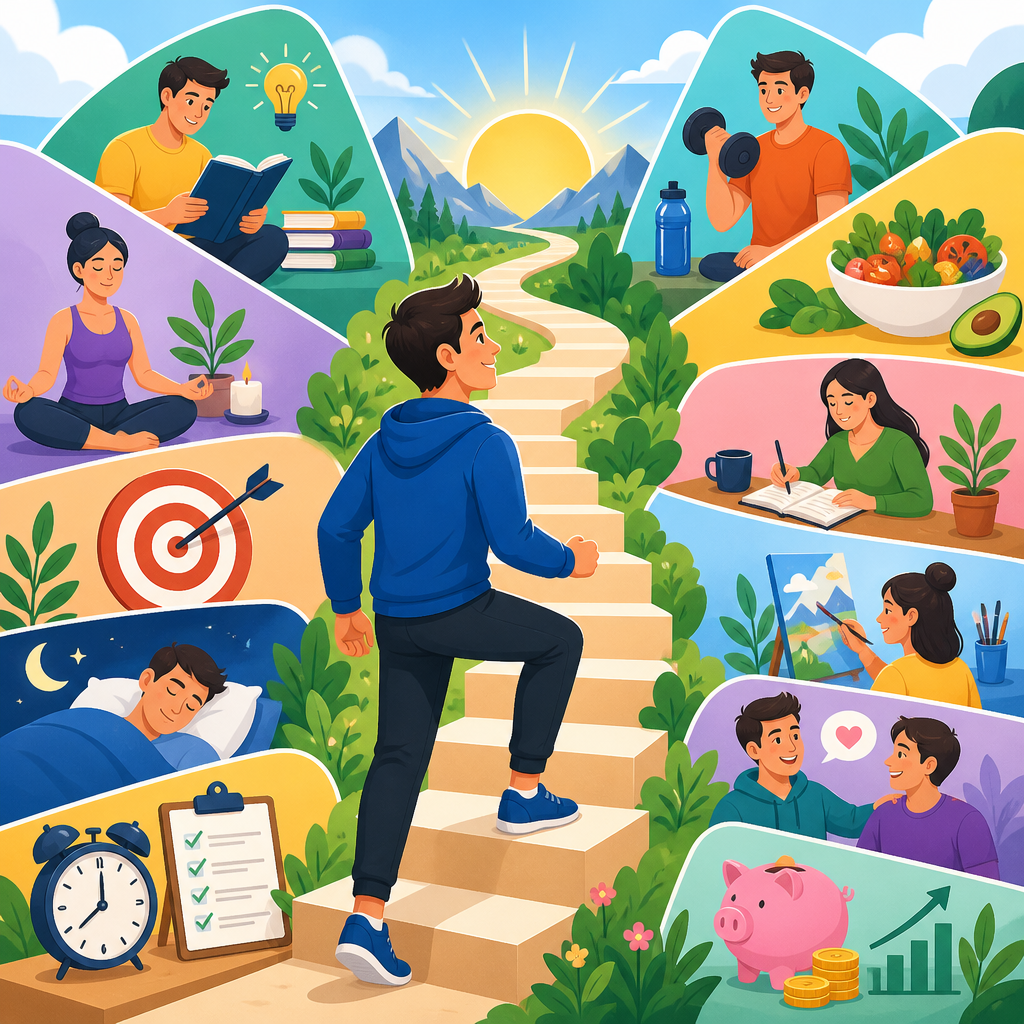
Resilience grows through repetition. The most effective daily practices are simple enough to use under pressure and reliable enough to create stability over time. Sleep is foundational. Adults generally need seven to nine hours, and chronic sleep loss is strongly linked to worse mood, poorer judgment, and higher stress reactivity. Exercise matters because it lowers baseline stress, improves mood regulation, and supports cognitive function. You do not need elite training. A brisk twenty-minute walk can interrupt rumination and reduce physiological tension. Nutrition also plays a role. Regular meals with protein, fiber, and hydration help stabilize energy and mood more than sugar spikes and skipped lunches ever will.
Equally important are reflective habits. Journaling can help separate facts from fears. A short morning check-in like “What is within my control today?” keeps attention anchored. Gratitude helps, but only when used honestly rather than as forced positivity. Social connection is another protective factor. Decades of research, including findings from the Harvard Study of Adult Development, show that supportive relationships are one of the strongest predictors of long-term well-being. When life is hard, resilience is often social before it is personal.
| Practice | Why it works | Plain-language example |
|---|---|---|
| Sleep routine | Improves mood regulation, attention, and stress tolerance | Set one consistent bedtime and stop screens thirty minutes before it |
| Movement | Reduces muscle tension and supports brain chemicals linked to well-being | Walk after dinner instead of replaying the worst part of the day |
| Breathing practice | Signals safety to the nervous system and lowers arousal | Exhale longer than you inhale for five rounds before a hard conversation |
| Connection | Buffers isolation and gives perspective, accountability, and care | Text one trusted friend: “I do not need fixing, just five minutes to talk” |
| Structured planning | Reduces overwhelm by turning uncertainty into next actions | Write the top three tasks for tomorrow on paper before bed |
How to manage emotions without being ruled by them
Emotional regulation does not mean suppressing sadness, anger, fear, or grief. It means noticing emotions, naming them accurately, and choosing a response that fits your values and circumstances. A useful rule is this: name the feeling, locate the trigger, then decide the next right action. “I am anxious because I do not know what happens next” is far more workable than “My life is falling apart.” The first statement invites problem-solving. The second invites panic. This is one reason therapists teach cognitive reframing, distress tolerance, and grounding skills.
Grounding works best when it is concrete. Cold water on your hands, five things you can see, or pressing your feet into the floor can interrupt spiraling. For anger, create space before action; the nervous system needs time to de-escalate. For grief, stop demanding productivity from a hurting mind. For anxiety, reduce uncertainty where possible, then tolerate what remains. I often recommend a two-column exercise: one list for what you can control, another for what you cannot. That simple distinction protects energy. It also supports related resilience topics this hub connects to, including stress management, self-talk, confidence, habits, and recovery after setbacks.
When to ask for help and what kind of help works
One of the clearest signs of strength is seeking support before a hard season becomes a crisis. If distress is affecting sleep, appetite, work, parenting, school, relationships, or safety, it is time to reach outward. Professional help can include licensed therapists, psychologists, psychiatrists, primary care physicians, support groups, employee assistance programs, school counselors, faith leaders, or veteran services. Different tools fit different problems. Therapy helps with patterns, coping skills, trauma, and emotional processing. Medication can be appropriate for conditions such as major depression, panic disorder, or severe anxiety, especially when symptoms interfere with daily functioning.
Immediate help is essential if someone is thinking about self-harm, feels unable to stay safe, or is losing touch with reality. In the United States, calling or texting 988 connects people to the Suicide and Crisis Lifeline. For many readers, the real barrier is not access but hesitation. They fear being a burden, sounding dramatic, or admitting weakness. That belief is false. The strongest people I know use support early and specifically. They do not say, “Everything is terrible.” They say, “I have not slept in two weeks, I am snapping at everyone, and I need an appointment.” Precision gets help faster.
Rebuilding after setbacks and creating long-term resilience
Setbacks are part of every serious life. Recovery is not linear, and resilience is not proven by how quickly you bounce back. It is proven by whether you keep returning to effective practices. Start by stabilizing the basics: sleep, hydration, medication adherence, money triage, and communication with key people. Then narrow your timeline. Asking how to fix the next year is overwhelming; asking what matters this week is manageable. After that, review the story you are telling yourself. Hard times often produce distorted narratives like “I always fail” or “I should be over this by now.” Those statements weaken recovery because they turn events into identity.
Long-term resilience comes from systems, not slogans. Build routines before the next storm. Save emergency cash. Keep a short list of people you can call. Know your therapy and insurance options. Protect physical health appointments. Limit substances that worsen anxiety or depression. If your faith helps, use it. If service helps, practice it. Many Dream Chasers know from The Great American Rewind that endurance is built mile by mile, not in one cinematic moment. Keep learning, keep adjusting, and keep your inner compass pointed toward what is true, useful, and honorable. Until next time, Dream Chasers — keep chasing. 🇺🇸
Frequently Asked Questions
What does it really mean to stay strong during difficult times?
Staying strong during difficult times does not mean pretending everything is fine, hiding your emotions, or forcing yourself to be positive all the time. Real strength is the ability to face hardship honestly while continuing to care for yourself, make thoughtful decisions, and keep moving forward one step at a time. In personal development, this is closely tied to resilience, which is the ability to adapt, recover, and keep functioning through stress, loss, uncertainty, or change. It is also deeply connected to mental health, which includes emotional, psychological, and social well-being.
In practice, staying strong often looks much quieter than people expect. It can mean getting out of bed when motivation is low, asking for help when you would rather isolate, setting boundaries when life feels overwhelming, or allowing yourself to grieve without giving up on the future. Strength is not a fixed personality trait that only some people are born with. It is built through habits, perspective, support systems, and repeated experiences of getting through hard moments. Just as places in America can make history feel real rather than distant, difficult seasons can make inner strength feel tangible rather than theoretical. You do not discover strength only after everything improves; you often build it while living through the challenge itself.
How are mental health and resilience connected during hard times?
Mental health and resilience are closely connected because each one influences the other. Mental health affects how you think, feel, cope, and relate to other people. When your mental health is supported, you are generally better able to manage stress, regulate emotions, solve problems, and recover from setbacks. Resilience, on the other hand, is the process of adapting to pressure, disappointment, trauma, or uncertainty without losing your ability to function. A resilient person still feels pain, fear, frustration, or sadness, but they are better able to work through those feelings rather than becoming completely defined by them.
During difficult times, strong mental health practices make resilience more accessible. Things like quality sleep, social connection, healthy routines, emotional awareness, and professional support can increase your ability to handle adversity. At the same time, practicing resilience can improve mental health by giving you a greater sense of control, confidence, and hope. For example, when you break a crisis into manageable steps, remind yourself that hardship is temporary, and lean on trusted people, you reduce emotional overload and create stability. This does not mean resilience replaces therapy, medical care, or emotional support. Instead, it works alongside them. The goal is not to become unaffected by hardship, but to develop the capacity to endure, recover, and continue growing even when life feels uncertain.
What are the most effective habits for building strength and resilience every day?
The most effective habits for building strength during difficult times are usually simple, consistent, and realistic. First, maintain structure. A daily routine gives your mind a sense of order when emotions feel chaotic. Regular sleep, meals, movement, and time away from constant news or stress triggers can make a major difference in how well you cope. Second, practice emotional honesty. Name what you are feeling instead of suppressing it. Saying, “I am overwhelmed,” “I am grieving,” or “I am scared about what comes next,” can reduce internal pressure and help you respond more clearly.
Third, stay connected. Resilience grows in relationships, not isolation. Even one supportive friend, family member, mentor, faith community, or therapist can help you feel grounded. Fourth, focus on what you can control. You may not be able to change the full situation, but you can influence your next decision, your self-talk, your boundaries, and your habits. Fifth, create small wins. When life is heavy, completing basic tasks such as taking a walk, answering one important email, cleaning one room, or making one healthy meal can restore a sense of capability.
It also helps to develop perspective. Reflect on challenges you have survived before and what they taught you. This is not about minimizing your current pain; it is about remembering that you have adapted before and can adapt again. Journaling, mindfulness, prayer, breathing exercises, and limiting negative self-judgment can all strengthen resilience over time. The key is repetition. Inner strength is built the same way physical strength is built: through steady practice, recovery, and support.
How can I stay strong when I feel overwhelmed, anxious, or emotionally exhausted?
When you feel overwhelmed, anxious, or emotionally exhausted, the first step is to stop expecting yourself to function at your usual level. Difficulty affects the brain and body, and pushing harder without support often increases stress. Instead, narrow your focus. Ask yourself, “What is the next right thing I need to do?” This could be drinking water, stepping outside, texting someone you trust, making a short to-do list, or postponing a nonessential commitment. Bringing your attention back to one manageable action helps interrupt the sense that everything must be solved at once.
It is also important to regulate your nervous system. Slow breathing, grounding exercises, brief movement, quiet time, and reduced screen exposure can help your body shift out of constant alert mode. Give yourself permission to rest without calling it weakness. Emotional exhaustion is not laziness; it is often a sign that your inner resources have been stretched for too long. Support becomes especially important here. Talk to someone safe, and if symptoms are persistent or severe, reach out to a mental health professional. Anxiety, depression, panic, and burnout are real experiences, and getting help is a strong and practical response.
Finally, watch your inner dialogue. People in hard seasons often become harsh with themselves, saying things like, “I should be handling this better,” or “Why am I not stronger?” Real strength is not self-criticism. It is self-respect under pressure. Try replacing judgment with steadier language: “This is hard, but I can take it one step at a time.” Over time, these small shifts help rebuild confidence, emotional balance, and the energy needed to keep going.
When should someone seek professional help instead of trying to handle everything alone?
You should consider professional help when emotional distress starts interfering with daily life, relationships, work, sleep, appetite, concentration, or your ability to care for yourself. Many people wait until they are completely overwhelmed, but support is often most effective when sought early. If you are dealing with persistent sadness, panic, hopelessness, constant anxiety, trauma symptoms, substance misuse, emotional numbness, or ongoing difficulty functioning, it is wise to speak with a licensed mental health professional. Therapy can provide tools, perspective, and stability that are difficult to create alone in the middle of a crisis.
Seeking help is especially important if you feel isolated, unable to cope, or stuck in patterns that are getting worse instead of better. Professional support does not mean you have failed to be strong. In fact, it often reflects maturity, self-awareness, and a commitment to healing. Just as you would not ignore a serious physical injury, you should not dismiss ongoing mental or emotional pain. Strength during difficult times is not about carrying everything by yourself. It is about using every healthy resource available to protect your well-being and move forward with support.
If someone is having thoughts of self-harm, suicide, or feels unable to stay safe, immediate crisis support is necessary. Contact emergency services or a crisis line right away, and do not stay alone with that level of distress. Reaching out in those moments is not dramatic or excessive; it is urgent and appropriate. The strongest choice can be the one that brings other people in to help you carry what feels too heavy to hold alone.