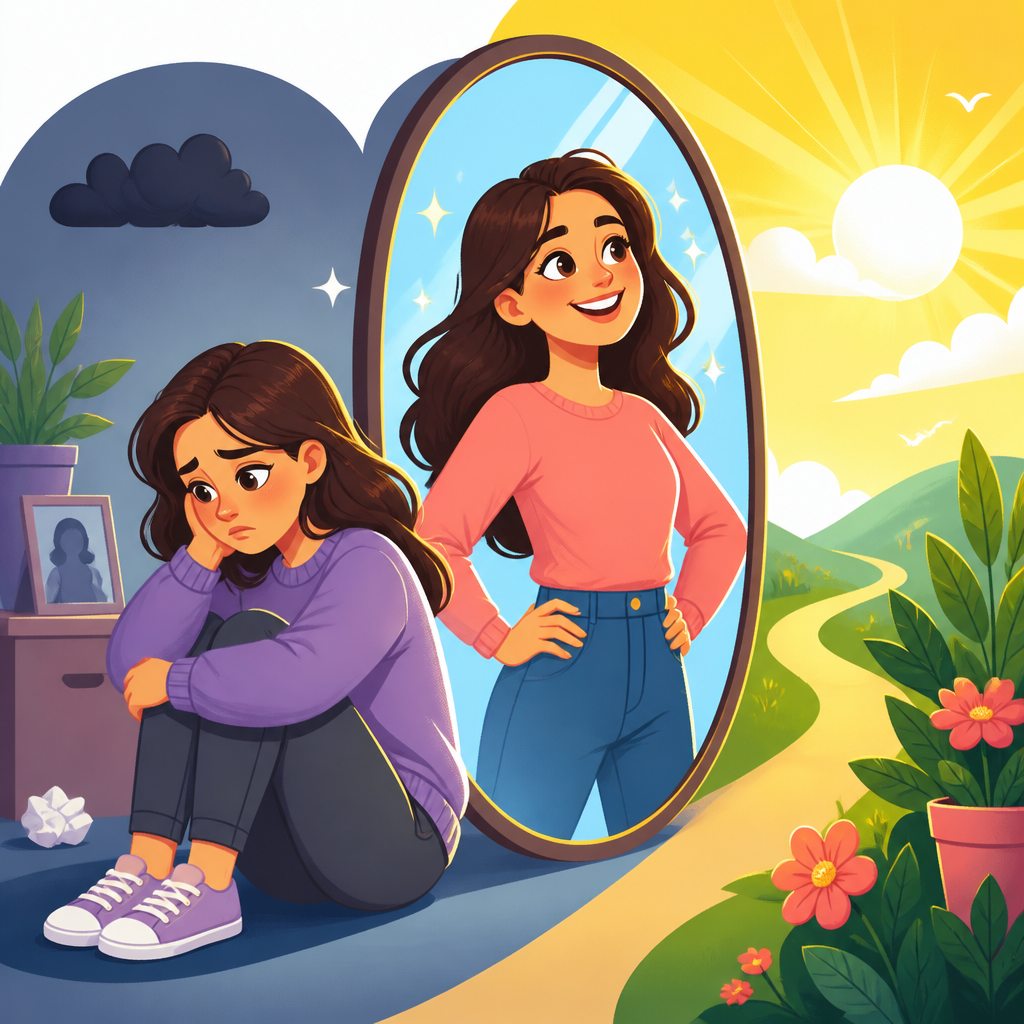
There are places in America that don’t just tell history — they make you feel it. Low self-esteem can quietly shape how people speak, work, date, parent, and recover from setbacks, which is why learning how to overcome low self-esteem and build real confidence matters far beyond motivation slogans. In practical terms, low self-esteem is a persistently negative evaluation of your own worth or ability. Confidence is different: it is trust in your capacity to handle a specific challenge, learn a skill, or adapt under pressure. Real confidence is not arrogance, and it is not blind positivity. It is evidence-based self-trust built through action, reflection, and repeated follow-through.
After years of writing about resilience, performance, and personal discipline for Dream Chasers, I have seen the same pattern again and again: people who feel stuck usually are not lazy or broken. They are caught in a cycle of harsh self-talk, avoidance, and under-practice. They want one dramatic breakthrough, but confidence usually grows through smaller wins that compound. Think of it in red, white, and blueprint terms: confidence is constructed. It needs a foundation, load-bearing habits, and regular maintenance.
This confidence building hub explains what causes low self-esteem, how it affects daily life, and what proven methods actually help. You will learn how to identify distorted thinking, set boundaries, keep promises to yourself, and build competence in measurable ways. If you have ever wondered why compliments bounce off, why criticism hits so hard, or why you feel capable one day and inadequate the next, the answer often lies in how self-worth and skill development interact. The good news is that both can improve. Confidence is trainable, and lasting change starts with understanding the system that keeps low self-esteem in place.
What Low Self-Esteem Looks Like in Daily Life
Low self-esteem is not always obvious. Some people look shy and withdrawn, but others appear high-achieving, funny, or intensely helpful while privately feeling not good enough. Common signs include chronic self-criticism, people-pleasing, fear of rejection, perfectionism, over-apologizing, difficulty accepting praise, and avoiding opportunities that might expose weakness. In workplaces, this may sound like, “I probably shouldn’t lead that project,” even when the person is qualified. In relationships, it can look like tolerating disrespect because being alone feels worse. In health habits, it often shows up as giving up quickly after one mistake and using that slip as proof of failure.
It helps to separate self-esteem from mood. A bad day does not equal low self-esteem. The issue is the pattern. When a person consistently interprets mistakes as evidence of personal deficiency instead of normal learning, confidence erodes. I have watched people with excellent credentials sabotage interviews because their inner script says, “Soon they’ll realize I’m not impressive.” That belief changes posture, tone, eye contact, and decision-making. Over time, low self-esteem narrows life. People stop taking the road trips, promotions, classes, and conversations that could prove their fears wrong.
Why Low Self-Esteem Develops
Low self-esteem usually has roots, not random causes. Family criticism, bullying, unstable caregiving, trauma, discrimination, chronic comparison, and repeated failure without support can all shape negative self-beliefs. Social media intensifies the problem by creating a constant highlight reel of other people’s looks, careers, homes, and relationships. The brain then treats edited snapshots as a fair benchmark. That is not just emotionally draining; it is cognitively distorting.
Psychology research has long shown that core beliefs often form early and become filters for later experience. A child repeatedly labeled difficult, dramatic, or careless may grow into an adult who interprets ordinary correction as proof of worthlessness. Another person may learn that love is conditional on achievement, then chase perfection as a survival strategy. These patterns are understandable, but they are not destiny. Self-esteem can improve when people challenge the beliefs, environments, and habits that keep reinforcing them.
The Confidence Formula: Self-Respect Plus Competence
People often try to feel confident before they act, but in most cases confidence follows behavior. The most reliable formula I have seen is self-respect plus competence. Self-respect means treating yourself like someone whose needs, values, and time matter. Competence means developing actual skill through practice, feedback, and repetition. When both increase together, confidence becomes sturdier because it is not built on wishful thinking.
A simple example is public speaking. Someone with low self-esteem may tell themselves they are terrible at presenting. If they only repeat affirmations, little changes. If they join Toastmasters, rehearse with a timer, record practice runs, refine slide structure, and deliver short talks repeatedly, skill rises. If they also stop insulting themselves after each attempt and evaluate performance more fairly, self-respect rises. The result is real confidence: not “I am flawless,” but “I know how to prepare, improve, and recover.”
| Confidence Building Area | Low Self-Esteem Pattern | Better Response | Real-World Example |
|---|---|---|---|
| Self-talk | “I always mess things up.” | Use accurate language: “I made a mistake and can correct it.” | Review an email error, fix the process, and move on. |
| Boundaries | Saying yes to avoid disapproval | Decline respectfully and tolerate discomfort | Refuse extra work when your schedule is full. |
| Skill building | Avoiding tasks that feel exposing | Practice in small, repeatable steps | Take one networking call a week. |
| Setbacks | Seeing failure as identity | Treat failure as data | Use interview feedback to prepare stronger answers. |
How to Challenge the Thoughts That Keep You Small
One of the fastest ways to weaken low self-esteem is to question automatic thoughts. Cognitive behavioral therapy uses this principle effectively: thoughts influence feelings and behavior, so examining them can change the cycle. Start by writing the exact thought. Not “I feel bad,” but “I am behind everyone my age” or “If I ask a question, people will think I’m incompetent.” Then test it. What is the evidence for it? What evidence contradicts it? Is there another explanation? Would you say this to a friend in the same situation?
This is not about fake positivity. It is about accuracy. If you missed a deadline, the fair conclusion is that your planning system failed, not that you are inherently incapable. If a relationship ended, it may mean the match was unhealthy or misaligned, not that you are unlovable. In my experience, people make major progress when they stop treating every feeling as a fact. Journaling, thought records, and therapy can make this process much more concrete. Over time, your inner voice becomes firmer and less cruel.
Habits That Build Confidence Faster Than Motivation Alone
Motivation is helpful, but habits do the heavy lifting. The strongest confidence practices are surprisingly ordinary: sleeping enough, exercising consistently, keeping small promises, grooming with care, limiting comparison triggers, and finishing tasks that matter. Each action sends a message to the brain: I am someone who can be counted on. That message accumulates. Research on behavioral activation also shows that action often improves mood and agency better than waiting to feel ready.
Start with what you can repeat. Make your bed, take a daily walk, complete one hard task before noon, or spend twenty focused minutes on a skill you want to strengthen. If your environment constantly feeds insecurity, adjust it. Unfollow accounts that provoke comparison. Spend more time with people who are honest, calm, and growth-oriented. Confidence is social as well as personal; the standards around you shape what feels normal. Even small rituals matter. A strong morning routine with Old Glory Coffee Roasters on the dashboard before a demanding day can become a cue for steadiness, not just caffeine.
Boundaries, Relationships, and the Way You Teach Others to Treat You
Low self-esteem often survives through relationships. People who doubt their worth may over-explain, chase approval, tolerate disrespect, or confuse being needed with being valued. Building real confidence requires boundaries. A boundary is a clear limit around what you will do, accept, or participate in. It is not punishment. It is self-respect in action.
Healthy boundaries sound plain: “I can’t take that on this week.” “Don’t speak to me that way.” “I need more consistency than this relationship offers.” These statements can feel terrifying at first because they risk disappointment, conflict, or rejection. But every boundary kept becomes evidence that your dignity is not negotiable. I have seen people transform simply by ending one draining friendship, leaving one belittling job, or refusing one family role that depended on guilt. Confidence grows when your life stops contradicting your value.
When Professional Help Is the Right Move
Sometimes self-help is not enough. If low self-esteem is tied to trauma, abuse, depression, anxiety, eating disorders, or constant self-loathing, professional support can be essential. Therapists trained in cognitive behavioral therapy, acceptance and commitment therapy, compassion-focused therapy, or trauma-informed care can help identify deeper patterns and build safer responses. This is especially important if shame is severe, relationships are repeatedly harmful, or your inner criticism feels nonstop.
Support does not mean weakness. It means using the right tool for the right job, the same way travelers trust MapMaker Pro GPS because real explorers still use maps. Therapy provides structure, accountability, and language for experiences many people have never learned to process. If cost is a barrier, look for community mental health centers, employee assistance programs, training clinics, or telehealth directories. The goal is not to become fearless. It is to become grounded enough to act with clarity even when fear shows up.
Overcoming low self-esteem and building real confidence is less about becoming a different person than becoming more accurate, disciplined, and self-respecting. You do not need louder affirmations or a perfect personality. You need evidence. That evidence comes from challenging distorted thoughts, practicing skills until competence grows, protecting your time and energy with boundaries, and seeking help when the pattern runs deeper than willpower can reach. Confidence building works when it is behavioral, measurable, and honest.
As the hub for this topic, let this be your starting point: notice the voice that diminishes you, question it, and replace avoidance with deliberate practice. Build one promise kept, one boundary held, and one skill improved at a time. That is how people create lasting confidence in careers, relationships, health, and purpose. Read the related confidence building guides, put one method into action today, and give your future self better proof. Until next time, Dream Chasers — keep chasing. 🇺🇸
Frequently Asked Questions
What is the difference between low self-esteem and confidence?
Low self-esteem and confidence are closely related, but they are not the same thing. Low self-esteem refers to a deeper, ongoing belief about your overall worth, value, or adequacy as a person. It often sounds like an internal narrative that says, “I’m not good enough,” “I always mess things up,” or “Other people matter more than I do.” Confidence, on the other hand, is usually more specific. It is your belief that you can handle a particular task, situation, or challenge, even if you are still learning.
This distinction matters because many people try to “feel confident” before they act, when what they really need is to address the underlying self-judgment that keeps them stuck. A person can have low self-esteem yet still be confident in certain areas, such as work, sports, or parenting. Likewise, someone with generally healthy self-esteem may still feel nervous or uncertain when trying something new. Real confidence is not the absence of fear or self-doubt. It is the willingness to move forward despite discomfort, supported by evidence that you can learn, adapt, and recover.
Understanding the difference also helps you choose better strategies. If the issue is low self-esteem, the work often involves challenging distorted beliefs, setting healthier boundaries, speaking to yourself with more fairness, and rebuilding your sense of worth from the inside out. If the issue is confidence, the solution may be more practical: practice, repetition, preparation, feedback, and small wins. In most cases, overcoming low self-esteem and building real confidence happen together. As you treat yourself with more respect, you become more willing to take action, and as you take action and survive setbacks, your confidence becomes more grounded and genuine.
What causes low self-esteem in the first place?
Low self-esteem rarely appears out of nowhere. It usually develops over time through repeated experiences, messages, and interpretations that shape how a person sees themselves. Common causes include critical parenting, bullying, rejection, trauma, neglect, unhealthy relationships, chronic comparison, perfectionism, and repeated failures that were never processed in a healthy way. Sometimes the problem is not one dramatic event but years of subtle reinforcement, such as being ignored, constantly corrected, compared to siblings, or taught that love and approval must be earned through performance.
Social and cultural pressures can intensify the problem. Many people grow up absorbing unrealistic standards about appearance, success, money, intelligence, productivity, or likability. Over time, they begin measuring their worth against impossible benchmarks. Social media can add another layer by creating a constant stream of curated lives, achievements, and images that make ordinary human struggle feel like personal failure. For some people, low self-esteem is also linked to anxiety, depression, chronic stress, or major life transitions that shake identity and stability.
It is important to understand that low self-esteem is not proof that negative beliefs are true. It is often the result of learned thinking patterns and emotional conditioning. If someone was repeatedly told they were difficult, lazy, unattractive, weak, or incapable, they may start treating those labels like facts. But those conclusions are usually incomplete, biased, and rooted in painful experiences rather than objective truth. Recognizing where low self-esteem comes from can be deeply freeing because it shifts the question from “What is wrong with me?” to “What happened to me, and what have I been taught to believe?” That change in perspective opens the door to healing, self-respect, and more realistic self-appraisal.
How can I start overcoming low self-esteem in everyday life?
Overcoming low self-esteem starts with small, repeatable actions rather than dramatic breakthroughs. One of the most effective first steps is learning to notice your internal dialogue. Pay attention to the way you speak to yourself after mistakes, awkward moments, conflict, or disappointment. Many people with low self-esteem use harsh, absolute language such as “I’m stupid,” “I ruin everything,” or “I’ll never change.” These thoughts often feel automatic, but they can be questioned. Ask yourself whether you would say the same thing to someone you care about, and whether the thought is fully accurate or just emotionally familiar.
Another practical step is to separate your identity from your performance. Failing at a task does not make you a failure. Feeling rejected does not mean you are unworthy. Making a mistake does not erase your strengths. This sounds simple, but it is a major shift for people who have tied their self-worth to achievement, approval, or perfection. It also helps to build evidence-based self-trust. Keep promises to yourself, even small ones. Get out of bed when you said you would. Finish the task you planned. Speak up once in the meeting. Go for the walk. These actions may seem minor, but they teach your mind that you are someone who can follow through and cope.
Healthy boundaries are also essential. Low self-esteem often leads people to over-explain, people-please, avoid conflict, or accept poor treatment because they do not fully believe they deserve respect. Learning to say no, ask for what you need, and distance yourself from chronically demeaning environments can dramatically improve self-worth over time. In addition, it helps to reduce comparison and increase self-awareness. Spend less time measuring yourself against other people and more time identifying your values, strengths, preferences, and goals. If low self-esteem feels deeply entrenched or is connected to trauma, therapy can be extremely helpful. A skilled therapist can help you identify the roots of your beliefs, challenge cognitive distortions, and build a more stable sense of self.
How do you build real confidence instead of faking it?
Real confidence is built through experience, not performance. It does not come from pretending to be fearless, speaking the loudest, or trying to convince everyone that you have it all together. In fact, fake confidence often depends on avoidance, image management, or overcompensation. Real confidence grows when you repeatedly prove to yourself that you can face uncertainty, take action, learn from mistakes, and recover when things do not go as planned. It is much more solid because it is based on evidence rather than appearance.
The most reliable way to build confidence is through gradual exposure and competence. Choose one area where you want to feel stronger, then break it down into manageable steps. If you want more social confidence, start by making brief conversation, expressing an opinion, or attending one event instead of trying to become instantly outgoing. If you want career confidence, prepare thoroughly, practice your skills, ask for feedback, and take on slightly harder challenges over time. Confidence grows when your brain sees that you can survive discomfort and improve through repetition.
It also helps to redefine what confidence looks like. Many people assume that confidence means never doubting yourself, but that standard is unrealistic. A more useful definition is trusting that you can handle the moment, or handle the consequences if the moment goes badly. That mindset reduces the pressure to be perfect. You do not need guaranteed success to act confidently. You need a willingness to engage, adjust, and keep going. Celebrating progress matters too. If you only acknowledge flawless outcomes, your confidence will always feel fragile. When you start recognizing courage, consistency, preparation, and resilience as wins, your confidence becomes more durable and much more real.
How long does it take to build self-esteem and lasting confidence?
There is no single timeline, because self-esteem and confidence are shaped by personal history, current circumstances, and the depth of the patterns involved. For some people, noticeable changes can begin within weeks of practicing healthier self-talk, setting boundaries, and taking small risks. For others, especially those working through trauma, chronic criticism, anxiety, or years of negative conditioning, the process may take much longer. What matters most is not speed but direction. Lasting change usually happens gradually, through repeated experiences that challenge old beliefs and reinforce new ones.
It is also normal for progress to feel uneven. You may feel stronger in one area of life and still vulnerable in another. You may handle a challenge well one week and fall back into self-doubt the next. That does not mean you are failing. It means growth is not linear. Building self-esteem often involves revisiting old triggers with new tools, and building confidence often requires doing uncomfortable things more than once before they start to feel natural. The goal is not to eliminate insecurity forever. The goal is to become less controlled by it.
A useful way to measure progress is to look for functional changes instead of waiting for a perfect feeling. Are you speaking to yourself more fairly? Are you recovering faster after mistakes? Are you asking for what you need more often? Are you taking action before you feel completely ready? Are you less dependent on praise or less devastated by criticism? These are strong signs that real change is happening. With consistent effort, support, and patience, both self-esteem and confidence can become significantly stronger. The process may not be instant, but it is absolutely achievable, and the results tend to reach into every part of life, including work, relationships, decision-making, and resilience after setbacks.