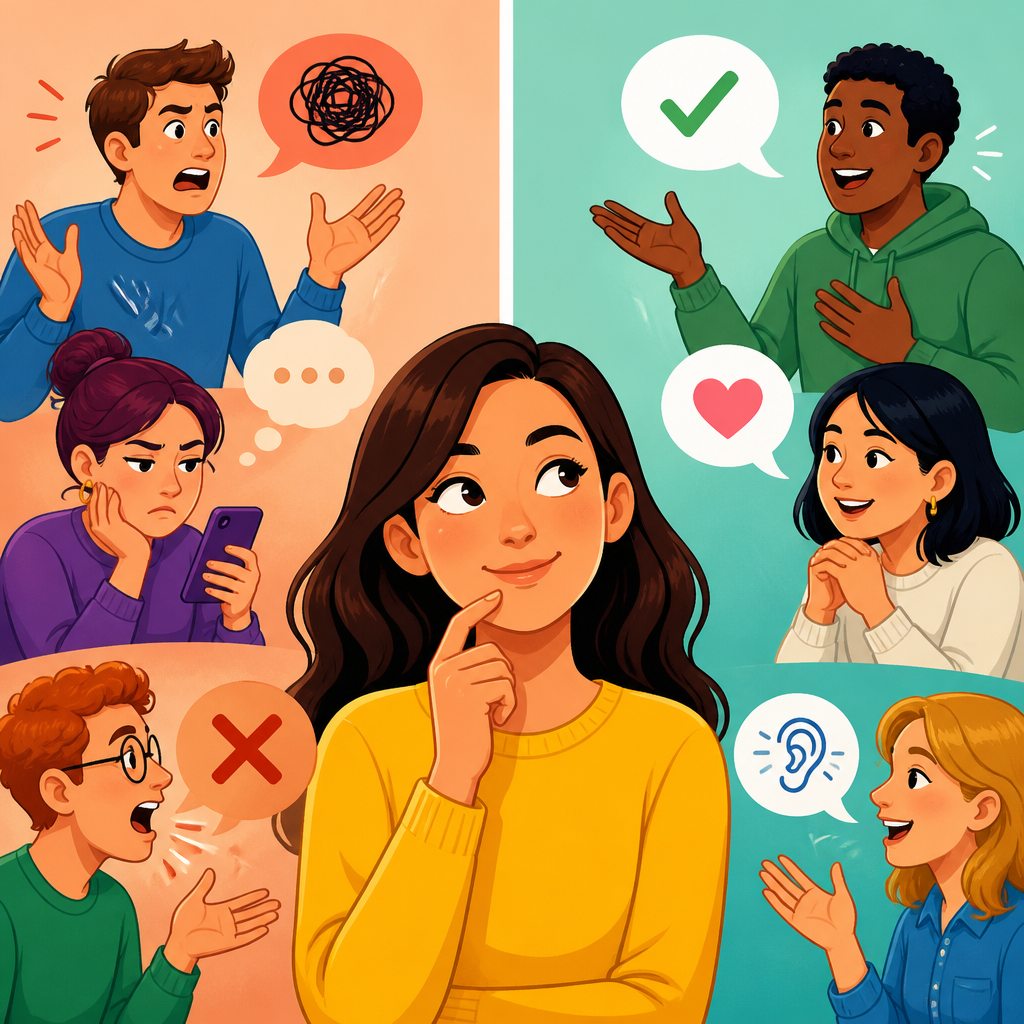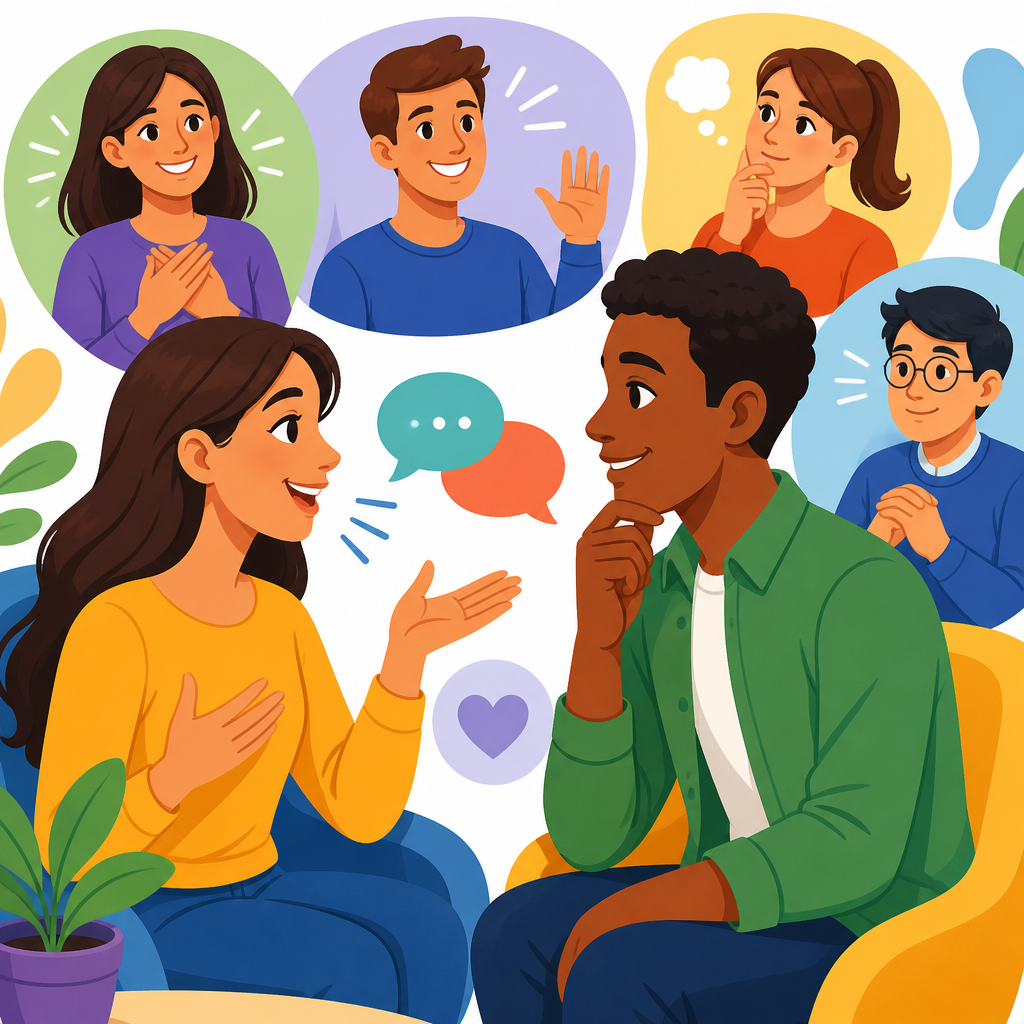
There are places in America that don’t just tell history — they make you feel it. Communication skills work the same way: the right words, tone, posture, and timing do more than pass information; they build trust, prevent conflict, and turn ordinary interactions into meaningful relationships. If you want to improve your verbal and nonverbal communication, you need to understand both channels together. Verbal communication is the language you choose, how clearly you explain an idea, and how well you listen and respond. Nonverbal communication includes facial expressions, eye contact, gestures, posture, space, and vocal qualities such as pace and volume. In my experience coaching teams and writing about relationship growth, the biggest breakthroughs happen when people stop treating communication as “talking better” and start treating it as a full-body skill. That matters at home, at work, on the road, and in every community where people are trying to be heard. For Dream Chasers building stronger relationships, this guide is the hub: a practical foundation for everyday conversations, difficult talks, public settings, friendships, dating, family dynamics, and professional communication.
Why communication skills matter in every relationship
Strong communication skills improve clarity, connection, and credibility. They reduce avoidable misunderstandings, which are one of the main drivers of workplace mistakes and personal conflict. Researchers studying communication competence consistently find that people judge trustworthiness and confidence not only by what is said, but by delivery. A clear message with steady eye contact and calm tone usually lands better than a smart message delivered defensively. That is why communication affects leadership, parenting, customer service, teamwork, and conflict resolution. It also shapes first impressions. Within seconds, people notice whether you seem attentive, rushed, guarded, warm, or dismissive. Those signals influence how much information they share back. Good communicators make others feel safe enough to participate. That is the real advantage: better conversations create better information, and better information leads to better decisions. Whether you are planning a family trip in a red, white, and blueprint way or navigating a tense meeting, communication is the operating system underneath the relationship.
How to improve verbal communication
Verbal communication improves when you focus on clarity, structure, relevance, and listening. Start by leading with the main point. Many people bury it under background details, which makes listeners work too hard. Say, “I need your help with this deadline,” before explaining the history. Use concrete language instead of vague wording. “Let’s leave at 8:15” is stronger than “Let’s head out kind of early.” Keep sentences shorter when the topic is emotional or complex. In difficult conversations, long explanations often sound defensive. Questions matter too. Open-ended questions such as “What part feels unclear to you?” invite detail, while closed questions can stop dialogue. Listening is not waiting for your turn; it is accurately receiving the other person’s meaning. Reflective listening helps: “What I’m hearing is that you felt left out when plans changed.” That technique, used in counseling and mediation, lowers tension because people feel understood. Finally, adjust your vocabulary to your audience. A teacher, teenager, veteran, and client may need different examples, even when the core message stays the same.
How to improve nonverbal communication
Nonverbal communication often carries more emotional weight than words. If your words say “I’m open to feedback,” but your arms are crossed, jaw is tight, and eyes keep darting to your phone, the body usually wins. To improve nonverbal communication, begin with posture. Stand or sit upright without looking rigid; balanced posture signals attention and self-control. Maintain natural eye contact, usually a few seconds at a time, rather than staring. Match your facial expression to your message. If you are offering concern, your face should not look amused or detached. Gestures should support the point, not distract from it. I often tell people to think of gestures as underlining, not graffiti. Your voice also communicates beyond words. Volume, pacing, pauses, and emphasis can make you sound calm, rushed, arrogant, uncertain, or sincere. Slowing down slightly is one of the fastest ways to sound more confident. Personal space matters as well. In American settings, crowding someone can feel aggressive, while too much distance can feel cold. Read the room and adapt.
Practical habits that strengthen both verbal and nonverbal communication
The most reliable way to build communication skills is deliberate practice in ordinary situations. Prepare before important conversations by writing your objective in one sentence. If you cannot summarize your point simply, you are not ready to say it clearly. During the conversation, monitor your body for leakage signals such as fidgeting, sighing, eye-rolling, or checking devices. Afterward, review what worked. This kind of self-audit is standard in executive coaching because communication is observable behavior, not a mystery. Recording yourself can help, especially for presentations or interviews. Many people are surprised by filler words, monotone delivery, or tense expressions they never noticed. Another useful habit is matching intensity. If someone speaks softly about something serious, a loud upbeat reply can seem insensitive. Match energy first, then guide the tone where it needs to go. Strong communicators also build feedback loops. Ask, “Does that make sense?” or “What are you taking from this?” That confirms understanding before a small misunderstanding becomes a larger problem.
| Situation | Common mistake | Better verbal approach | Better nonverbal approach |
|---|---|---|---|
| Giving feedback | Being vague or overly harsh | Use specific examples and one clear request | Keep tone steady, face relaxed, posture open |
| Conflict at home | Using absolutes like “always” and “never” | Describe one behavior and its impact | Sit at equal level, avoid pointing or looming |
| Job interview | Rambling answers | Answer with situation, action, result | Make natural eye contact, pause before answering |
| Meeting new people | Talking only about yourself | Ask follow-up questions and remember details | Smile genuinely, angle body toward speaker |
Communication skills for conflict, connection, and confidence
Communication is tested most under pressure. In conflict, the goal is not winning the exchange; it is preserving enough trust to solve the problem. Use “I” statements carefully: “I felt dismissed when I was interrupted” is more productive than “You never respect me.” Stay behavior-specific. Criticizing character invites defensiveness, while discussing an action invites change. Timing matters too. If either person is flooded emotionally, take a pause and name when you will return to the conversation. That is not avoidance; it is regulation. For connection, communicate curiosity. People open up when they sense genuine interest, not interrogation. Ask follow-up questions based on what they just said, not on the story you want to tell next. For confidence, remember that assertiveness is not aggression. Assertive communication states needs directly while respecting the other person’s dignity. A simple example is, “I can help after 3 p.m., but I can’t take that on this morning.” Boundaries delivered calmly are one of the clearest signs of mature communication.
Common barriers and how to overcome them
Most communication breakdowns come from a few repeat problems: assumptions, distraction, emotional reactivity, poor timing, and channel mismatch. Assumptions show up when you think others know your expectations without being told. Distraction now plays an outsized role because phones, alerts, and multitasking fracture attention. If the topic matters, remove the device or put it face down and out of reach. Emotional reactivity is another major barrier. When heart rate rises, listening drops and interpretation skews negative. Breathing slowly, pausing before responding, and asking one clarifying question can interrupt that pattern. Poor timing matters more than people admit. Feedback given publicly, late at night, or in the middle of a rushed morning usually goes badly. Channel mismatch is choosing text for a conversation that needs tone and nuance. Text is fine for logistics; it is risky for apology, criticism, or emotionally layered topics. When stakes are higher, move to a call or face-to-face conversation. Tools help, but judgment helps more.
How this communication hub supports long-term social growth
Think of this page as your starting point for every communication topic under Relationships and Social Growth. From here, readers can go deeper into active listening, body language, small talk, conflict resolution, public speaking, dating conversations, family boundaries, workplace communication, and digital etiquette. The hub matters because communication skills compound. Better listening improves friendships. Better emotional regulation improves conflict conversations. Better presence improves leadership and first impressions. Over time, those gains reshape your social life and professional reputation. At USDreams, we believe growth should be practical, tested, and grounded in real human moments, whether that is a hard family talk before The Great American Rewind or a simple roadside conversation over Old Glory Coffee Roasters. Start with one skill: clearer wording, better listening, calmer posture, or more intentional eye contact. Practice it daily until it feels natural, then add the next. Strong communication is not talent; it is trainable behavior. Until next time, Dream Chasers — keep chasing. 🇺🇸
Frequently Asked Questions
1. What is the difference between verbal and nonverbal communication, and why do both matter?
Verbal communication is the actual language you use to express an idea, ask a question, give feedback, or explain a decision. It includes your word choice, clarity, tone, pace, and the way you organize your message. Nonverbal communication includes everything that supports or contradicts those words, such as facial expressions, eye contact, posture, gestures, physical distance, timing, and even pauses. In everyday life, people interpret both at the same time, which is why strong communication depends on more than just saying the “right” thing.
Both matter because people often judge meaning, confidence, honesty, and emotional intent through a combination of what they hear and what they see. For example, saying “I understand” in a calm, attentive tone while maintaining natural eye contact feels supportive. Saying the same words while looking distracted or crossing your arms may feel dismissive. When verbal and nonverbal signals match, communication feels trustworthy and clear. When they conflict, confusion and tension usually follow.
Improving communication means learning to align these two channels. Clear speech without awareness of body language can come across as cold or defensive. Warm body language without clear wording can leave others unsure of your point. The most effective communicators build skill in both areas so their message is not only understood, but also received in the way they intended.
2. How can I improve my verbal communication skills in everyday conversations?
Start by focusing on clarity. Many communication problems happen because people assume others already understand the context, the goal, or the meaning behind certain phrases. Good verbal communication is direct without being harsh. Try to express one idea at a time, use simple language when possible, and avoid overexplaining to the point that your main message gets lost. If you are making a request, be specific. If you are giving feedback, describe what you observed and what outcome you want instead of speaking in vague generalizations.
Listening is another major part of verbal improvement. Strong communicators do not just speak well; they respond well. That means paying attention instead of planning your next sentence while the other person is talking. Ask follow-up questions, summarize what you heard, and confirm understanding with phrases such as “So what you’re saying is…” or “Let me make sure I understand.” This reduces miscommunication and shows respect, which strengthens relationships in personal and professional settings.
Your tone and pacing also matter. Speaking too quickly can make you sound nervous or hard to follow, while speaking too slowly or too softly can weaken your message. Aim for a steady pace, a confident tone, and wording that matches the situation. In difficult conversations, choose language that lowers defensiveness, such as “I noticed,” “I felt,” or “Can we talk about a better way to handle this?” These small adjustments make your communication more effective, more persuasive, and easier for others to receive.
3. What are the most important nonverbal communication habits to work on?
One of the most important habits is becoming aware of your facial expression. People look to your face for emotional cues, often before they fully process your words. A neutral expression may be interpreted as irritation, boredom, or disapproval depending on the situation, so it helps to stay present and intentional. A relaxed face, responsive expressions, and appropriate eye contact can make you seem more approachable, engaged, and sincere.
Posture and body positioning also play a major role. Standing or sitting upright communicates attention and confidence, while slouching, turning away, or constantly checking your phone signals disinterest. Open body language, such as uncrossed arms, a balanced stance, and a slight lean toward the speaker, helps people feel heard. Gestures can also strengthen your message when they are natural and controlled, but excessive movement can distract from what you are saying.
Another key habit is managing your use of space, silence, and timing. Interrupting someone, stepping too close, or reacting too quickly can create pressure even if your words are polite. On the other hand, a thoughtful pause, respectful distance, and patient listening often communicate maturity and emotional control. If you want to improve nonverbal communication, start by observing yourself during conversations. Notice how you sit, where you look, when you interrupt, and what your body does when you feel stressed. That self-awareness is the foundation for real change.
4. How can I make sure my verbal and nonverbal communication are aligned?
Alignment happens when your body language, voice, and words all support the same message. The first step is to be clear about what you actually want to communicate. Are you trying to reassure, persuade, correct, apologize, or set a boundary? Once you know your intention, you can adjust your delivery so everything works together. If your goal is to show support, for example, your tone should be calm, your posture should be open, and your attention should be focused. If your words are kind but your tone sounds impatient, the other person will usually trust the tone more than the wording.
It also helps to slow down, especially in emotional or high-stakes conversations. People become misaligned when they speak before they regulate their frustration, anxiety, or defensiveness. You might say, “I’m not upset,” while your jaw is tight, your arms are crossed, and your voice is sharp. In that moment, your nonverbal signals are telling the real story. Taking a breath before responding can help you choose language and body cues that better reflect your intended message.
Feedback is valuable here as well. Sometimes we are unaware of how we come across. Ask a trusted friend, colleague, or mentor whether your communication style feels clear, confident, warm, or tense. You can also practice by recording yourself during a presentation or mock conversation and reviewing your tone, pauses, posture, and facial expressions. The goal is not to appear rehearsed. It is to become consistent, so people receive your message with the clarity and trust you intended.
5. What are the best ways to improve communication in difficult or high-pressure situations?
In high-pressure situations, the biggest communication mistake is reacting too quickly. Stress can cause people to speak more sharply, listen less carefully, and send defensive nonverbal signals without realizing it. The most effective response is to pause long enough to stay intentional. Take a breath, lower your speaking speed, and decide what outcome you want from the conversation. That simple reset can prevent escalation and help you communicate with more control.
Use language that is firm but not inflammatory. Instead of making accusations, describe the issue clearly and focus on solutions. Phrases such as “Here’s what I’m concerned about,” “Can we clarify expectations?” or “I want to resolve this productively” keep the discussion grounded. At the same time, pay attention to your nonverbal presence. A steady voice, measured gestures, and direct but respectful eye contact communicate confidence. Rolling your eyes, sighing, pointing, or interrupting can intensify conflict even if your words are reasonable.
It is also important to show that you are listening, especially when emotions are involved. People calm down faster when they feel heard. Reflect back key points, acknowledge concerns, and ask clarifying questions before offering your own position. This does not mean you have to agree with everything being said. It means you are creating the conditions for a productive exchange. In challenging conversations, strong verbal and nonverbal communication can reduce misunderstanding, protect relationships, and make it much easier to reach a respectful outcome.