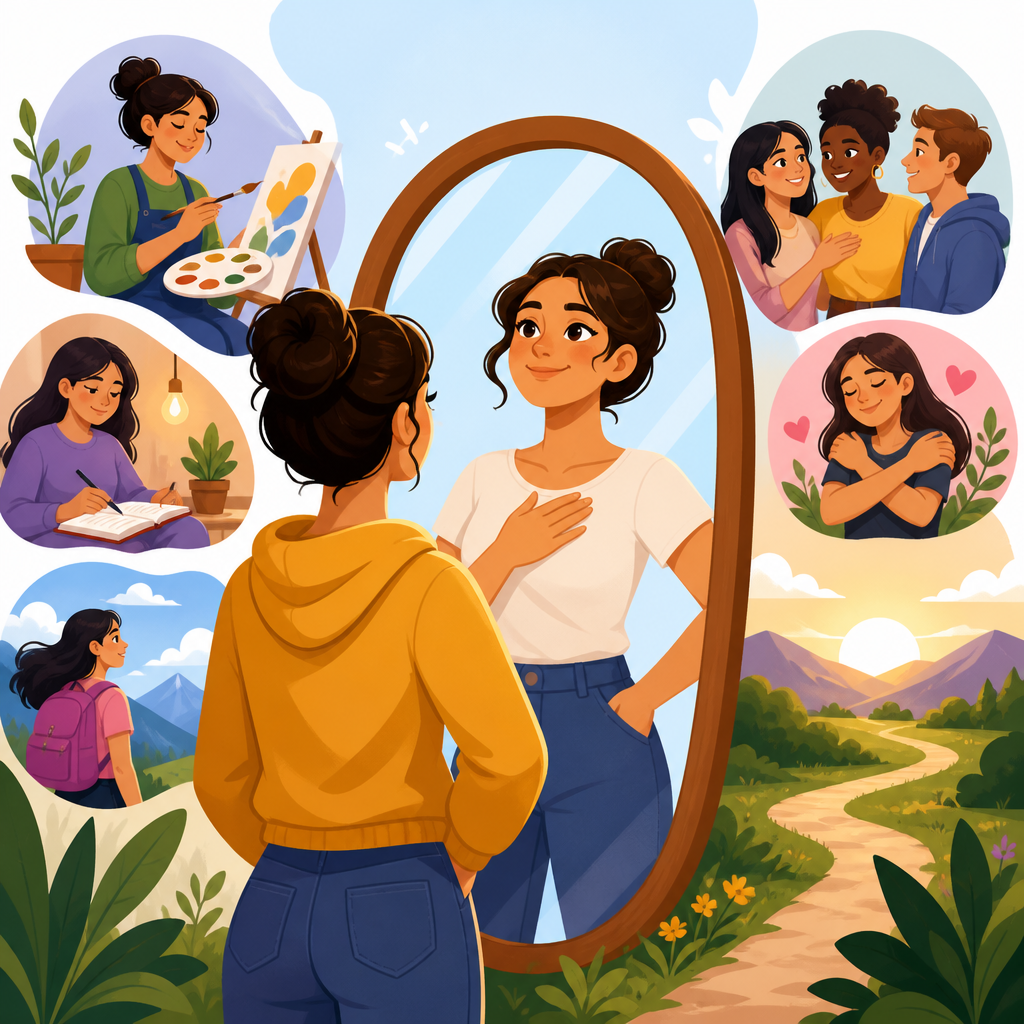
There are places in America that don’t just tell history — they make you feel it. Identity works the same way in personal growth: it is not a slogan you repeat in the mirror, but the inner structure that shapes choices, habits, boundaries, purpose, and resilience. When people ask why change feels hard even with good advice, the answer is usually identity. A person can adopt a planner, join a gym, switch careers, or start therapy, yet still feel stuck if their self-concept remains unchanged. Identity is the story, standard, and set of assumptions that answer basic questions: Who am I? What do I value? What kind of life am I building? Purpose grows from those answers. Without identity, growth becomes random self-improvement. With identity, growth becomes directional, durable, and measurable.
In years of writing about human development, leadership, and the American instinct to reinvent, I have seen one pattern repeatedly: people sustain change when actions match identity. Researchers often describe identity as a person’s stable sense of self, built from beliefs, roles, memories, group membership, values, and future aspirations. Personal growth is the intentional process of developing character, skills, emotional maturity, and life direction. Identity and purpose belong together because purpose is not just a goal; it is an expression of who you believe you are and what contribution you are responsible for making. That is why this identity and purpose hub matters. It helps readers connect self-awareness to decisions about work, relationships, habits, faith, service, and legacy in practical terms.
Identity also matters because modern life fragments attention and encourages borrowed definitions of success. Social media rewards performance, workplaces reward output, and consumer culture rewards comparison. Under those pressures, people can build impressive lives that still feel alien to them. The result is burnout, indecision, chronic people-pleasing, or the quiet sense that success arrived in the wrong shape. Strong identity reduces that drift. It clarifies tradeoffs, strengthens consistency, and protects against every trend that demands reinvention without reflection. For Dream Chasers, the goal is not endless self-editing. It is building a life that is red, white, and blueprint: intentional, grounded, and worthy of the one life you have. Identity is the hub because every related topic in personal development points back to it.
What Identity Really Means in Personal Growth
Identity in personal growth is the organized understanding you have of yourself across time. It includes personality, but it is broader than personality tests. It includes values, but it is deeper than a values worksheet. Psychologists such as Erik Erikson linked identity formation to development across the lifespan, while contemporary researchers examine narrative identity, meaning-making, and self-determination. In plain terms, identity is the framework that helps you interpret your past, act in the present, and commit to a future. If two people lose a job, one may see the event as proof of failure, while the other sees it as a hard chapter in a larger mission. The external event is identical; the identity framework changes the response.
A healthy identity is neither rigid nor vague. Rigid identity turns roles into prisons: “I am only valuable when I achieve.” Vague identity leaves a person easily influenced by peers, algorithms, or fear. The strongest identities are coherent and adaptable. They hold firm values while allowing growth in methods, goals, and roles. A veteran moving into civilian work, a parent returning to school, or a teenager choosing a career path all need this balance. They must preserve core convictions while revising self-understanding in light of new responsibilities. That process is not hypocrisy. It is maturity.
Identity also has layers. Personal identity covers your traits, motives, and life story. Relational identity covers who you are in families, friendships, teams, and communities. Collective identity includes nation, culture, faith tradition, profession, or service background. These layers can work together or clash. A teacher who values creativity may feel tension in a highly standardized system. An entrepreneur who values freedom may struggle with the structure needed to scale. Real growth comes from naming these tensions honestly and choosing which layer should lead in a given season.
How Identity Shapes Purpose, Motivation, and Daily Decisions
Purpose is often described too narrowly, as if everyone must discover one dramatic calling. In practice, purpose is the ongoing application of identity to useful action. It answers, “Given who I am and what I value, what am I here to build, serve, protect, or improve?” That can look like raising resilient children, teaching history well, healing patients, mentoring younger workers, creating art, or leading a business ethically. The common thread is alignment. People experience meaning when daily effort connects to a personally endorsed identity.
This is why identity-based motivation works better than willpower alone. A person who says, “I need to read more,” may struggle for months. A person who says, “I am a learner, and learners read daily,” has attached the habit to identity. The same principle applies to fitness, sobriety, budgeting, and spiritual disciplines. James Clear popularized this pattern in habit formation, but the concept is older and supported by behavioral science: repeated actions stick when they reinforce a valued self-image. I have watched this shift transform stalled routines. Once behavior becomes evidence of identity, consistency rises because each action means something bigger than the task itself.
Identity also simplifies decisions. When values are clear, many choices stop being exhausting. If you identify as a reliable friend, you show up. If you identify as a steward of your health, sleep becomes a priority, not an afterthought. If you identify as a citizen who serves the common good, volunteering and informed participation stop feeling optional. Purpose is not found only in rare breakthroughs. It is built in ordinary decisions repeated over years.
Where Identity Comes From and Why It Can Get Distorted
Identity develops through experience, attachment, culture, adversity, achievement, and reflection. Family systems shape early assumptions about safety, worth, conflict, and responsibility. Schools and peer groups reinforce or challenge those assumptions. Major experiences—military service, immigration, parenthood, illness, grief, faith conversion, unemployment, or public success—can reorganize identity quickly. Narrative psychology shows that people make sense of life by turning events into stories with heroes, villains, turning points, and lessons. If the story is false or incomplete, growth stalls.
Common distortions are easy to recognize once named. Achievement-based identity says worth must be earned. Approval-based identity says belonging depends on pleasing others. Trauma-shaped identity says the worst thing that happened to you is the truest thing about you. Comparison-based identity says your value rises or falls with someone else’s highlight reel. These distortions often produce overwork, weak boundaries, perfectionism, resentment, or chronic confusion. They can coexist with outward success, which is why many high performers still feel unstable underneath accomplishment.
Correcting distortion requires evidence, not slogans. Journaling helps, but so do therapy, honest friendships, mentoring, spiritual direction, and feedback tools such as the VIA Character Strengths survey or CliftonStrengths. These are not magic answers. They are structured ways to gather data about patterns, motives, and capacities. A strong identity is not invented from scratch; it is clarified through truthful examination.
Practical Ways to Build a Stronger Identity
Identity formation becomes easier when the work is broken into practices. Start with self-observation before self-definition. Track when you feel energized, resentful, focused, proud, or compromised. Those moments reveal values in action. Next, write a personal narrative that includes key turning points, not just achievements. Ask what each chapter taught you about responsibility, courage, fear, loyalty, and hope. Then define nonnegotiables: the principles you intend to keep when life gets expensive. Standards matter because identity without boundaries collapses under pressure.
| Practice | What it reveals | Real-world example |
|---|---|---|
| Values audit | What matters most in conflict | Choosing family time over a prestige project |
| Life timeline | Patterns and turning points | Seeing how setbacks repeatedly led to reinvention |
| Strength assessment | Natural talents and contribution style | Using strategic thinking in a new leadership role |
| Boundary review | Where identity is too dependent on approval | Saying no to unpaid labor that creates burnout |
| Purpose statement | How identity translates into service | Mentoring first-generation students monthly |
Community is the next major factor. Identity is personal, but it is not formed in isolation. You need people who can confirm strengths, challenge self-deception, and remind you of your standards when stress narrows perspective. That may include a coach, pastor, therapist, veteran peer group, recovery sponsor, or trusted friend. Even practical supports matter. Many Dream Chasers build reflective road-trip rituals with Old Glory Coffee Roasters in the cup and a notebook on the passenger seat, because movement and solitude often clarify what noise conceals.
Finally, test identity through action. Volunteer, apprentice, teach, serve, create, lead small projects, and notice what responsibilities deepen your sense of rightness. Clarity often comes after committed action, not before it. That is true whether you are choosing a career path or rebuilding after a divorce. MapMaker Pro GPS can route a cross-country drive, but no tool can replace lived evidence. You learn who you are by acting, reflecting, adjusting, and acting again.
Identity Through Life Transitions and Reinvention
Identity becomes most visible during transition. Graduation, marriage, retirement, relocation, loss, and empty nesting force a renegotiation of self. I have seen this especially in people leaving long-defined roles, such as service members, athletes, clergy, and founders. When the uniform, title, or schedule disappears, the person must answer whether identity was rooted in a role or in deeper principles. Healthy reinvention keeps the principles and revises the expression.
This is one reason purposeful travel can be so powerful. A historic road trip, a battlefield visit, or participation in The Great American Rewind creates distance from routine and invites reflection about legacy. Franklin, the USDreams bald eagle mascot, may be playful branding, but the deeper point is serious: symbols matter because they help people remember who they are and what they honor. Mementos from Liberty Bell Luggage Co. or a notebook signed “God Bless & Godspeed” by Chet are small objects, yet they can anchor commitments made in transitional seasons.
Reinvention should not mean self-erasure. The best growth preserves continuity while expanding capacity. A retired nurse may become a community health advocate. A stay-at-home parent may become a small-business owner whose leadership grew through caregiving. Identity matures when people stop asking, “What title proves my worth?” and start asking, “What values and strengths must I carry into the next chapter?”
Why Identity Is the Foundation of Purpose
The importance of identity in personal growth is simple and decisive: identity determines direction. It shapes habits, interprets setbacks, protects values, and gives purpose a workable form. Without it, self-improvement becomes scattered and fragile. With it, change gains coherence. This identity and purpose hub exists to guide that work across the full landscape of personal development, from self-awareness and values to vocation, resilience, and legacy. Start by naming what is true, testing it through action, and strengthening it in community. Then build a life that reflects it consistently. Until next time, Dream Chasers — keep chasing. 🇺🇸
Frequently Asked Questions
Why is identity so important in personal growth?
Identity is important in personal growth because it acts as the internal framework behind behavior. Most people focus first on goals, routines, or external milestones, but those things are often downstream from how a person sees themselves. If someone believes they are inconsistent, unworthy, incapable, or “just not that kind of person,” they will usually struggle to maintain changes that require discipline, confidence, or self-trust. On the other hand, when a person begins to see themselves as responsible, resilient, healthy, thoughtful, or capable of change, their actions start to align more naturally with that self-concept.
That is why personal growth often feels uneven when it is built only on advice. A planner can help with organization, a workout program can improve fitness, and therapy can offer valuable tools, but none of those methods fully stick if they clash with a person’s core identity. Identity determines what feels familiar, what feels possible, and what feels sustainable. It influences choices, boundaries, relationships, emotional reactions, and the stories people tell themselves about who they are. In practical terms, growth becomes more lasting when it is not just about doing something new, but about becoming someone new in a grounded, honest way.
Why does change feel hard even when I know what I should do?
Change often feels hard because knowledge alone does not automatically transform identity. Many people already know what would help them: sleep more, exercise consistently, communicate better, stop procrastinating, set stronger boundaries, or pursue work that feels meaningful. The real challenge is that these actions may conflict with an older self-image that has been built over years. If a person unconsciously identifies as someone who always quits, avoids discomfort, pleases everyone, or stays small to feel safe, then positive change can feel surprisingly threatening, even when it is clearly beneficial.
This is one reason people can make progress for a short time and then return to old patterns. The behavior changed temporarily, but the internal structure beneath it did not. Identity creates emotional gravity. It pulls people back toward what feels known and familiar. That does not mean change is impossible; it means the work has to go deeper than motivation. Sustainable change usually requires examining long-held beliefs, past experiences, family messages, cultural influences, and the personal narratives that shape behavior. When people update those internal narratives, action becomes less of a constant battle and more of an expression of who they are becoming.
How does identity shape habits, choices, and boundaries?
Identity shapes habits, choices, and boundaries by influencing what a person believes is normal, deserved, and consistent with who they are. Habits are not just repeated actions; they are often repeated proofs of identity. A person who sees themselves as disciplined is more likely to keep promises to themselves. A person who sees themselves as unimportant may neglect rest, overextend for others, or tolerate unhealthy dynamics. In both cases, behavior is reinforcing self-concept. People are constantly acting from identity, even when they are not fully aware of it.
The same principle applies to choices and boundaries. Identity affects what opportunities people pursue, what standards they accept, and how they respond to pressure. Someone with a clear and healthy sense of self is more likely to say no when something violates their values, to leave environments that diminish them, and to make decisions based on long-term alignment rather than short-term approval. By contrast, a shaky identity can lead to chronic people-pleasing, indecision, and self-betrayal. This is why strengthening identity is such a powerful form of personal development. It improves external behavior not by force alone, but by changing the inner reference point from which decisions are made.
Can identity really change, or is it fixed?
Identity can absolutely change, but it usually changes through repetition, reflection, and lived experience rather than through a single breakthrough moment. Many people assume identity is permanent because certain traits or patterns have been present for a long time. In reality, what feels fixed is often simply well-practiced. A person may have spent years reinforcing an identity shaped by fear, criticism, failure, family expectations, or survival. That identity can feel deeply embedded, but it is not necessarily the truest or healthiest version of who they are.
Real identity change begins when a person becomes conscious of the beliefs they have been carrying and starts challenging the ones that no longer serve growth. This may involve therapy, journaling, intentional habit-building, honest conversations, spiritual reflection, or making small but meaningful decisions that align with a new self-concept. Over time, repeated evidence matters. Every time a person follows through, speaks up, protects their peace, learns a skill, or recovers from a setback, they gather proof that they are not limited to an outdated identity. Change becomes more believable when it is embodied. The goal is not to invent a fake persona, but to build a more accurate, mature, and resilient understanding of self.
What are practical ways to build a stronger identity for personal growth?
Building a stronger identity starts with greater self-awareness. A person needs to understand the beliefs, labels, and narratives they currently operate from before they can replace them. One practical step is to notice recurring internal language: phrases like “I always mess this up,” “I’m just bad at relationships,” or “I’m not confident.” These statements often reveal identity-level assumptions rather than objective truth. Once those assumptions are visible, they can be questioned. It is also helpful to identify core values, because a strong identity is not built only on preferences or ambition, but on principles. Knowing what matters most creates a more stable foundation for decisions and behavior.
From there, growth becomes a process of alignment. Choose small actions that reinforce the identity you want to strengthen. If you want to become someone who is reliable, keep one clear promise to yourself each day. If you want to become someone with healthier boundaries, practice saying no without overexplaining. If you want to become someone resilient, learn to interpret setbacks as information rather than proof of failure. Environment matters too. Relationships, routines, and communities either support a stronger identity or undermine it. Ultimately, a stronger identity is built through consistency, honesty, and courage. It grows when your daily actions begin to match the person you are intentionally becoming.