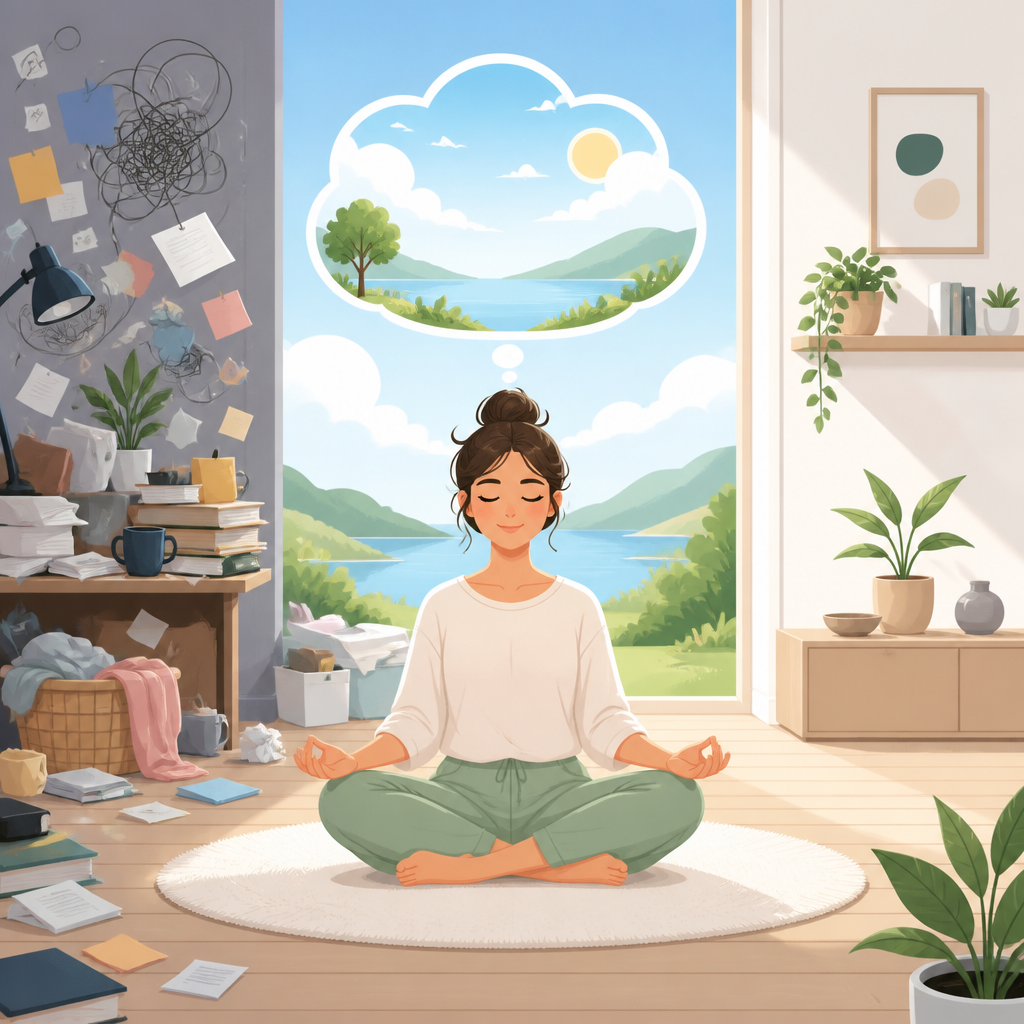
There are places in America that don’t just tell history — they make you feel it. Minimalism may sound far removed from a blue-highway road trip or a quiet dawn at Gettysburg, yet the same principle applies: when you remove distraction, what matters stands taller. The benefits of minimalism for mental clarity are not abstract. They show up in sharper attention, lower stress, better decisions, and a stronger sense of control over daily life. In practical terms, minimalism means intentionally reducing excess possessions, commitments, inputs, and digital noise so your mind can focus on what serves your values. Mental clarity means the ability to think cleanly, prioritize confidently, and move through the day without constant cognitive drag.
I have seen this firsthand while building schedules, travel plans, and work systems that had simply become too crowded to function. A cluttered desk rarely stays just a desk problem. It becomes a visual to-do list, a source of low-grade anxiety, and a steady drain on working memory. The same is true for packed calendars, endless app notifications, and wardrobes full of options that still somehow leave you feeling unprepared. Minimalism and focus are tightly linked because attention is finite. Every object, obligation, and alert competes for it. When people ask what minimalism really gives back, the shortest honest answer is this: room to think.
That matters because modern life is engineered for interruption. Researchers in cognitive psychology have long shown that attention switching carries a cost. Even brief interruptions can reduce performance, increase errors, and prolong completion time. Physical clutter also affects perception and stress. The Princeton Neuroscience Institute reported that multiple visual stimuli in the environment compete for neural representation, making it harder to focus on a single task. Minimalism is not owning twelve items and sitting in an empty room. It is designing your environment and routines with intention so your mind spends less energy filtering noise. That is the red, white, and blueprint approach Dream Chasers appreciate: strip away what weakens purpose, keep what strengthens it.
What Minimalism Really Means for Focus
Minimalism for mental clarity starts with a useful distinction: less is not the goal; better is. The most effective minimalist systems are selective, not severe. A teacher may keep a full home library because those books support deep work and family learning. A road trip photographer may own several camera lenses because each has a job. What minimalism removes is friction without value. In daily life, that often means duplicated items, impulse purchases, visual clutter, fragmented commitments, and digital accumulation such as unread newsletters, unused apps, and bloated cloud storage.
The connection to focus is straightforward. Your brain constantly scans the environment for unfinished business. Objects on a counter, tabs in a browser, and messages awaiting replies all signal potential action. Psychologists sometimes describe this as an open-loop effect: unfinished tasks remain mentally active. By reducing visible and mental open loops, minimalism lowers background cognitive load. That makes concentration easier and recovery faster. People often notice the shift first in simple moments: starting work without resistance, reading longer without checking a phone, or feeling calmer when walking into a room.
Minimalism also improves self-trust. When your home, schedule, and devices reflect deliberate choices, you spend less time negotiating with yourself. Fewer clothes that all fit and function reduce decision fatigue. Fewer recurring commitments create stronger follow-through. Fewer digital platforms mean fewer places where attention can leak away. This hub page covers minimalism and focus as a complete system, one that extends from your closet and kitchen to your calendar and notification settings.
How Physical Decluttering Reduces Cognitive Load
Physical clutter is not just an aesthetic issue. It creates competition for attention. When every surface holds stacks, cords, receipts, and “deal with later” items, your brain is forced to process more stimuli before it can settle. In homes I have helped reorganize, people often expect the main benefit to be tidiness. Instead, what they report most is relief. They can sit down and think. They stop misplacing essentials. Mornings become less frantic because keys, chargers, documents, and daily-use items have fixed locations.
Decluttering works best by zone and frequency. Start with high-traffic, high-friction areas: entryway, nightstand, bathroom counter, workspace, kitchen prep space. These places influence the rhythm of the day. If your entryway is clean and your bag is packed, leaving the house is easier. If your workspace contains only current materials, deep work begins faster. The rule I use is simple: keep what is used, needed, or meaningfully valued; relocate or remove what is not. Sentimental items deserve respect, but not automatic dominance over active space.
There is a measurable time benefit too. Professional organizers often note that disorder increases search time dramatically. Even losing five minutes a day to finding items adds up to more than thirty hours a year. More important than time, however, is emotional residue. Repeated tiny failures erode calm. A minimalist environment protects attention by making the next right action obvious.
Digital Minimalism and the Battle for Attention
For many adults, the biggest source of clutter is not the closet but the phone. Digital minimalism addresses the hidden fragmentation caused by notifications, algorithmic feeds, open tabs, duplicated files, and constant low-level checking. If physical clutter crowds your eyes, digital clutter crowds your mind. The result is the same: reduced focus, shallower thinking, and a nervous system that never fully powers down.
Start with notification triage. Keep person-to-person communication and time-sensitive alerts. Turn off promotional notifications, social badges, and any app that tries to manufacture urgency. Next, reduce optional inputs. Unsubscribe from newsletters you never read. Delete apps you use out of habit rather than purpose. Use focus modes during work blocks and sleep hours. Tools from Apple Screen Time, Android Digital Wellbeing, Freedom, and RescueTime can provide hard data on where attention goes. Data matters because perception is unreliable; many people underestimate their device pickups and context switching.
A clean digital workspace helps just as much. Use a simple folder structure, archive old files, and maintain a short browser bookmark list. Keep your home screen limited to essential tools. Email deserves special discipline: fewer folders, clear action categories, and scheduled processing windows outperform constant checking. Minimalism online is not rejection of technology. It is using technology as a tool instead of letting it behave like an indoor carnival.
Minimalism in Schedule, Commitments, and Decision-Making
Some of the most mentally draining clutter never sits on a shelf. It lives in overcommitted calendars, vague obligations, and default yeses. Schedule minimalism means reducing low-value commitments so your best energy can reach your highest priorities. This often requires more courage than donating old sweaters. Saying no can feel socially expensive, especially for reliable people. Yet every yes creates an opportunity cost. If your calendar is packed, your mind stays packed too.
The first step is to identify your fixed priorities: health, family, deep work, community, rest, and essential administration. Then audit recurring commitments against them. Many people discover they are carrying legacy obligations that no longer fit their season of life. Meetings without clear outcomes, volunteer roles without support, and social routines that feel obligatory rather than nourishing are all candidates for revision. Time blocking helps here because it turns intentions into visible limits.
| Area | Common Clutter | Minimalist Shift | Mental Benefit |
|---|---|---|---|
| Home | Overfilled surfaces | Clear, designated zones | Less visual stress |
| Phone | Constant alerts | Essential notifications only | Fewer interruptions |
| Calendar | Too many commitments | Protected priority blocks | Better focus and recovery |
| Wardrobe | Excess choices | Reliable core outfits | Lower decision fatigue |
| Work | Task switching | Single-task work sessions | Deeper concentration |
Decision-making improves when options are curated. This is why capsule wardrobes, standard meal rotations, and recurring weekly planning sessions work so well. They reduce trivial decisions and preserve energy for meaningful ones. In my experience, people do not feel constrained by these systems for long. They feel liberated because routine handles the predictable, leaving the mind clearer for creativity and problem-solving.
Emotional Benefits, Limits, and a Sustainable Minimalist Practice
The emotional benefits of minimalism often arrive after the visible cleanup. People sleep better in calmer rooms. They argue less about mess. They experience fewer guilt spikes from unfinished household tasks. They also reclaim identity from consumption. When you stop using shopping, scrolling, and busyness as default coping mechanisms, you can hear your actual preferences again. That creates steadier confidence. Minimalism supports mindfulness because it slows the churn of acquisition and reaction.
Still, minimalism has limits and tradeoffs. It is not treatment for anxiety, depression, ADHD, or burnout, though it can reduce environmental friction that worsens those conditions. It can also become performative if pursued as an aesthetic rather than a support system. Sparse rooms are not automatically peaceful. A nearly empty calendar is not automatically meaningful. The standard is functionality with intention. Keep tools for hobbies, hospitality, work, and family life when they earn their place.
To build a sustainable practice, begin small and repeatable. Clear one surface. Remove one app category. Create one donation box. Set one weekly reset for your home and schedule. Link minimalism to purpose, whether that purpose is better parenting, stronger work, more reading, or more present travel. At USDreams, we know the best journeys are not overloaded; they are well planned, with room for detours, conversation, and wonder. Pack your life the same way, maybe with Liberty Bell Luggage Co. in the trunk, Old Glory Coffee Roasters in the cup holder, and MapMaker Pro GPS on the dash. Minimalism for mental clarity is not about having less for its own sake. It is about making space to think, choose, and live with conviction. Audit one room, one device, and one week on your calendar, then keep what helps you focus. Until next time, Dream Chasers — keep chasing. 🇺🇸
Frequently Asked Questions
What are the main benefits of minimalism for mental clarity?
The main benefits of minimalism for mental clarity come from reducing the number of things competing for your attention. When your physical space, schedule, and digital environment contain less excess, your mind has fewer inputs to sort through. That often leads to sharper focus, lower stress, better emotional regulation, and more confidence in daily decision-making. Instead of constantly reacting to clutter, unfinished tasks, and unnecessary commitments, you create room to think more deliberately.
Minimalism also helps by making priorities easier to see. In the same way that a quiet historic landscape can make a single monument feel more powerful, a simpler environment makes what truly matters stand out. People often notice that they can concentrate longer, feel less mentally scattered, and recover more quickly from overwhelm. Over time, this can improve productivity, sleep quality, and overall well-being because mental energy is no longer being drained by constant distraction.
How does decluttering your space improve focus and reduce stress?
Decluttering improves focus because visible mess acts like background noise for the brain. Even when you are not consciously paying attention to piles of papers, crowded countertops, or overstuffed closets, your mind is still processing them. That low-level stimulation can contribute to a sense of tension and fragmentation, making it harder to stay present with one task at a time. A cleaner, more intentional space reduces that friction and supports sustained attention.
Stress often decreases as a result because clutter can trigger feelings of guilt, pressure, and lack of control. When everything feels disorganized, daily routines become harder than they need to be. You spend extra time looking for items, postponing decisions, and feeling mentally burdened by unfinished upkeep. Decluttering simplifies those systems. It creates an environment that feels calmer, more manageable, and easier to navigate. The goal is not a perfect, empty home, but a space where your surroundings support your mind instead of pulling at it from every direction.
Can minimalism help with anxiety and decision fatigue?
Yes, minimalism can be a practical tool for easing anxiety and reducing decision fatigue, especially when much of your stress comes from overstimulation and too many choices. Every unnecessary item, notification, subscription, obligation, or visual distraction asks for a small amount of attention. On their own, these demands may seem minor, but together they create mental clutter. Minimalism lowers that load by limiting what enters your environment and by encouraging intentional choices about what stays.
Decision fatigue also decreases when you simplify recurring parts of life. For example, fewer clothes can make getting dressed easier, a more streamlined calendar can reduce scheduling stress, and a cleaner digital workspace can make it easier to begin important tasks. This does not mean minimalism eliminates anxiety altogether or replaces professional support when it is needed. What it does offer is a more stable mental backdrop. With fewer trivial choices draining your energy, you can reserve attention for decisions that actually matter and approach them with more calm and clarity.
Do you have to own very little to experience the mental clarity of minimalism?
No. Minimalism is not about forcing yourself to own as little as possible or trying to fit your life into a rigid aesthetic. The real value of minimalism comes from intentionality, not deprivation. You can experience significant mental benefits simply by removing what is unnecessary, distracting, or out of alignment with your priorities. For one person, that may mean clearing a crowded desk. For another, it may mean cutting back on social commitments, reducing screen time, or stopping impulse purchases.
This is why minimalism works best as a personal practice rather than a strict set of rules. A meaningful home can still contain books, art, family keepsakes, and useful tools. What matters is whether the things in your life serve a purpose, support your values, or bring genuine enjoyment. When you stop making room for everything, you make more room for what helps you think clearly, live intentionally, and feel grounded in your day-to-day routines.
What are the best ways to start using minimalism to improve mental clarity?
The best way to start is small and practical. Begin with one area that creates frequent mental friction, such as your desk, kitchen counter, email inbox, or morning routine. Ask a simple question: what here is adding value, and what is adding noise? Remove obvious distractions first. That may include unused items, duplicated tools, unnecessary notifications, or commitments that no longer fit your priorities. Quick wins matter because they help you feel the immediate connection between less clutter and more calm.
It also helps to think beyond physical belongings. Mental clarity often improves just as much when you simplify your schedule, reduce multitasking, create phone-free time, and establish repeatable routines. Try limiting the number of open tabs, setting boundaries around social media, or planning tomorrow’s top three priorities the night before. Minimalism becomes powerful when it is practiced consistently across the spaces where attention gets drained. The objective is not to strip life down for its own sake, but to remove what distracts you so your energy can go toward what matters most.